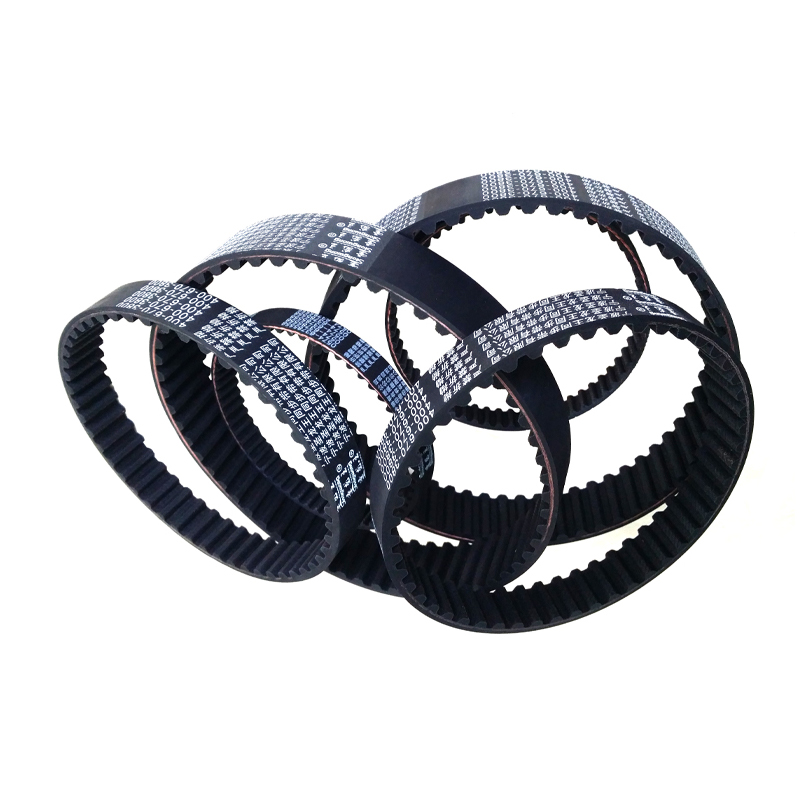
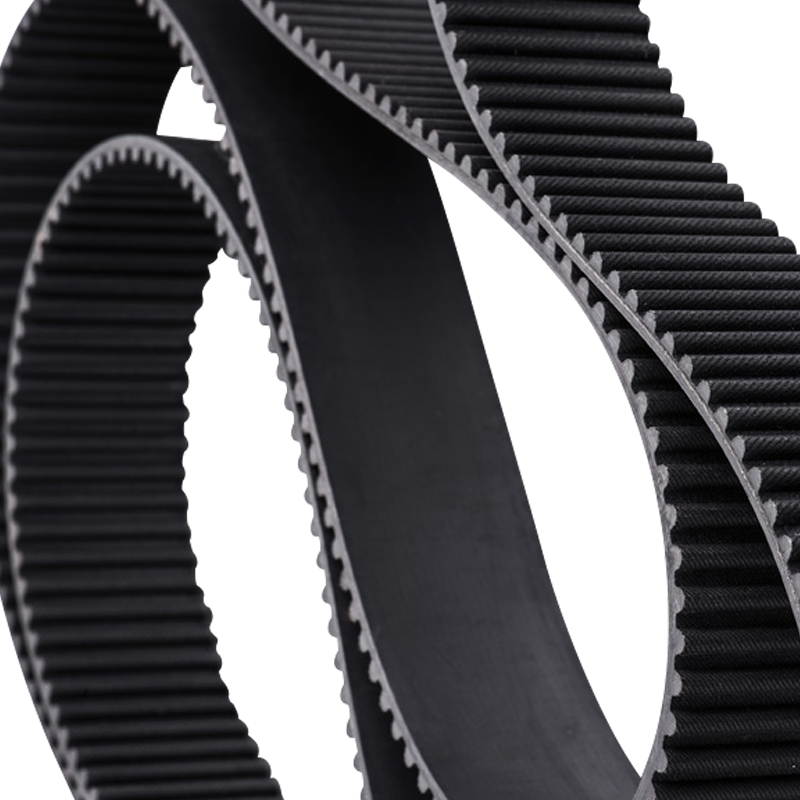
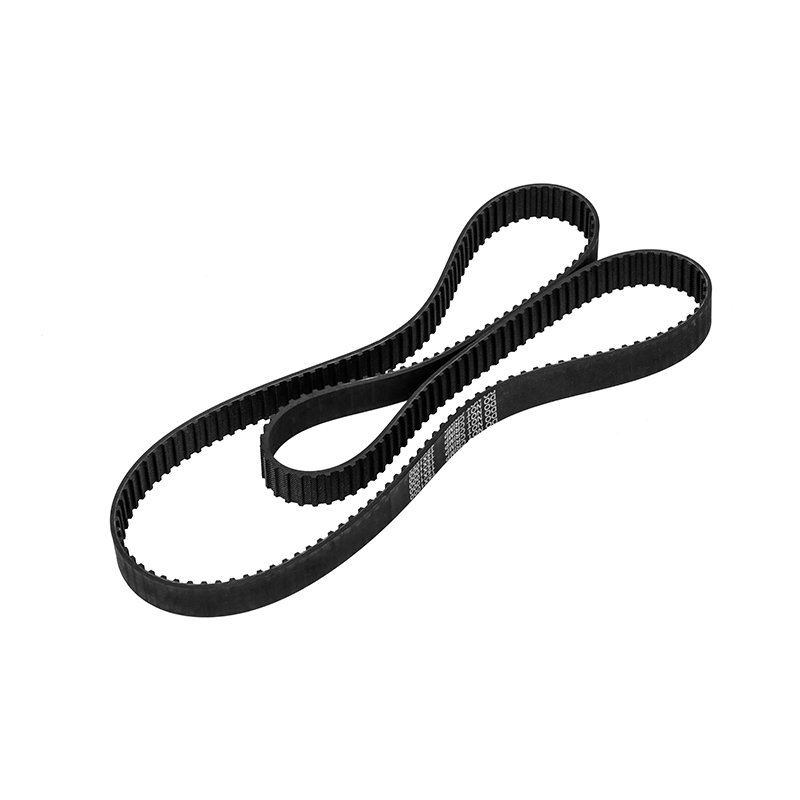
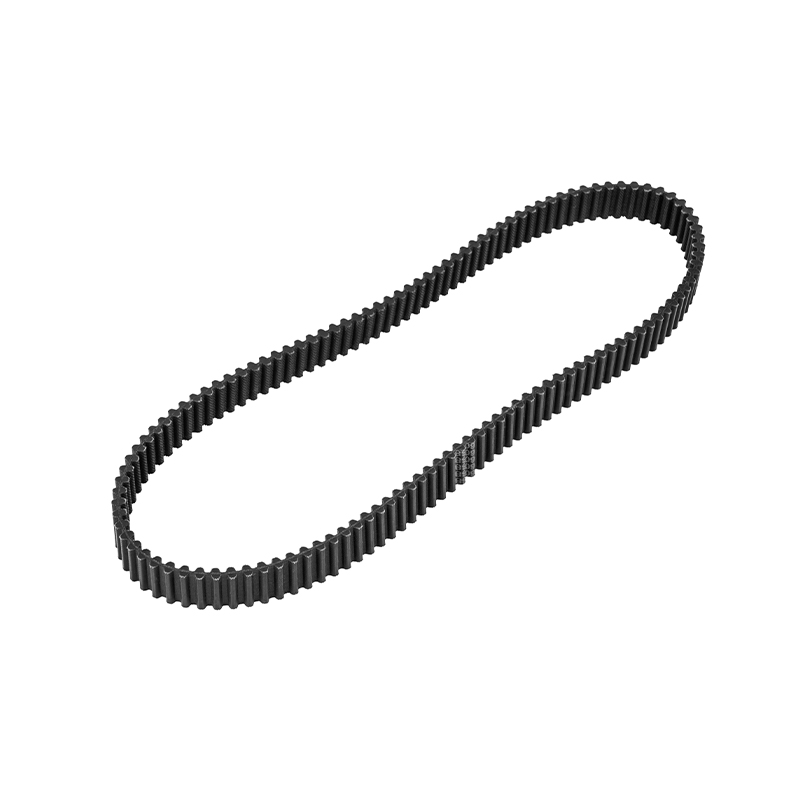
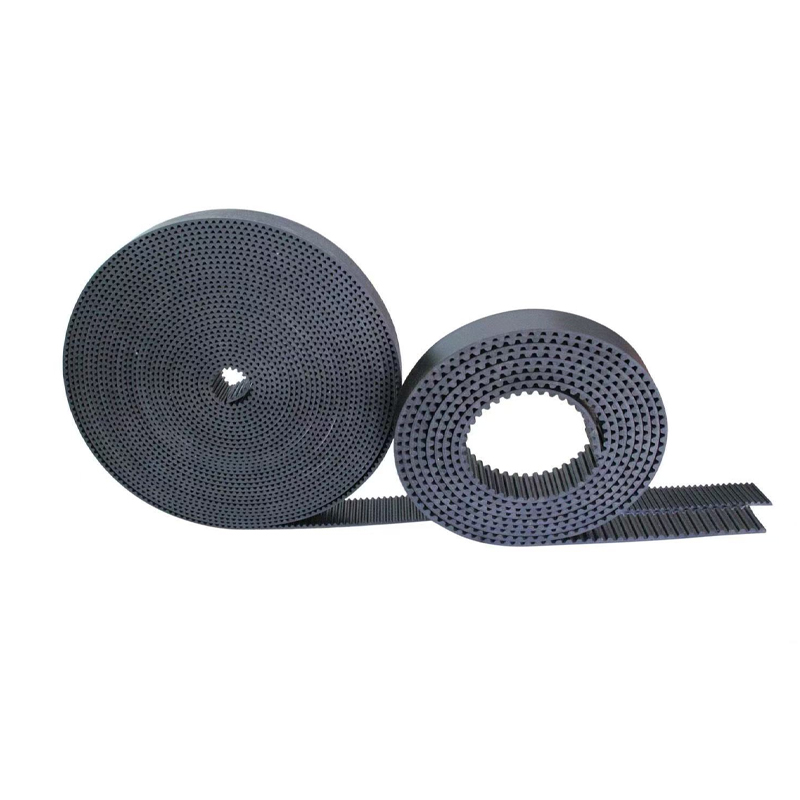
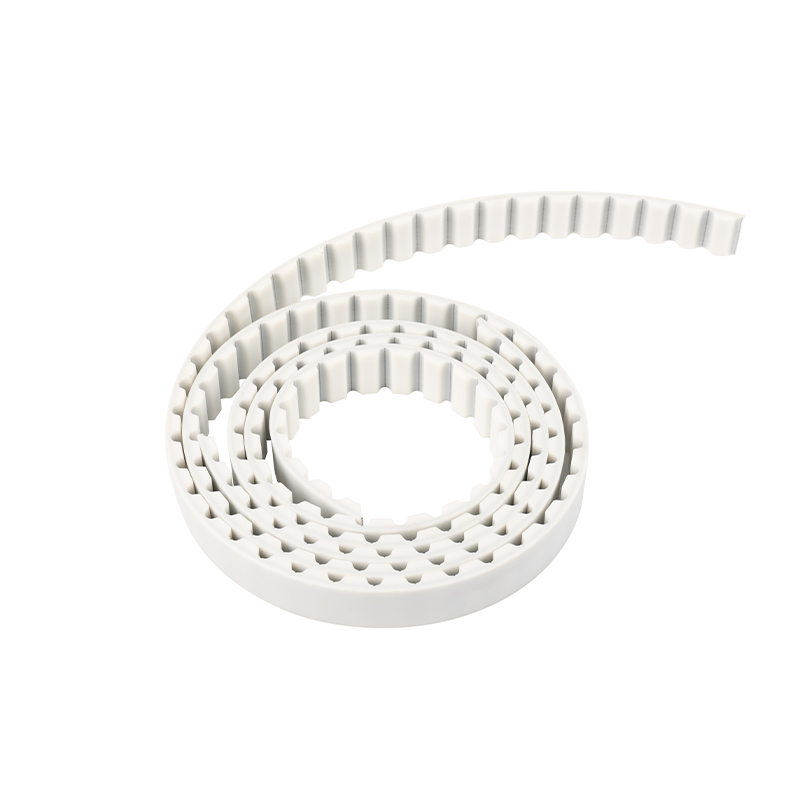
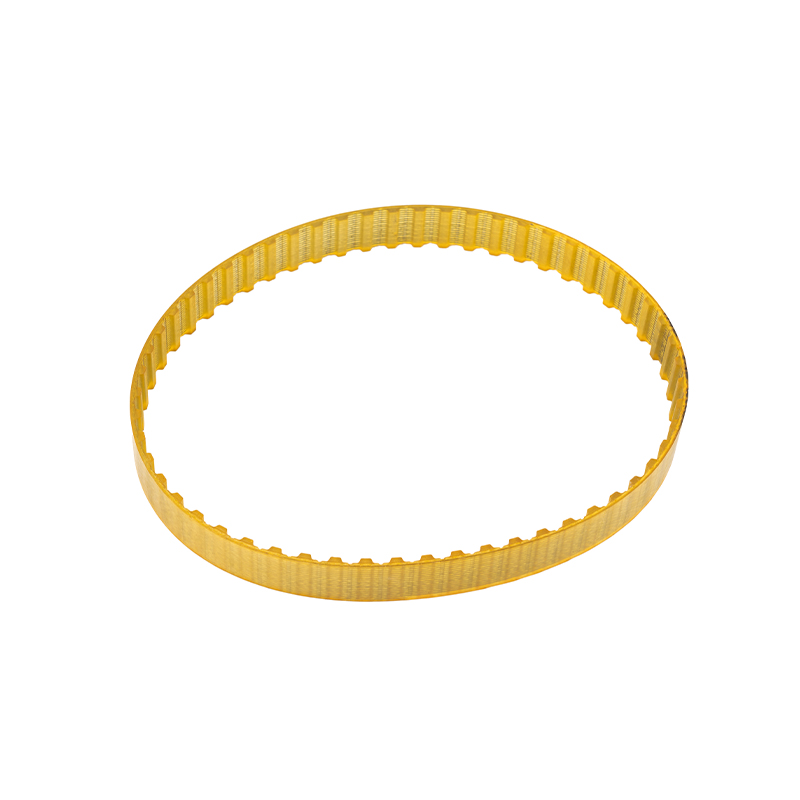
A timing belt synchronizes the rotation of two or more shafts — most commonly the crankshaft and camshaft in an engine, or a drive pulley and driven axis in industrial machinery — ensuring that mechanical events happen at precisely the correct moment in every cycle. Unlike a plain drive belt, a timing belt uses teeth that mesh with matching pulley grooves, preventing any slip and maintaining a fixed positional relationship between connected components. Without a functioning timing belt, valve and piston movements become unsynchronized, which in an engine leads to catastrophic internal damage within seconds.
Timing belts are manufactured in two primary materials: rubber (typically neoprene or HNBR) and polyurethane (PU). Each has distinct advantages and limitations that make one or the other the right choice depending on the operating environment, load type, precision requirement, and expected service life.
What Does a Timing Belt Actually Do?
The core function of a timing belt is positive, slip-free power transmission with precise angular synchronization. Its toothed profile locks it to matching sprockets or pulleys so that shaft positions remain in a fixed ratio regardless of load fluctuations or speed changes. This distinguishes it from V-belts or flat belts, which rely on friction and can slip under overload.
In Automotive Engines
In a four-stroke gasoline or diesel engine, the timing belt connects the crankshaft (which drives the pistons) to the camshaft or camshafts (which open and close the intake and exhaust valves). The standard gear ratio is 2:1 — the camshaft rotates once for every two crankshaft revolutions. This ensures that valves open and close at exactly the right point in the piston's travel. At 3,000 RPM, the crankshaft completes 50 revolutions per second; the timing belt must maintain that synchronization across millions of cycles without stretching or skipping a tooth. In interference engines — where valves and pistons share overlapping space — a broken or jumped timing belt causes pistons to strike open valves, typically destroying the engine.
In Industrial and Automation Machinery
Outside the automotive world, timing belts are critical components in CNC machines, 3D printers, conveyor systems, packaging equipment, textile machines, medical devices, and robotics. In these applications, the belt transmits both motion and position information. A CNC router axis driven by a timing belt, for example, relies on the belt's dimensional stability to translate motor steps into accurate linear movement — any elongation or tooth wear introduces positioning error directly into the finished workpiece.
Key Functions Summarized
- Synchronization: Maintains exact angular phase relationships between shafts regardless of speed or load.
- Power transmission: Transfers torque efficiently across distances — typical timing belt drive efficiency is 98–99%, higher than chain or gear drives of equivalent complexity.
- Speed ratio control: Fixed tooth engagement provides consistent drive ratios from 1:1 up to 8:1 or higher in a single pass.
- Quiet, low-maintenance operation: Unlike roller chains, timing belts require no lubrication and run significantly more quietly, reducing operating noise by 10–15 dB in comparable applications.
- Linear actuation: In open-belt configurations, timing belts convert rotational motor movement into precise linear carriage motion in axes, plotters, and conveyors.
Timing Belt Tooth Profiles: How the Shape Affects Performance
The tooth profile is not merely a matter of compatibility — it determines load distribution, noise level, and the belt's ability to transmit high torques without tooth jump or root cracking. Selecting the correct profile for the application is as important as selecting the material.
| Profile |
Tooth Shape |
Pitch Range |
Typical Applications |
| MXL / XL / L / H / XH |
Trapezoidal (square) |
2.032–22.225 mm |
Light-to-medium industrial, office equipment |
| T2.5 / T5 / T10 / T20 |
Trapezoidal (metric) |
2.5–20 mm |
Automation, conveyors, packaging machinery |
| AT3 / AT5 / AT10 / AT20 |
Modified trapezoidal (wider tooth) |
3–20 mm |
High-torque drives, positive engagement under shock load |
| HTD (3M / 5M / 8M / 14M) |
Curvilinear (rounded) |
3–14 mm |
Automotive, high-load industrial drives, e-bikes |
| GT2 / GT3 (2M / 3M / 5M) |
Modified curvilinear |
2–5 mm |
3D printers, CNC, precision positioning systems |
| STPD / STS (S3M / S5M / S8M) |
Semicircular curvilinear |
3–8 mm |
Servo drives, robotics, low-backlash positioning |
Table 1: Common timing belt tooth profiles, pitch ranges, and typical applications.
Curvilinear profiles such as HTD and GT distribute load across a larger tooth contact area, reducing stress concentration and enabling 40–50% higher torque capacity compared to trapezoidal profiles of the same pitch. This is why modern automotive and high-load industrial belts have almost universally moved away from trapezoidal designs.
Rubber Timing Belts: Material, Strengths, and Limitations
Rubber timing belts are the dominant choice for automotive engines and a large share of industrial drive applications. The body compound is most commonly neoprene (CR) for standard applications or hydrogenated nitrile rubber (HNBR) for higher-performance demands. Tensile cords — typically fiberglass or aramid (Kevlar) — are embedded in the neutral axis to provide high tensile strength with minimal elongation under load.
Neoprene (CR) Rubber Timing Belts
Neoprene is the traditional and most cost-effective rubber compound for timing belts. It offers good resistance to oil, ozone, and moderate heat. Operating temperature range is typically −30°C to +100°C. Neoprene belts are well-suited for indoor industrial machinery, older automotive applications, and general-purpose drives where temperature and chemical exposure are moderate.
HNBR Rubber Timing Belts
Hydrogenated nitrile rubber represents the modern standard for automotive timing belts and demanding industrial use. HNBR offers superior resistance to heat (operating range typically −40°C to +150°C), engine oils, coolant contamination, and ozone degradation. A typical OEM HNBR automotive timing belt is rated for 60,000 to 105,000 miles (or 5–7 years) of service, though manufacturers increasingly specify replacement at 100,000–150,000 km intervals for premium HNBR compounds with aramid cords.
Advantages of Rubber Timing Belts
- Flexibility at low temperatures: Rubber remains pliable well below 0°C, making it suitable for cold-start automotive and outdoor industrial applications without cracking or stiffening.
- High damping capacity: Rubber absorbs vibration and shock loads better than polyurethane, reducing noise and protecting connected components in engines and reciprocating machinery.
- Wide availability and low cost: Standard rubber timing belts are a commodity product with broad availability across all pitch and width sizes at competitive prices.
- Compatibility with oil splash environments: HNBR belts tolerate incidental oil exposure without rapid degradation, which is important in wet-belt engine designs (belt-in-oil, BIO systems) used by Renault, PSA, and Fiat.
Limitations of Rubber Timing Belts
- Moisture absorption: Rubber compounds can absorb water over time, causing swelling and dimensional changes that affect tooth pitch accuracy and belt tension.
- Limited chemical resistance: Exposure to aggressive solvents, fuels beyond incidental splash, or strong acids degrades rubber compounds rapidly.
- Creep under sustained high loads: Under constant tension or high cyclic loads, rubber compounds exhibit more long-term elongation than polyurethane, gradually reducing timing accuracy.
- Thermal aging: Prolonged exposure above 130°C accelerates oxidative degradation of the rubber matrix, reducing tensile strength and tooth integrity even in premium HNBR compounds.
Polyurethane (PU) Timing Belts: Properties and Industrial Advantages
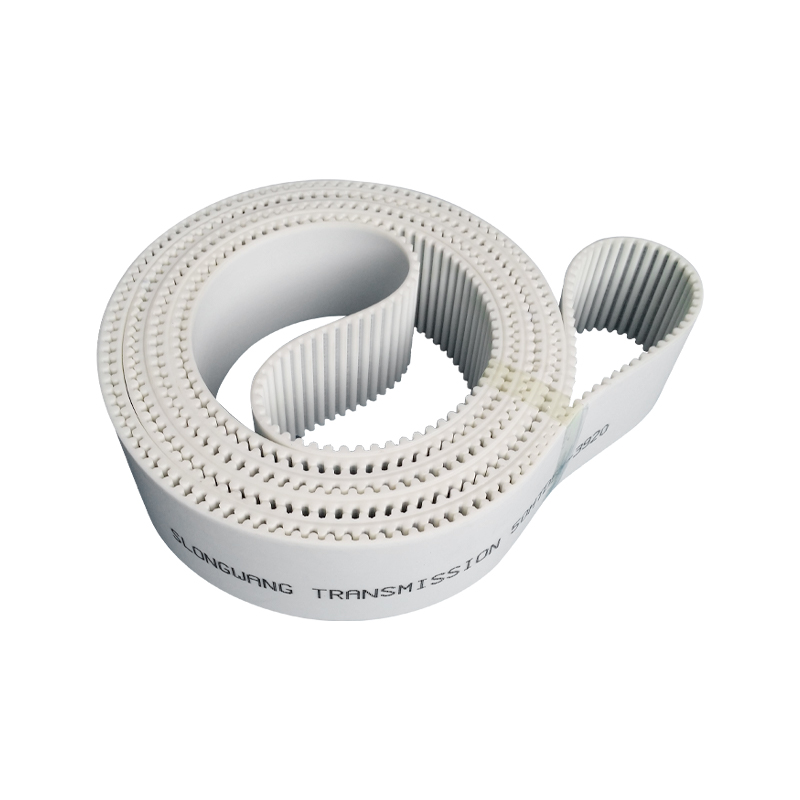
Polyurethane timing belts — often called PU timing belts — are manufactured from thermoplastic polyurethane, typically reinforced with steel wire, aramid fiber (Kevlar), or fiberglass tension cords. Unlike rubber, polyurethane is cast or extruded as a homogeneous body, and the tooth and backing are formed as a single monolithic structure with no rubber-to-fabric bonding layers that can delaminate.
PU timing belts have become the preferred choice for precision industrial automation, linear positioning systems, conveyor applications, and food processing equipment where dimensional stability, chemical resistance, and long maintenance-free service life are priorities.
Key Material Properties of Polyurethane Timing Belts
- Operating temperature: Standard PU belts operate from −30°C to +80°C; specialty high-temperature PU compounds extend this to +100°C or beyond.
- Dimensional stability: PU absorbs less than 1% moisture by weight, versus 1–3% for neoprene rubber. This near-zero swelling is critical in high-humidity environments where rubber belts would change pitch and lose tension accuracy.
- Shore hardness: Typical PU timing belts measure Shore A 85–95, making them harder and stiffer than rubber, which directly contributes to lower elongation under load and higher positional accuracy.
- Chemical resistance: PU resists oils, greases, dilute acids, alkalis, and many solvents far better than neoprene, though it is attacked by concentrated acids and some halogenated solvents.
- Abrasion resistance: Polyurethane offers 3–5 times greater abrasion resistance than standard rubber compounds — important for open-ended belts that contact guide rails or experience edge wear.
Steel Cord vs. Aramid Cord PU Timing Belts
The choice of tension cord inside a PU timing belt significantly affects its suitability for specific applications:
- Steel cord PU belts: Highest tensile strength and lowest elongation (essentially zero creep under normal loads). Preferred for heavy-load conveyor systems, linear axes with high thrust requirements, and applications where absolute positional repeatability is needed. Not suitable near magnets or in MRI environments.
- Aramid (Kevlar) cord PU belts: Lighter than steel cord variants, non-conductive, and non-magnetic. Excellent fatigue life over small-diameter pulleys. Preferred in medical equipment, electronics manufacturing, and applications with frequent direction reversals. Elongation is slightly higher than steel cord but still well below rubber.
- Fiberglass cord PU belts: The most economical option, suitable for light loads and standard synchronization drives. Higher elongation than steel or aramid cords — not appropriate for high-precision positioning.
Rubber Timing Belt vs. Polyurethane Timing Belt: Direct Comparison
The table below provides a side-by-side comparison of the two belt materials across the most important practical parameters:
| Property |
Rubber (HNBR/CR) |
Polyurethane (PU) |
| Operating temperature |
−40°C to +150°C (HNBR) |
−30°C to +80°C (standard) |
| Moisture absorption |
1–3% (causes swelling) |
<1% (dimensionally stable) |
| Vibration / shock damping |
Excellent |
Moderate |
| Positional accuracy / low elongation |
Good (aramid cord) |
Excellent (steel / aramid cord) |
| Chemical resistance (oils, solvents) |
Good (HNBR); moderate (CR) |
Very good |
| Abrasion resistance |
Moderate |
Very high (3–5× rubber) |
| Flexibility at low temperature |
Excellent |
Moderate (stiffens below −10°C) |
| Splicing / open-ended lengths |
Not practical — fixed loop only |
Yes — weldable to any length |
| Food-grade certification availability |
Limited |
Wide availability (FDA, EU 10/2011) |
| Typical unit cost |
Lower |
Higher (20–60% premium typical) |
| Primary application domain |
Automotive engines, general industrial drives |
Automation, precision positioning, food processing |
Table 2: Rubber vs. polyurethane timing belt comparison across key performance parameters.
When to Choose a PU Timing Belt Over Rubber
The higher upfront cost of a polyurethane timing belt is justified — and often pays back quickly in reduced maintenance and downtime — in the following situations:
- Precision linear positioning: CNC machines, pick-and-place robots, gantry systems, and coordinate measurement machines where positioning repeatability of ±0.1 mm or better is required. PU belts with steel cords achieve elongation rates below 0.2% at rated load, compared to 0.5–1.5% for rubber equivalents.
- High-humidity or washdown environments: Food processing lines, pharmaceutical manufacturing, and outdoor conveyors where rubber belts would absorb moisture, swell, and lose tension. PU's near-zero water absorption makes it the reliable choice.
- Chemical exposure: Applications involving incidental contact with cleaning agents, lubricants, dilute acids, or hydraulic fluids that would degrade neoprene rubber.
- Open-ended or custom-length belt runs: Long conveyor lines or custom machine layouts where a closed-loop rubber belt of the correct length is unavailable. PU belts are available as roll stock that can be cut to length and butt-welded with a heat tool in the field — no special tooling required.
- Food contact and hygienic applications: PU timing belts are available in FDA-compliant and EU food-contact certified formulations, with smooth surfaces that resist bacterial harboring. Rubber belts have limited certifications for direct food contact.
- Long maintenance intervals: Industrial facilities aiming to reduce planned maintenance frequency benefit from PU belts' longer service life in appropriate environments — some manufacturers claim 3–5× the service life of rubber in dry, moderate-temperature industrial settings.
When Rubber Timing Belts Remain the Better Choice
Despite PU's advantages in precision and chemical resistance, rubber timing belts are the correct — and often the only appropriate — choice in a range of important applications:
- All automotive engine applications: Engine temperatures regularly exceed 100°C, with peaks reaching 120–140°C near the head. PU's upper temperature limit of +80°C (standard grades) makes it unsuitable. HNBR rubber is the correct and only practical material for engine timing belts.
- High-shock and vibration environments: Reciprocating compressors, presses, and engines with significant cyclic torque variation benefit from rubber's superior damping, which protects shafts, bearings, and fasteners from fatigue loads that PU's rigidity would transfer directly.
- Sub-zero operating conditions: At temperatures below −20°C, polyurethane becomes noticeably stiffer and loses flexibility, increasing the risk of cracking on small-diameter pulleys. Rubber — particularly HNBR and EPDM compounds — remains flexible to −40°C and below.
- Cost-sensitive, short-life applications: When a drive system has a defined service life under 2–3 years and will be replaced as a planned maintenance item regardless of condition, the lower cost of rubber timing belts provides a better economic outcome.
- Belt-in-oil (BIO) engine designs: Rubber timing belts specifically formulated for oil immersion (wet belt systems) are available from OEM suppliers — polyurethane is not compatible with continuous oil immersion at elevated engine temperatures.
Timing Belt Failure: Warning Signs and Replacement Intervals
Timing belt failure rarely provides obvious advance warning — which is why following replacement intervals, rather than waiting for visible symptoms, is the correct strategy for automotive applications. In industrial systems, predictive inspection is more practical.
Warning Signs to Inspect For
- Visible cracking or fraying: Surface cracks across the belt back or between teeth indicate rubber aging or over-tensioning. Any visible cord exposure means immediate replacement.
- Tooth shear or missing teeth: Caused by overload, tooth jump, or contamination. Even partial tooth loss compromises synchronization — replace immediately.
- Glazing of the tooth face: A shiny, hardened tooth surface indicates heat degradation or slippage — the tooth can no longer mesh reliably with the pulley groove.
- Excessive lateral tracking: A belt that walks toward one side of the pulley indicates misalignment or a worn guide flange — which will quickly cause edge damage and delamination.
- Unusual noise: A rhythmic slapping, squealing, or clicking from the belt drive area indicates incorrect tension, pulley misalignment, or a damaged tooth profile.
Typical Automotive Replacement Intervals
Automotive timing belt replacement intervals vary by manufacturer but typically fall into these ranges:
- Standard neoprene belts: 60,000–80,000 miles or 5 years, whichever comes first.
- HNBR with aramid cord (modern OEM spec): 100,000–150,000 km or 7–10 years.
- Always replace the water pump, tensioner, and idler pulleys at the same time — these components are driven by the timing belt and failure of any one of them will destroy the new belt.
Proper Tension, Alignment, and Installation Practices
Incorrect installation is the leading cause of premature timing belt failure — accounting for an estimated 40–60% of early-life belt failures in industrial applications. The following practices are essential for full belt service life:
- Never force a belt over a pulley flange. Always loosen the tensioner or reduce center distance first. Forcing a belt over a flange stresses the tension cords, causing internal damage that is invisible externally but significantly shortens belt life.
- Set tension to specification using a frequency meter or tension gauge. Under-tension causes tooth jump and accelerated wear; over-tension overloads bearings and premature cord fatigue. Most manufacturers specify belt natural frequency in Hz at a given span length as the target tension parameter.
- Verify pulley alignment within 0.5 mm/m of center distance using a straightedge or laser alignment tool. Misalignment causes uneven load distribution across the belt width and rapid edge wear.
- Keep the belt free of oil, grease, and chemical contamination. Even HNBR belts experience accelerated degradation if continuously soaked in lubricant. Install shielding where oil splash is a risk.
- Inspect and re-check tension after the first 50–100 operating hours on a new belt installation. New belts undergo initial elongation (bedding-in) during the first hours of operation; re-tensioning at this interval prevents premature tooth jump.
- Store spare belts correctly: Horizontal, in a cool dry environment below 25°C, away from ozone sources (electric motors, welders), and never folded sharply or hung on a nail — store coiled at a radius no smaller than the minimum pulley diameter specification.
Choosing the Right Timing Belt for Your Application
Use the following decision framework to match belt material and specification to your specific requirements:
| Application Requirement |
Recommended Belt Type |
Key Specification to Check |
| Automotive engine (any temperature) |
HNBR rubber |
OEM profile match; aramid cord preferred |
| CNC / precision positioning |
PU with steel or aramid cord |
GT2/GT3 profile; elongation spec ≤0.2% |
| Food processing conveyor |
PU (FDA/EU food-grade) |
Certifications; smooth back for product contact |
| High-shock industrial drive |
Rubber HNBR or CR |
HTD or AT profile; shock load capacity |
| Sub-zero outdoor application |
Rubber HNBR or EPDM |
Low-temperature flexibility rating |
| Chemical / washdown environment |
PU (standard or food-grade) |
Chemical resistance datasheet for specific agents |
| Custom-length linear conveyor |
PU roll stock (butt-weldable) |
Weld joint tensile strength ≥80% of belt body |
Table 3: Application-to-belt-type matching guide for rubber and polyurethane timing belts.


 Inquiry

 English
 中文简体
中文简体