
 Inquiry

 English
 中文简体
中文简体
Industry News
Home / News / Industry News / What Are the 4 Types of Pulleys? From Standard Types to the Synchronous Pulley
2026-06-10
Content
The four main types of pulleys are fixed pulleys, movable pulleys, compound pulleys, and synchronous pulleys (synchronous wheels). Each type operates on different mechanical principles and serves distinct functions — from redirecting force to transmitting precise rotational motion without slip. Among these, the synchronous pulley stands out as the most technically precise, making it the preferred choice in applications where timing accuracy and zero-slip power transmission are critical.
A fixed pulley is mounted to a stationary structure and rotates in place around a fixed axle. It does not reduce the amount of force required to lift a load — its mechanical advantage is 1:1 — but it changes the direction of the applied force, making it easier to pull down rather than lift up. This directional change is its primary function.
Fixed pulleys are found in flagpoles, window blinds, overhead cranes (as redirecting sheaves), and theater rigging systems. A simple flagpole uses a fixed pulley so the operator can pull downward to raise the flag upward — the classic example of directional force conversion.
A movable pulley has its axle attached to the load rather than a fixed structure. As the rope or cable is pulled, the pulley — and the load — moves along with it. This configuration provides a mechanical advantage of 2:1, meaning the operator only needs to apply half the force required to lift the load, though the rope must be pulled twice the distance.
Movable pulleys are used in construction hoists, sailboat boom vangs, and gym cable machines where reducing lifting effort is the primary goal. A construction worker using a single movable pulley to lift a 200 kg beam only needs to exert approximately 100 kg of force — though they must pull 2 meters of rope for every 1 meter the beam rises.
A compound pulley system combines multiple fixed and movable pulleys to achieve high mechanical advantage. The mechanical advantage equals the number of rope segments supporting the movable block. A system with 4 rope segments provides a 4:1 mechanical advantage — a 500 kg load requires only 125 kg of applied force to lift.
Compound pulleys are essential in marine rigging, heavy lifting cranes, theatrical stage rigging, and rescue systems. A 6-pulley block-and-tackle system used in sailing can allow a single crew member to tension a line carrying loads exceeding 1,000 kg with manageable hand force.
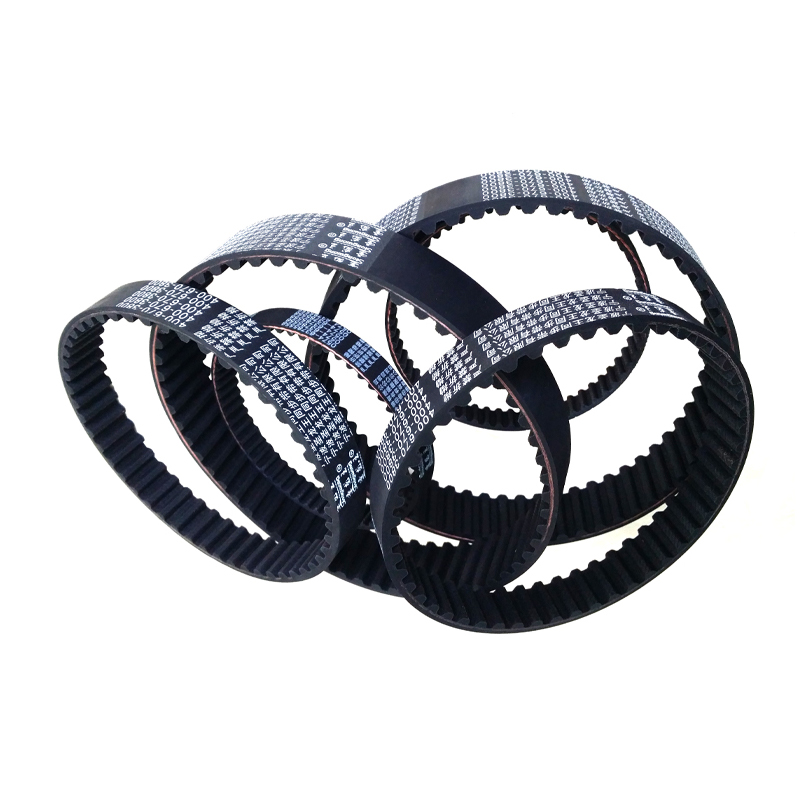
The synchronous pulley — also called a synchronous wheel, timing pulley, or toothed pulley — is fundamentally different from the first three types. It is not primarily designed for mechanical advantage or load lifting. Instead, its purpose is precise, slip-free power and motion transmission between rotating shafts. The pulley's toothed profile meshes with a matching toothed (synchronous) belt, creating a positive drive that locks the belt and pulley in exact positional sync at all times.
This makes synchronous pulleys the dominant choice in any application where timing accuracy, speed ratio precision, and positional repeatability are non-negotiable — such as CNC machines, 3D printers, automotive engine timing systems, and robotic actuators.
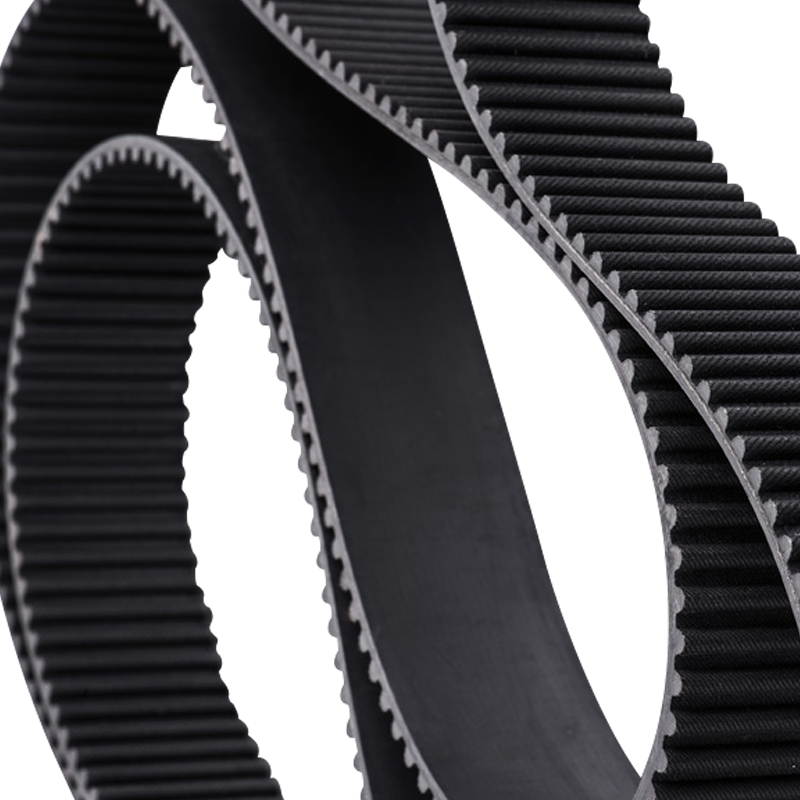
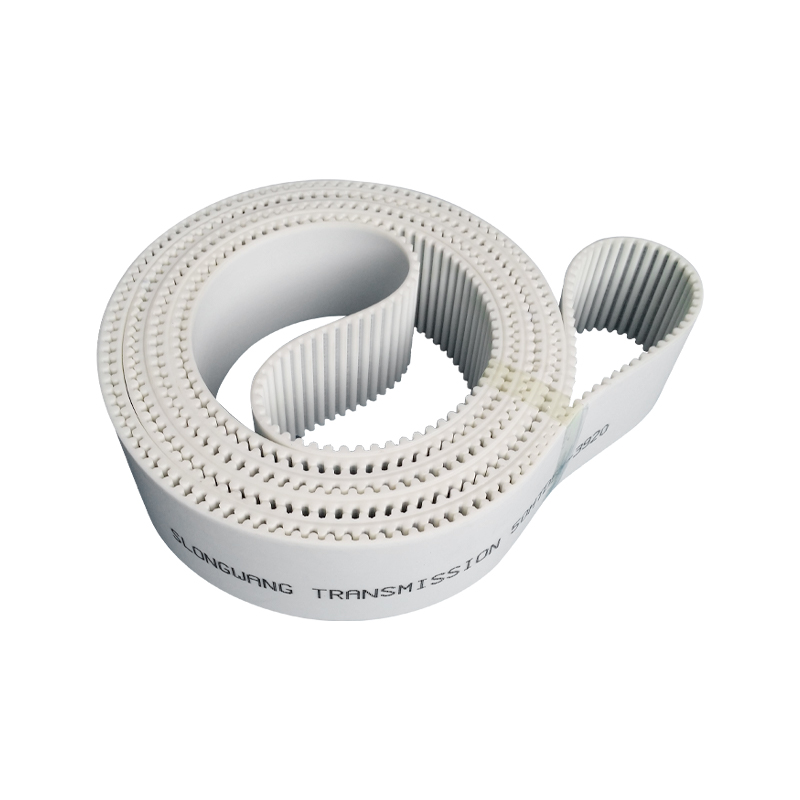
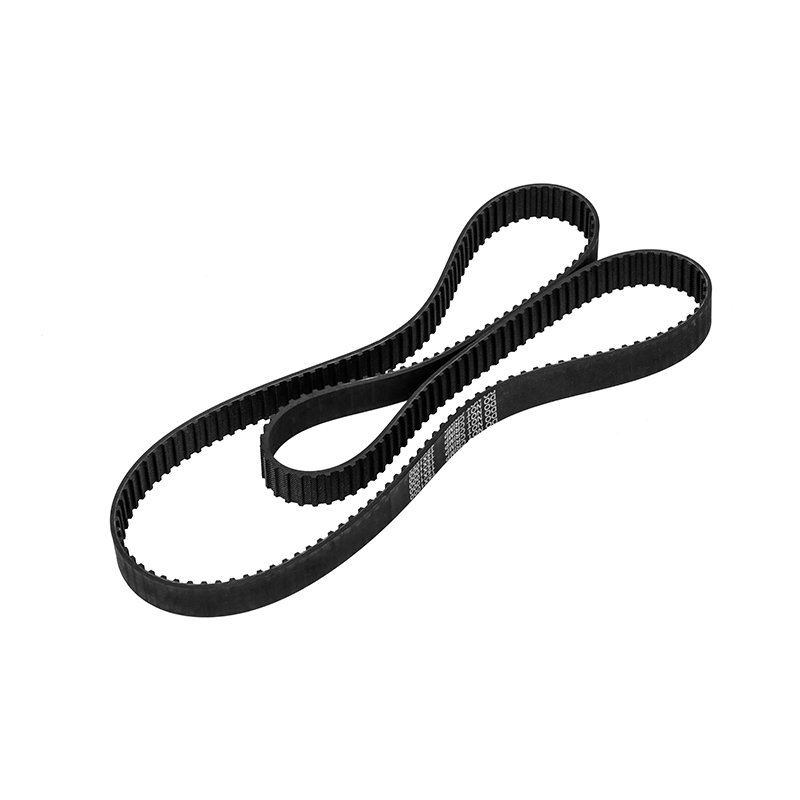
The teeth on the pulley rim interlock with the corresponding grooves on the synchronous belt. As the drive pulley rotates, each tooth positively engages a belt groove in sequence, pulling the belt forward without any possibility of slippage. The driven pulley receives this motion through the same tooth-groove engagement on its side, rotating at a speed determined precisely by the tooth count ratio between the two pulleys.
Speed ratio = Driver pulley tooth count ÷ Driven pulley tooth count. For example, a 20-tooth driver paired with a 40-tooth driven pulley produces a 2:1 speed reduction with exactly double the torque output — with zero slip error at any load within the belt's rated capacity.
Synchronous pulleys are manufactured to match specific belt tooth profiles. The most widely used standards include:
Synchronous wheel material selection directly affects durability, weight, cost, and noise characteristics:
The table below summarizes the defining characteristics of each pulley type to help with selection:
| Pulley Type | Mechanical Advantage | Slip | Primary Function | Typical Use |
|---|---|---|---|---|
| Fixed Pulley | 1:1 | Possible | Change force direction | Flagpoles, crane sheaves |
| Movable Pulley | 2:1 | Possible | Reduce lifting force | Construction hoists, gym cables |
| Compound Pulley | Variable (2:1–6:1+) | Possible | Multiply force greatly | Marine rigging, heavy cranes |
| Synchronous Pulley | Defined by tooth ratio | Zero (positive drive) | Precise speed/position sync | CNC machines, 3D printers, engines |
V-belt and flat belt pulleys rely on friction between the belt and pulley surface to transmit power. This friction-based drive is adequate for many applications but introduces fundamental limitations that synchronous wheels eliminate entirely.
| Parameter | Synchronous Pulley | V-Belt Pulley | Flat Belt Pulley |
|---|---|---|---|
| Slip | Zero | 1–3% | 1–5% |
| Efficiency | 97–99% | 93–97% | 95–98% |
| Lubrication needed | No | No | Sometimes |
| Speed ratio accuracy | Exact | Approximate | Approximate |
| Timing / positioning | Precise | Not possible | Not possible |
| Initial tension required | Low | High | High |
| Bearing load | Lower | Higher | Higher |
The lower initial tension requirement of synchronous drive systems is a significant practical benefit — it reduces radial shaft and bearing loads by 30–50% compared to equivalent V-belt drives, extending shaft and bearing service life substantially.
The synchronous pulley's combination of zero slip, high efficiency, and precise timing makes it indispensable across a wide range of industries and equipment types.
The camshaft timing belt drive is one of the most critical synchronous pulley applications. The crankshaft synchronous wheel drives the camshaft wheel at exactly 2:1 speed ratio (the camshaft rotates once for every two crankshaft revolutions) with zero tolerance for timing error. A slip of even a few degrees causes valve-piston interference, potentially destroying the engine. GT or HTD profile pulleys paired with fiber-reinforced rubber belts are used in virtually every modern combustion engine.
Axis drives in CNC machines translate motor rotation into precise linear movement via ballscrew or rack mechanisms. A synchronous pulley drive between the servo motor and ballscrew maintains exact positional correspondence — a machine cutting at 10,000 mm/min cannot tolerate even 0.1 mm of belt slip. GT2 and GT3 profile aluminum pulleys are the standard in professional CNC routers because of their minimal backlash and high tooth engagement count.
CoreXY and Cartesian 3D printer motion systems rely entirely on synchronous pulleys for X, Y, and Z axis movement. The print head position is calculated based on precise motor step counts, with GT2 pulleys (2 mm pitch) being universal in consumer and professional FDM printers. Any backlash or slip in these pulleys directly degrades dimensional accuracy and produces visible print artifacts such as ringing or layer offset.
Industrial robot joints, collaborative robot (cobot) arms, and automated assembly equipment use synchronous wheels to transmit precise angular position from servo motors to output shafts and end-effectors. In a 6-axis robot, every joint must hold position to within fractions of a degree — a requirement that only synchronous drives can reliably satisfy in belt-driven stages.
Register accuracy in multi-color printing presses and label applicators depends on synchronizing multiple rollers and print heads to within fractions of a millimeter. HTD and L-series synchronous pulleys drive these systems at speeds up to 3,000 rpm while maintaining phase accuracy across all driven axes simultaneously.
Choosing the correct synchronous wheel requires evaluating several interdependent parameters. Getting any one of them wrong leads to premature belt wear, tooth jumping, or inadequate power transmission.
Even the best synchronous wheel performs poorly if installed incorrectly. These practices ensure reliable, long-lasting operation:

Model:
Model:
Model:
Model:
Model:

No. 6, Longrui Middle Road, Longzhen Avenue, Longshan Town, Cixi City, Ningbo City, Zhejiang Province, China
Tel: +86-400-670-3800
Tel: +86-574-58967770
Phone: +86-18867628822
FAX: +86-574-63990099
Email: llm@cn-slw.com