
 Inquiry

 English
 中文简体
中文简体
Industry News
Home / News / Industry News / The Ultimate Guide to Synchronous Belts: High-Efficiency Power Transmission with Zero Slip
2026-06-24
Content
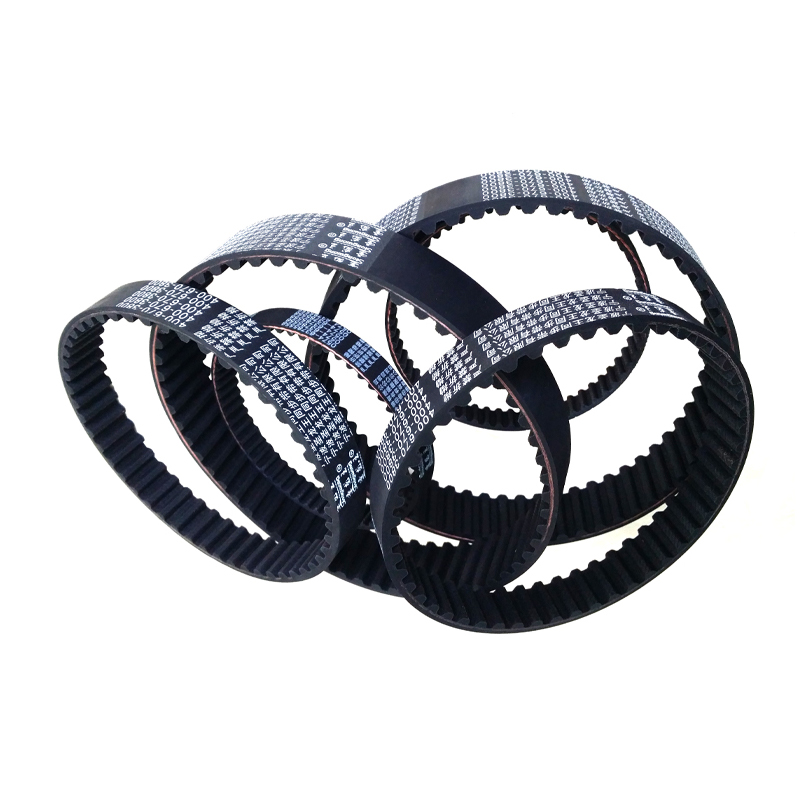
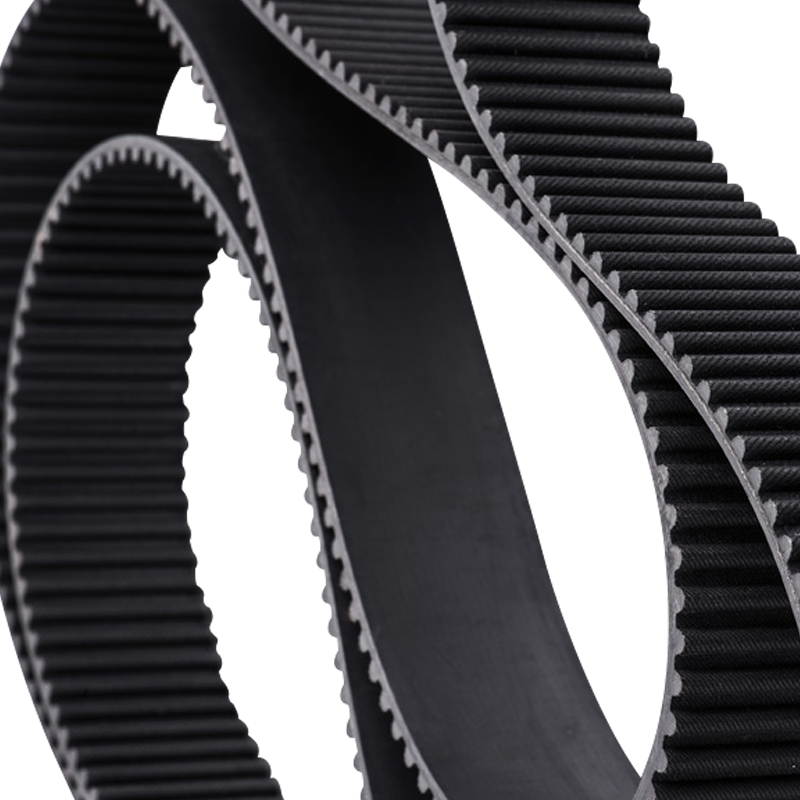
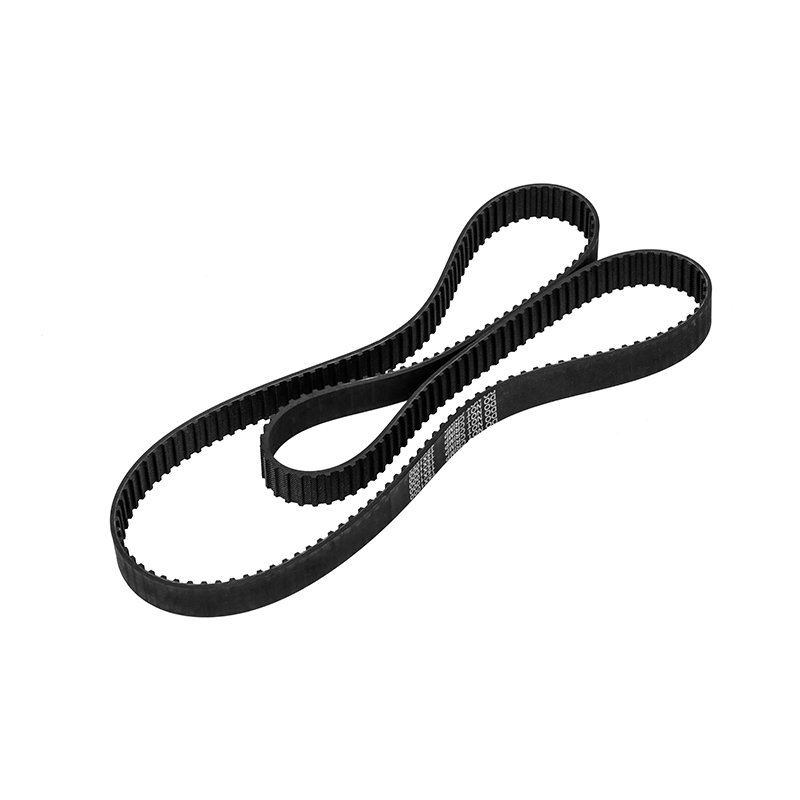
A synchronous belt — also called a timing belt or toothed belt — is a positive-drive power transmission component that transfers rotational motion between shafts with zero slip and precise positional accuracy. Unlike V-belts or flat belts that rely on friction, synchronous belts use interlocking teeth that mesh with matching sprocket grooves, guaranteeing a fixed speed ratio between driver and driven pulleys at all times.
They are the preferred choice wherever timing accuracy, high efficiency (typically 98–99%), and low maintenance are required — from automotive engine valve timing and CNC machine tool axes to medical robotics and food processing conveyors. This guide covers how synchronous belts work, the major profile standards, material options, selection criteria, and maintenance best practices.
The operating principle of a synchronous belt is fundamentally different from friction-based drives. The belt body wraps around toothed sprockets (also called pulleys or gears), and the teeth on the inner face of the belt engage positively with the sprocket grooves. Because the teeth cannot slip, the angular relationship between the two sprockets is fixed by the tooth count on each sprocket — not by tension or surface friction.
Because the speed ratio is determined purely by tooth count, a synchronous belt drive with a 20-tooth driving sprocket and a 40-tooth driven sprocket will always produce exactly a 2:1 reduction, regardless of load, speed, or tension variation.
Tooth profile is the single most important dimensional characteristic of a synchronous belt. Profiles are standardized globally, but multiple competing standards exist. Mixing profiles or standards will cause interference, rapid wear, or belt failure.
| Profile | Standard | Pitch Range | Tooth Shape | Load Capacity | Typical Use |
|---|---|---|---|---|---|
| MXL / XL / L / H / XH / XXH | ANSI / RMA (Imperial) | 2.032–12.7 mm | Trapezoidal | Low–High | Office machines, light industrial |
| T2.5 / T5 / T10 / T20 | DIN 7721 (Metric) | 2.5–20 mm | Trapezoidal | Low–High | European industrial, automation |
| AT3 / AT5 / AT10 / AT20 | DIN (Modified metric) | 3–20 mm | Modified trapezoidal | Medium–High | Servo drives, high-precision axes |
| HTD (3M / 5M / 8M / 14M) | ISO 13050 | 3–14 mm | Curvilinear (round) | Medium–Very High | Automotive, heavy industrial |
| GT2 / GT3 (2M / 3M / 5M) | Gates PowerGrip GT | 2–5 mm | Curvilinear (modified) | Medium–High | 3D printers, robotics, CNC |
| RPP / STPD (S3M / S5M / S8M) | ISO 13050 / Brecoflex | 3–14 mm | Curvilinear (optimized) | High–Very High | High-load servo, linear motion |
The shift from trapezoidal to curvilinear (round) tooth profiles — represented by HTD and GT profiles — was driven by a critical weakness of trapezoidal teeth: under high load, the sharp corners concentrate stress, causing premature tooth shear. Curvilinear profiles distribute contact stress more evenly across the full tooth flank, achieving up to 40% higher torque capacity at the same pitch and width compared to trapezoidal equivalents.
Material selection determines operating temperature range, chemical resistance, oil tolerance, elongation under load, and ultimately service life. The two dominant body materials are neoprene and polyurethane, with EPDM used in specialized automotive applications.
Neoprene is the traditional material for synchronous belts and remains the most widely used in general industrial applications. Key characteristics:
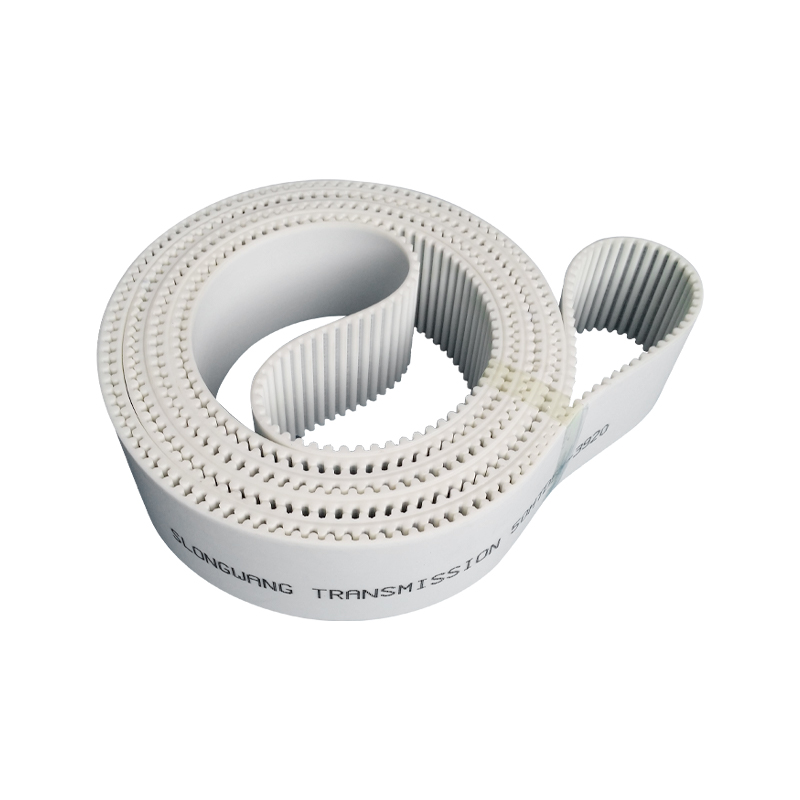
Polyurethane belts are injection-molded around steel or aramid cord, enabling tighter dimensional tolerances and superior surface quality. They are the preferred choice for precision motion, food processing, and medical applications:
The cord material governs how much the belt stretches under tension load, directly affecting positioning accuracy and the frequency of retensioning:
Understanding where synchronous belts outperform — and underperform — competing drive systems is essential for correct system design.
| Criterion | Synchronous Belt | V-Belt | Roller Chain | Gear Drive |
|---|---|---|---|---|
| Speed ratio accuracy | Exact (no slip) | ~1–3% slip | Exact | Exact |
| Efficiency | 98–99% | 95–98% | 97–99% | 96–99% |
| Lubrication required | No | No | Yes | Yes |
| Noise level | Low | Low–Medium | Medium–High | Low–Medium |
| Center distance flexibility | High | High | High | Fixed |
| Bearing load (shaft force) | Low–Medium | High | Medium | Medium–High |
| Maintenance interval | Long | Medium | Short–Medium | Long |
| Overload protection | Limited (tooth jump) | Yes (slip) | No | No |
The most important trade-off: synchronous belts require precise initial tension and shaft alignment. Unlike V-belts, which tolerate some misalignment through slip, a synchronous belt running on misaligned sprockets will generate uneven tooth wear and edge loading, dramatically shortening service life.
The combination of zero slip, high efficiency, low noise, and lubrication-free operation makes synchronous belts suitable across an exceptionally wide range of industries:
The most volume-intensive application is the engine timing belt, which synchronizes crankshaft and camshaft rotation to control valve timing. A typical automotive timing belt replacement interval is 60,000–100,000 miles. Failure in an interference engine causes immediate valve-piston contact and catastrophic engine damage.
Synchronous belts drive axis motion in CNC routers, laser cutters, and 3D printers — particularly the GT2 and GT3 profiles at 2mm and 3mm pitch. Belt-driven axes achieve positioning repeatability of ±0.05–0.1 mm in well-tensioned systems, making them cost-effective for medium-precision applications where ballscrews would be over-specified.
AT and S-profile belts with steel cords are used in collaborative robot joints, delta robot arms, and SCARA robots. Their low inertia compared to gearboxes allows faster acceleration and reduces servo motor sizing requirements.
Polyurethane synchronous belts in FDA-compliant white or blue (detectable) formulations drive conveyors, packaging lines, and filling machines in clean environments where chain lubrication would contaminate product.
Registration accuracy in high-speed printing requires exact synchronization between print heads and substrate feed — synchronous belts at L or H pitch handle speeds up to 40 m/s in high-performance configurations.
Proper belt selection requires working through a sequence of parameters. Skipping steps — particularly service factor and minimum tooth-in-mesh calculations — is the leading cause of premature belt failure in field installations.
Most major belt manufacturers — Gates, Bando, Mitsuboshi, ContiTech, and Habasit — provide free online or downloadable selection software that automates steps 1–6 once design inputs are entered.
Incorrect installation is responsible for the majority of synchronous belt failures that occur before the designed service life. Both under-tensioning and over-tensioning cause distinct failure modes.
An under-tensioned synchronous belt will ratchet — the teeth skip over sprocket grooves under load. This generates sudden shock loads on the remaining meshed teeth, causing rapid tooth shear. Symptoms include a clicking or popping noise under load, inaccurate positioning, and visible tooth root cracking.
Excessive tension increases radial shaft loads on both driver and driven sprocket bearings, shortening bearing life. A 10% increase in belt tension above the recommended value can reduce bearing life by approximately 25–30% due to the cubic relationship between load and bearing fatigue life (L10 life ∝ 1/F³).
Maximum allowable angular misalignment between sprocket faces is typically 0.5° for standard applications and 0.25° for precision servo drives. Parallel offset (axial misalignment) should be kept within 0.5 mm for most industrial applications. Use a straightedge or laser alignment tool across both sprocket faces before tensioning.
Examining a failed synchronous belt provides direct evidence of the root cause. Each failure mode leaves a characteristic pattern:
Synchronous belts are lower-maintenance than chains but are not maintenance-free. A structured inspection schedule prevents unplanned downtime.
Under correct installation and operating conditions, synchronous belt service life typically ranges from 8,000 to 25,000 operating hours in general industrial applications. Automotive timing belts are designed for specific mileage intervals (commonly 60,000–100,000 miles). Belts in high-temperature, chemically aggressive, or heavily shock-loaded environments may see significantly shorter service life — as low as 2,000–4,000 hours — making environment characterization essential during the design phase.
Always replace the sprockets when replacing a worn synchronous belt. Installing a new belt on worn sprockets reduces new belt life by 30–60% due to the mismatched geometry between new belt teeth and the eroded sprocket grooves.

Model:
Model:
Model:
Model:
Model:

No. 6, Longrui Middle Road, Longzhen Avenue, Longshan Town, Cixi City, Ningbo City, Zhejiang Province, China
Tel: +86-400-670-3800
Tel: +86-574-58967770
Phone: +86-18867628822
FAX: +86-574-63990099
Email: llm@cn-slw.com