
 Inquiry

 English
 中文简体
中文简体
Industry News
Home / News / Industry News / How a Timing Belt Works: The Ultimate Guide to Rubber Timing Belt Maintenance and Failure Prevention
2026-07-01
Content
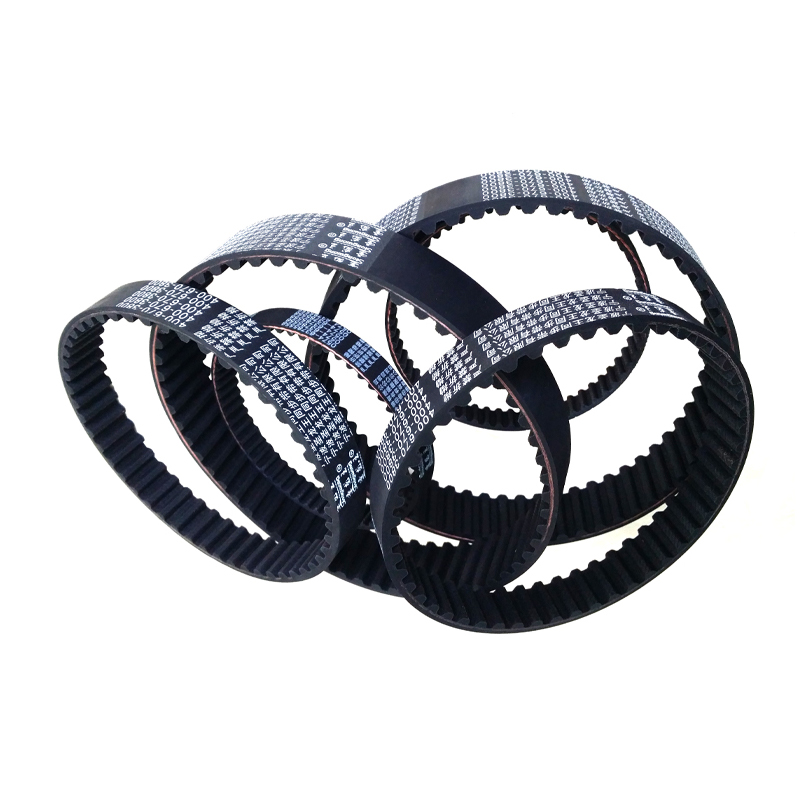
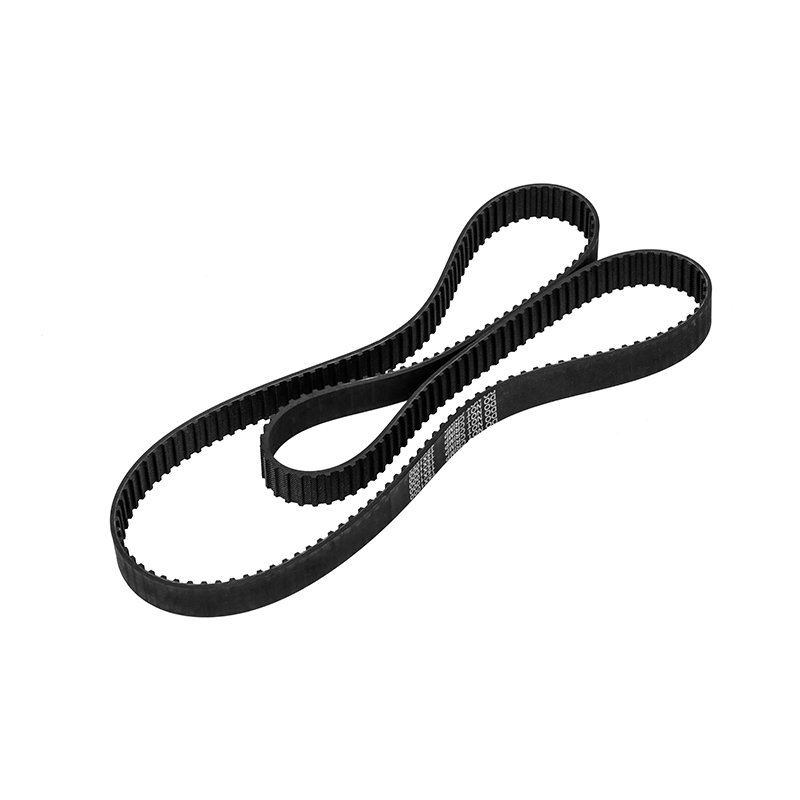
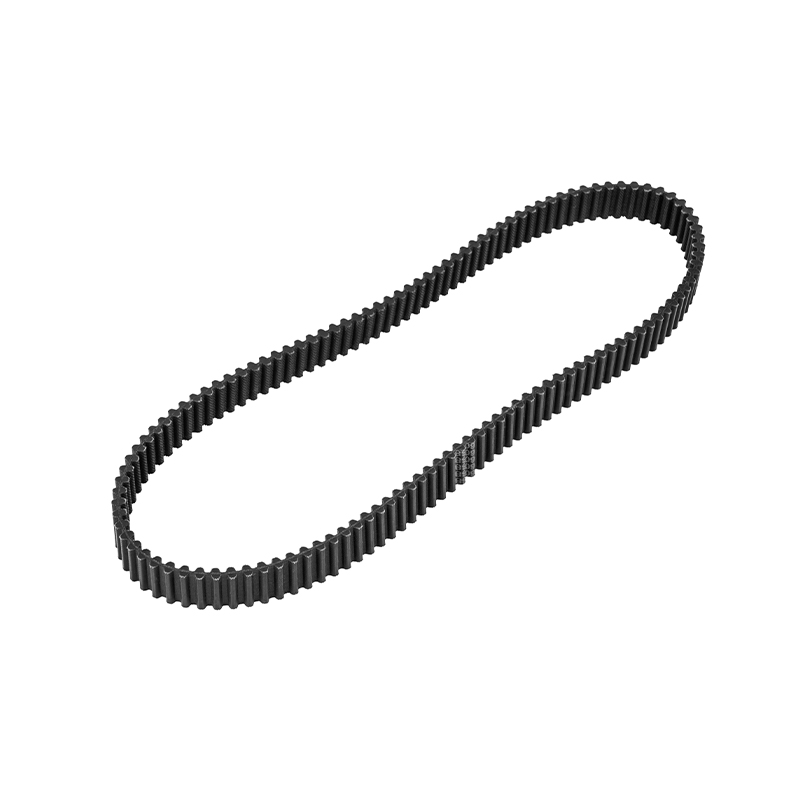
A timing belt works by mechanically linking the engine's crankshaft to its camshaft (or camshafts) using a toothed rubber belt, ensuring the intake and exhaust valves open and close at precisely the right moment relative to piston movement. Because a typical four-stroke engine crankshaft rotates twice for every one rotation of the camshaft, the belt must maintain exact synchronization — even a few degrees of timing error can cause poor performance, and in interference engines, a snapped belt allows pistons and valves to collide, often causing thousands of dollars in engine damage. Most rubber timing belts are engineered to last between 60,000 and 100,000 miles, making scheduled replacement one of the most important preventive maintenance items on any belt-driven engine.
This article explains the mechanics of how a timing belt keeps an engine synchronized, what rubber timing belts are made of, why they eventually fail, and how to know when replacement is due.
Inside the engine, the crankshaft converts the up-and-down motion of the pistons into rotational force, while the camshaft controls the opening and closing of intake and exhaust valves via lobes that push against the valve train. For the engine to run correctly, valve movement must be precisely timed to piston position — valves need to be closed during compression and ignition, and open at the correct points during intake and exhaust strokes.
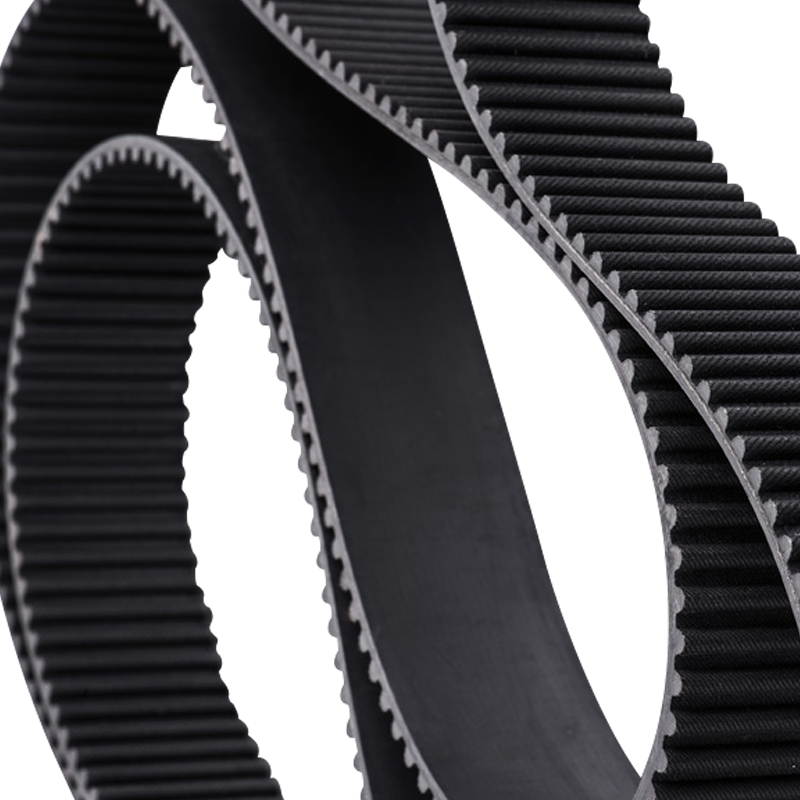
The timing belt physically connects gears (sprockets) on both the crankshaft and camshaft, looping around them so that as the crankshaft turns, the camshaft turns in exact proportion. Molded teeth on the inside of the belt interlock with matching teeth on the sprockets, preventing the belt from slipping the way a smooth belt would under load, which is what allows the precise timing relationship to hold consistently over thousands of engine revolutions per minute.
A rubber timing belt is a composite component, not a solid piece of rubber. It typically consists of three main layers working together:
This layered construction is what allows a rubber timing belt to run quietly, flex around small-diameter sprockets, and still resist stretching over tens of thousands of miles — a combination that a simple rubber strap without internal reinforcement could not achieve.
| Factor | Rubber Timing Belt | Timing Chain |
|---|---|---|
| Material | Reinforced rubber | Metal links |
| Typical Lifespan | 60,000–100,000 miles | Often lasts engine's lifetime |
| Noise Level | Quiet | Slightly louder |
| Lubrication Needed | No (dry-running) | Yes (engine oil bath) |
| Replacement Cost | Lower, but scheduled | Higher, but infrequent |
Not all engines respond the same way to a timing belt failure, and understanding which type your vehicle has significantly changes the stakes of a missed replacement interval.
In these engines, the piston's travel path physically overlaps with the space the open valves occupy. If the timing belt breaks or skips teeth, pistons can strike open valves, commonly bending valves, damaging pistons, and sometimes cracking the cylinder head — repairs that frequently cost more than the timing belt job would have cost many times over.
These engines are designed with enough clearance that a broken belt simply causes the engine to stop running without pistons and valves making contact. While less catastrophic, a stranded vehicle and belt replacement labor are still required, so scheduled replacement remains worthwhile regardless of engine type.
Timing belts fail gradually rather than suddenly in most cases, worn down by a combination of predictable stresses:
While many belts fail without obvious warning, several symptoms can indicate a belt nearing the end of its service life:
Because visible symptoms often appear too late to prevent damage, manufacturers' mileage or time-based replacement intervals should be followed proactively rather than waiting for the belt to show obvious signs of failure.
Manufacturer-recommended intervals vary by vehicle but commonly fall between 60,000 and 100,000 miles, or roughly every 5 to 10 years, whichever comes first, since rubber degrades with age even on low-mileage vehicles.
Because accessing the timing belt requires significant labor to remove surrounding components, most technicians recommend replacing several related parts at the same time to avoid paying for that labor twice:
Replacing these components together typically adds a modest amount to the total job cost but avoids a second labor-intensive teardown just a short time later if one of these related parts fails independently.
A timing belt works by keeping the crankshaft and camshaft precisely synchronized through a toothed, reinforced rubber loop, and its layered rubber-and-fiber construction is engineered to hold that precision reliably for tens of thousands of miles before it wears out. Because failure in an interference engine can cause severe internal damage, following the manufacturer's replacement interval — and replacing the tensioner, pulleys, and water pump alongside it — remains far less costly than waiting for warning signs that often don't appear until it's too late.

Model:
Model:
Model:
Model:
Model:

No. 6, Longrui Middle Road, Longzhen Avenue, Longshan Town, Cixi City, Ningbo City, Zhejiang Province, China
Tel: +86-400-670-3800
Tel: +86-574-58967770
Phone: +86-18867628822
FAX: +86-574-63990099
Email: llm@cn-slw.com