
 Inquiry

 English
 中文简体
中文简体
Industry News
Home / News / Industry News / What Is a PU Belt? A Complete Guide to Polyurethane and PU Timing Belts
2026-07-08
Content
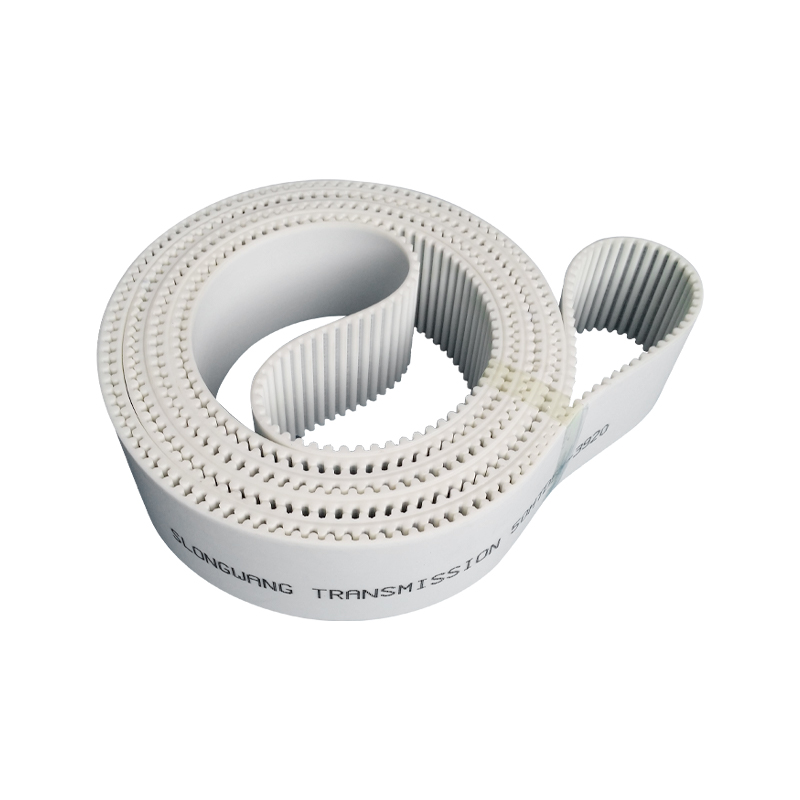
A PU belt is an industrial drive or conveyor belt made from polyurethane (PU), a synthetic polymer prized for its wear resistance, chemical resistance, and load-bearing strength. Most PU belts are thermoplastic polyurethane (TPU), meaning they can be melted, welded, and reshaped, which makes them easy to join into endless loops on-site. A PU timing belt is a specific type of PU belt with molded teeth that mesh with a toothed pulley for slip-free, synchronous motion — typically reinforced with steel or aramid cords and available in standard tooth pitches such as T5, T10, AT10, and HTD 5M/8M.
This article explains what makes PU belts different from rubber or PVC belts, how PU timing belts are constructed, and how to choose the right belt type, cord material, and pitch for a given application.
PU belts are built from thermoplastic polyurethane, a polymer formed from organic units joined by carbamate links. This chemical structure gives PU a combination of properties that few other belt materials match at once: high abrasion resistance, good elasticity, strong load capacity, and resistance to oils, greases, and many industrial chemicals.
Most PU belts fall into two manufacturing types. Cast (molded) polyurethane belts are poured into a mold and cured, producing precise tooth geometry and consistent hardness. Extruded thermoplastic polyurethane belts are formed by pushing molten PU through a die, which is typically used for flat and round belt profiles. Belt hardness is usually specified in Shore A, and standard PU belts commonly fall in the 85–92 Shore A range, noticeably firmer than rubber belts, which typically sit around 60–80 Shore A.
Because PU is thermoplastic, open-ended PU belting can be cut to any length and joined into an endless loop using heat welding or mechanical fasteners — a practical advantage when a conveyor's exact belt length isn't known until the machine is installed.
Choosing between PU, PVC, and rubber usually comes down to how harsh the operating environment is and how much precision the application demands.
| Property | PU Belt | Rubber Belt | PVC Belt |
|---|---|---|---|
| Wear resistance | Excellent | Moderate | Low to moderate |
| Chemical/oil resistance | Strong | Moderate (material-dependent) | Weak to moderate |
| Flexibility | Moderate | High | High |
| Typical service life | Long (2–3x rubber in high-wear use) | Moderate | Shorter, cost-driven choice |
| Best fit | High-precision, food, chemical exposure | Shock absorption, outdoor, heat | Light-duty, cost-sensitive |
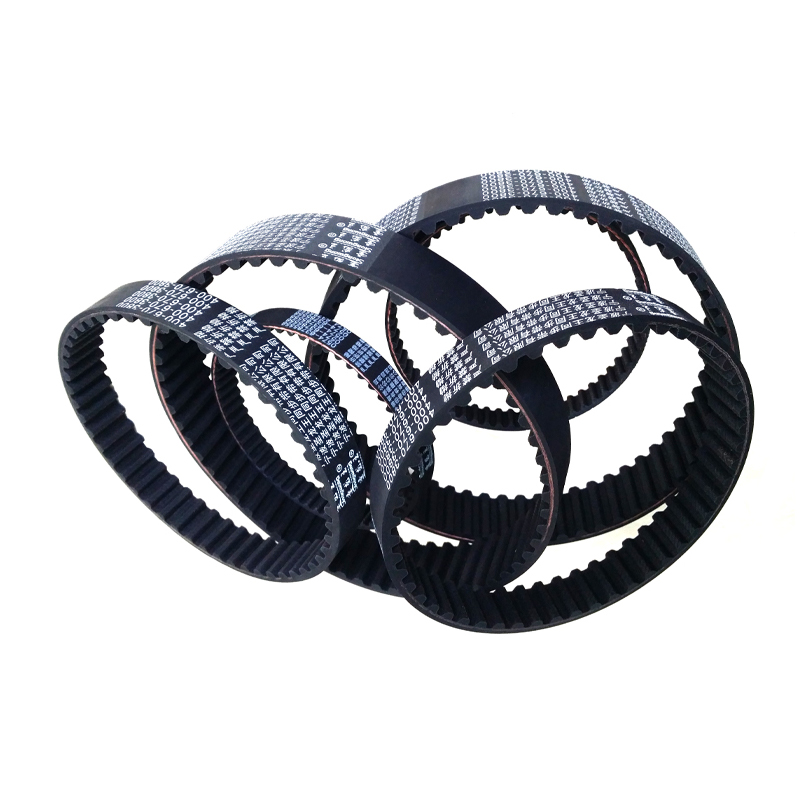
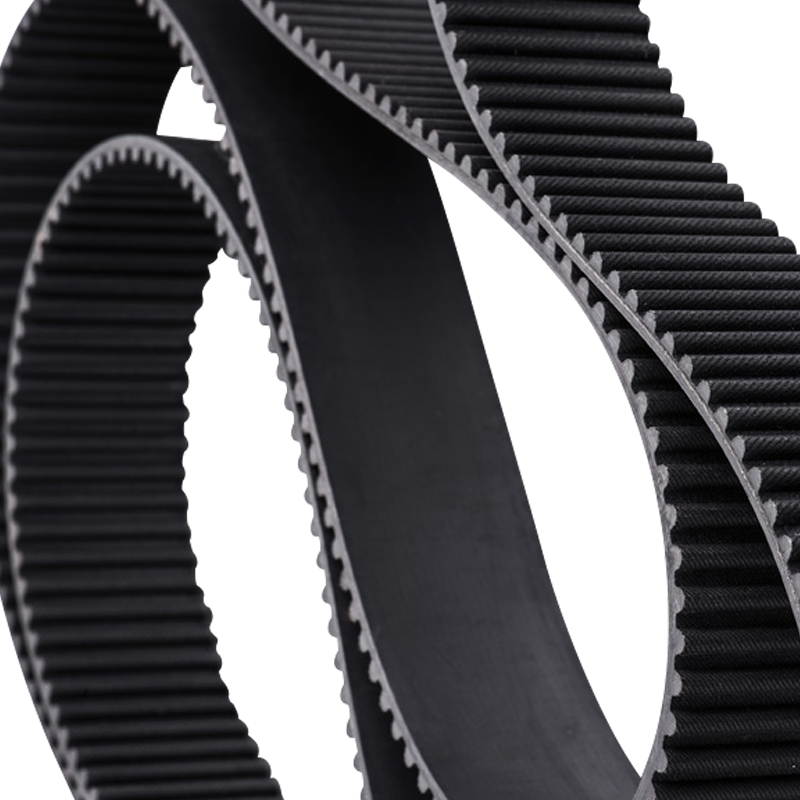
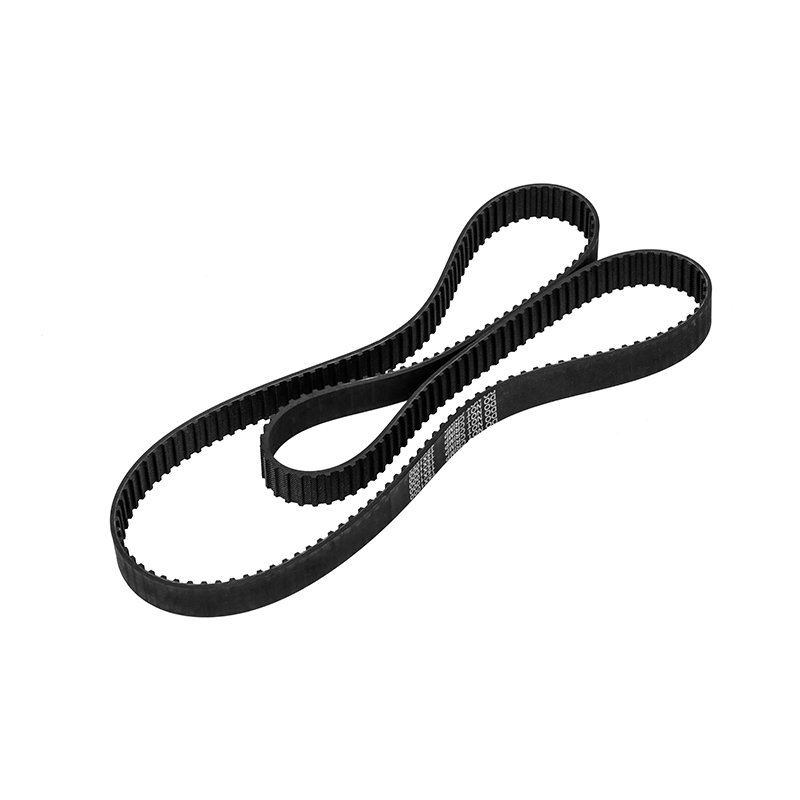
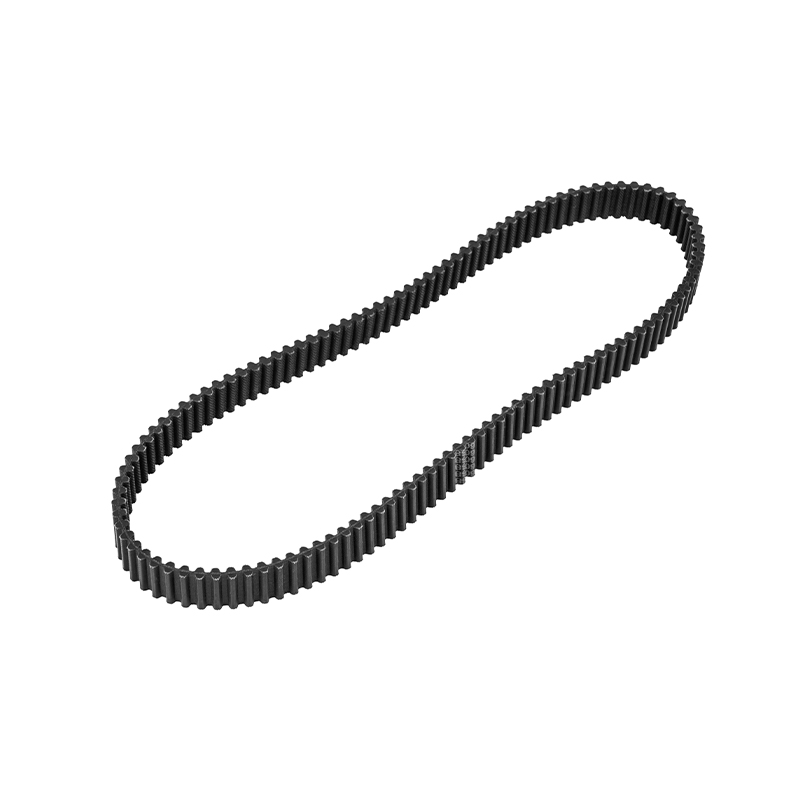
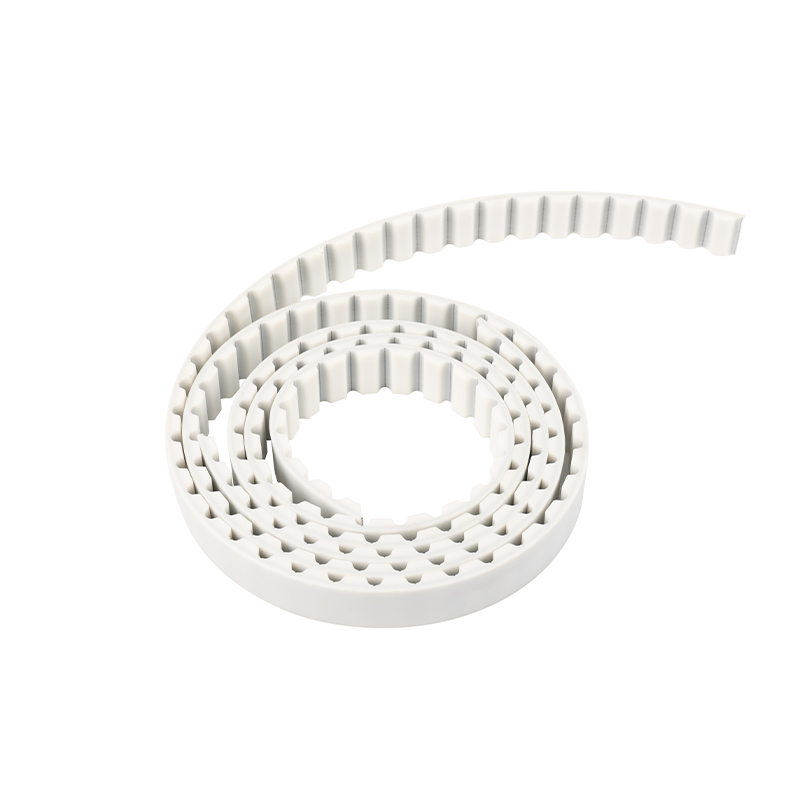
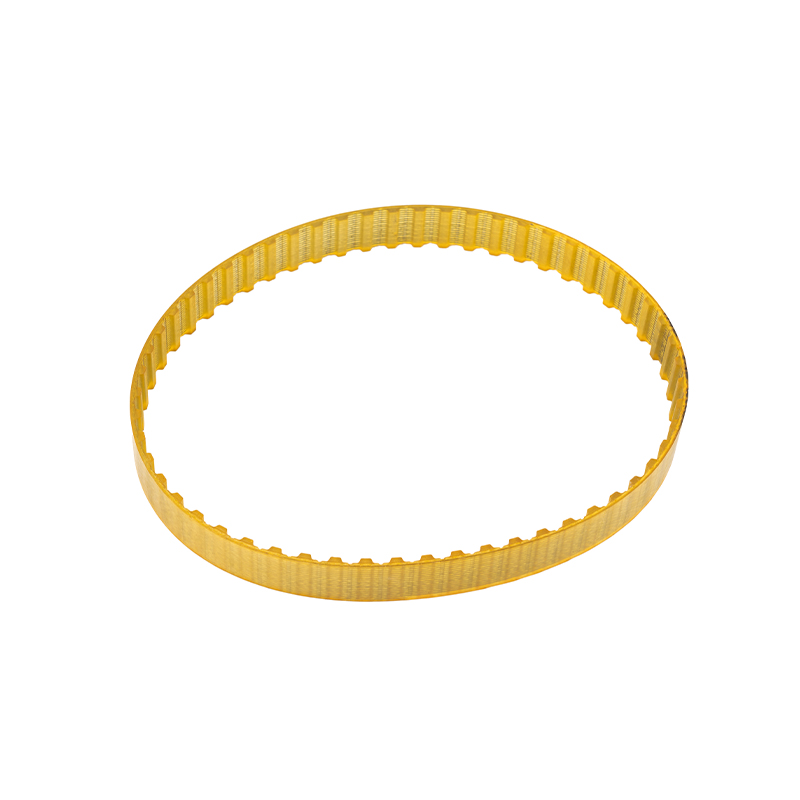
A PU timing belt (also called a PU synchronous belt or PU toothed belt) is a polyurethane belt with molded teeth on the inside surface that engage a matching toothed pulley. Because the teeth mesh directly rather than relying on friction, a timing belt cannot slip the way a flat or V-belt can, which keeps two shafts — or a shaft and a linear axis — in exact rotational or positional sync.
The PU body alone would stretch under load, so nearly every PU timing belt is reinforced with a tension member running along the pitch line. The two most common choices are:
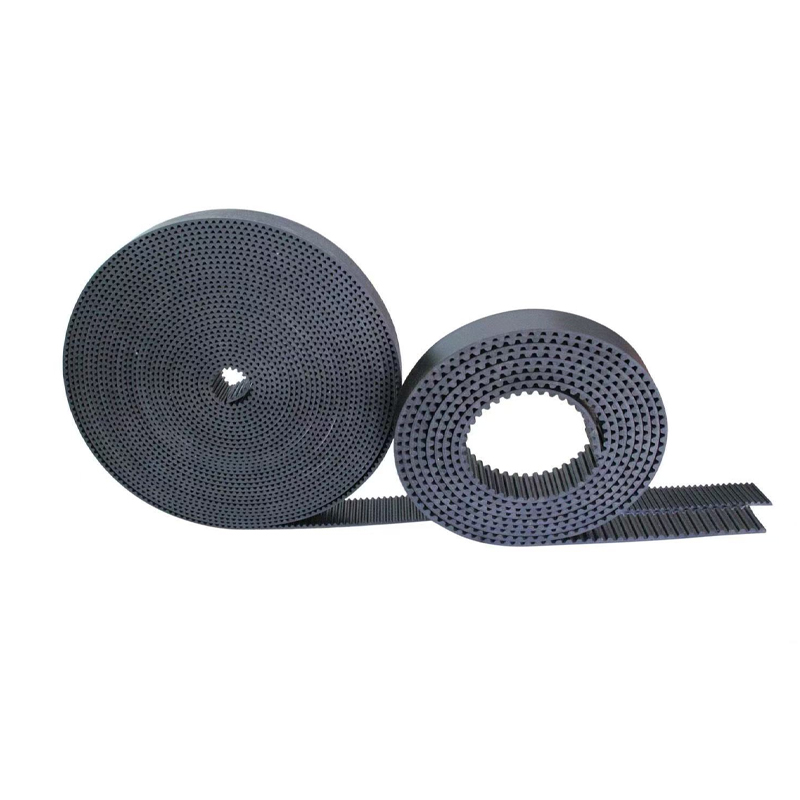
PU timing belts are produced in three main formats: open-ended rolls that are cut and joined on-site for custom-length conveying and positioning systems; endless welded belts, made by joining an open-end belt into a fixed loop; and molded endless belts, cast as a single seamless loop for the highest dimensional accuracy, with some manufacturers reporting production tolerances as tight as ±0.02mm.
Tooth profile and pitch determine which belt fits a given pulley, and mismatching them is one of the most common causes of premature tooth wear. The table below covers the profile families most often specified for PU timing belts.
| Profile Family | Common Pitches | Typical Use |
|---|---|---|
| T / AT (metric trapezoidal) | T5, T10, AT5, AT10, AT20 | General automation, linear positioning, light-to-medium loads |
| HTD (curvilinear) | 3M, 5M, 8M, 14M | Higher torque transmission, smoother tooth engagement |
| GT2 / GT3 (modified curvilinear) | GT2, GT3 | Precision motion control, 3D printers, robotics |
| XL / L / H / XH (imperial trapezoidal) | MXL, XL, L, H, XH, XXH | Legacy and replacement drives on older equipment |
Rubber (neoprene or EPDM) timing belts remain common, but PU and rubber timing belts diverge sharply enough in performance that the choice usually isn't close once the application is defined.
PU timing belts run harder — typically 85–92 Shore A against roughly 60–80 Shore A for rubber — which gives them higher tooth shear strength, less permanent stretch over time, and tighter positioning accuracy, since the teeth engage the pulley with almost no compliance. This makes PU the stronger choice for high-precision, high-load, or high-speed drives such as pick-and-place robots, CNC axes, and labeling machines, where rubber's gradual elongation can introduce timing drift over months of operation.
Rubber keeps two advantages that matter in specific environments. It handles higher continuous operating temperatures — rubber timing belts are commonly rated to roughly -35°C to +80°C (short-term up to +115°C), compared to a typical PU range of -30°C to +80°C (short-term up to +100–110°C) — and it resists hydrolysis better, since prolonged exposure to steam or high humidity above 60°C can degrade standard PU at the molecular level. For washdown or steam-heavy food processing lines, this means a hydrolysis-resistant PU grade, or a rubber belt, is usually the safer specification.
The application categories below account for most of the demand for PU timing belts across industry, and each draws on a different combination of the material's core strengths.
Specifying a PU timing belt correctly the first time avoids the two most common failure modes: premature tooth wear from an undersized belt, and slipping or drift from the wrong cord or pitch selection. Confirm the following before ordering:
| Specification Point | Why It Matters |
|---|---|
| Tooth pitch and profile | Must match the pulley exactly to avoid tooth jump or accelerated wear |
| Cord material (steel vs. aramid) | Determines minimum pulley diameter, stretch, and moisture sensitivity |
| Belt format (open-end vs. molded endless) | Open-end suits custom lengths; molded endless suits fixed, high-precision drives |
| Operating temperature range | Standard PU belts are rated roughly -30°C to +80°C; confirm against process conditions |
| Moisture/steam exposure | Standard PU can hydrolyze above 60°C in wet environments; a hydrolysis-resistant grade may be required |
| Food or hygiene compliance | Confirms whether an FDA or EU 10/2011-compliant grade is needed |

Model:
Model:
Model:
Model:
Model:

No. 6, Longrui Middle Road, Longzhen Avenue, Longshan Town, Cixi City, Ningbo City, Zhejiang Province, China
Tel: +86-400-670-3800
Tel: +86-574-58967770
Phone: +86-18867628822
FAX: +86-574-63990099
Email: llm@cn-slw.com