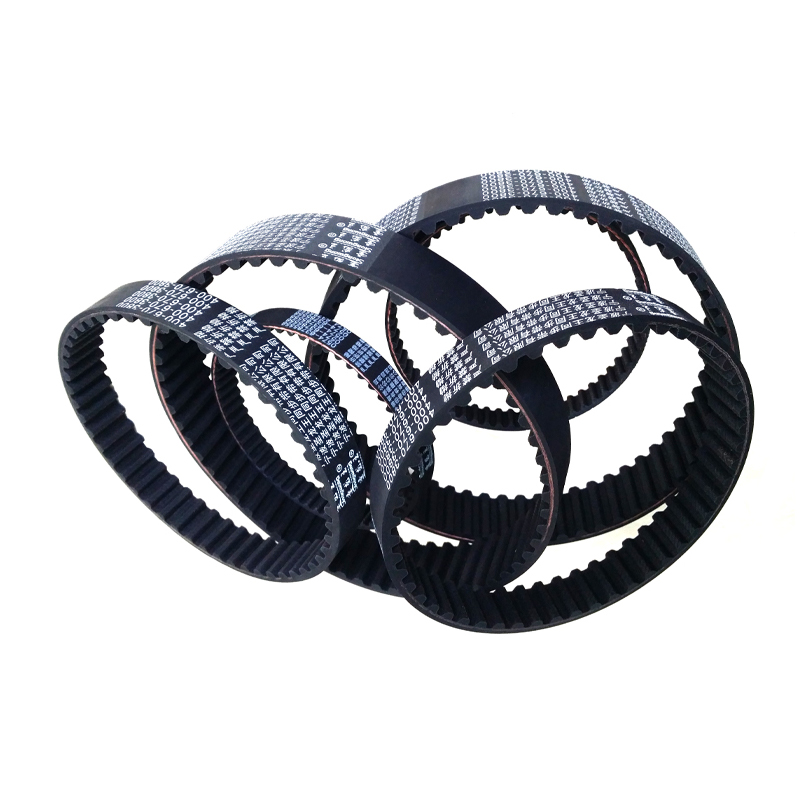
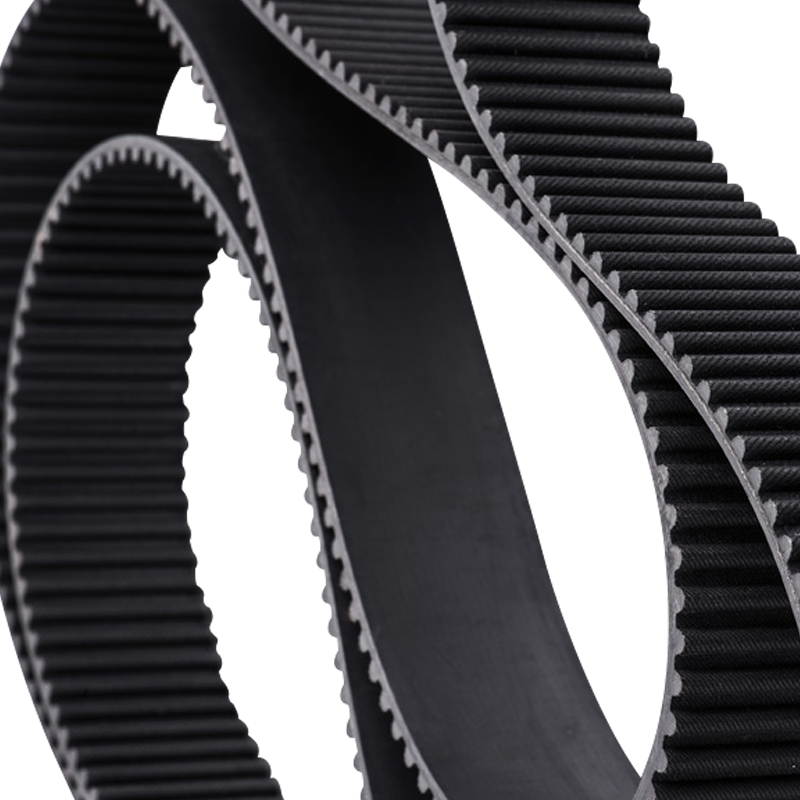
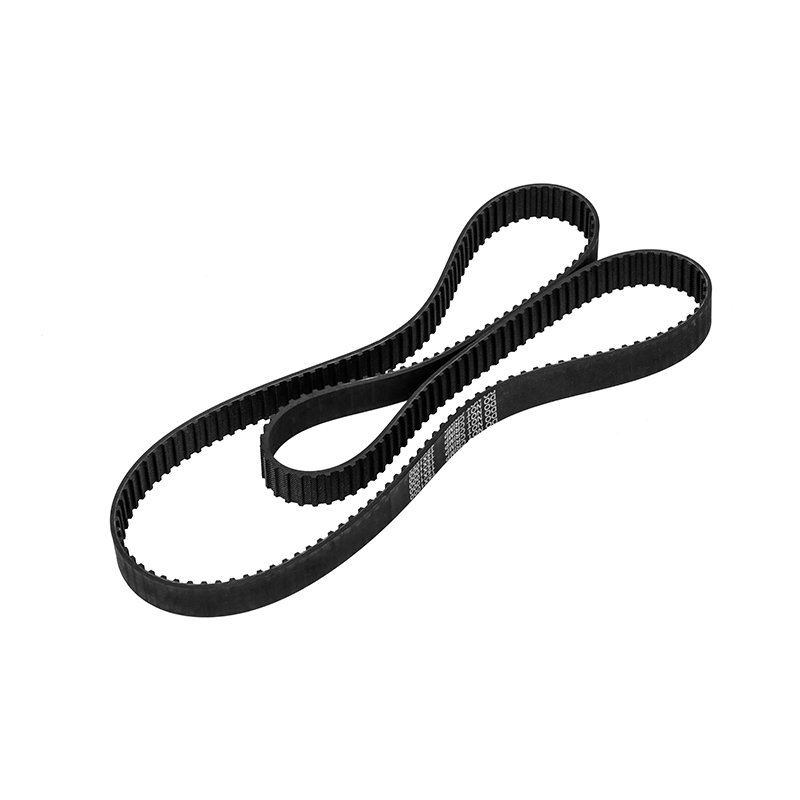
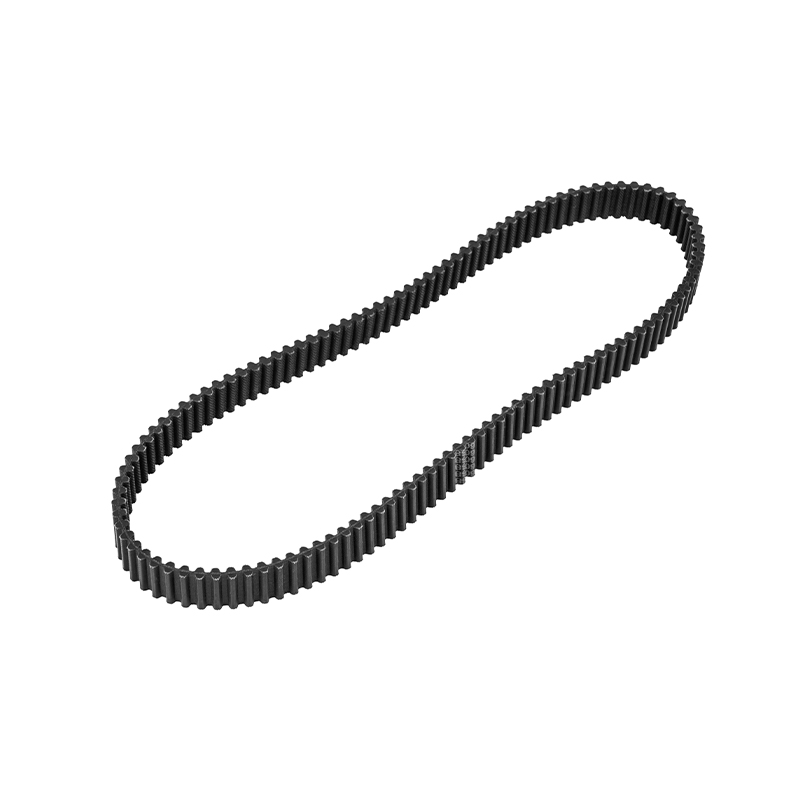
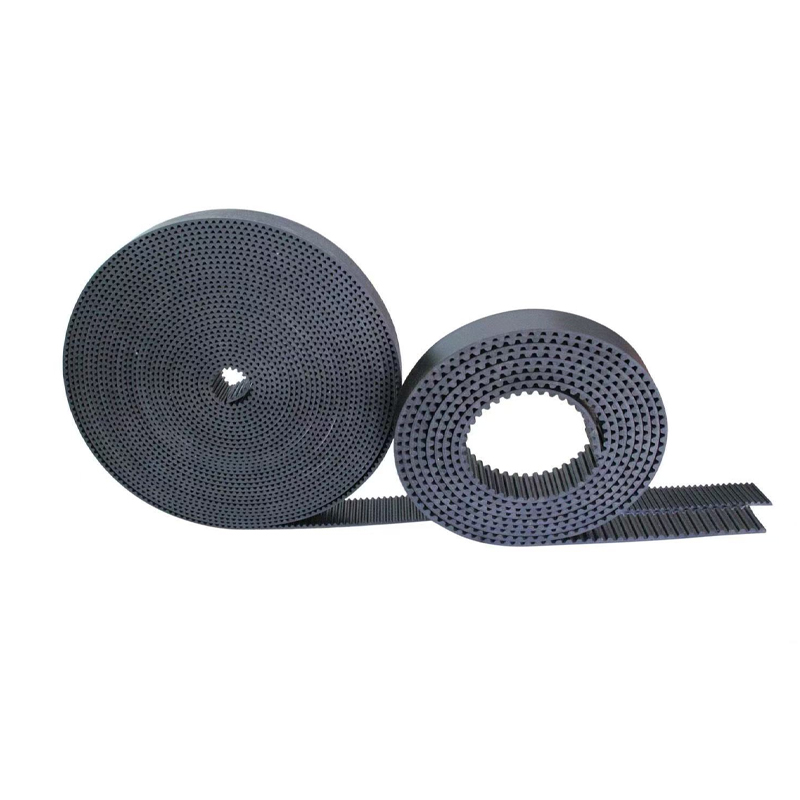
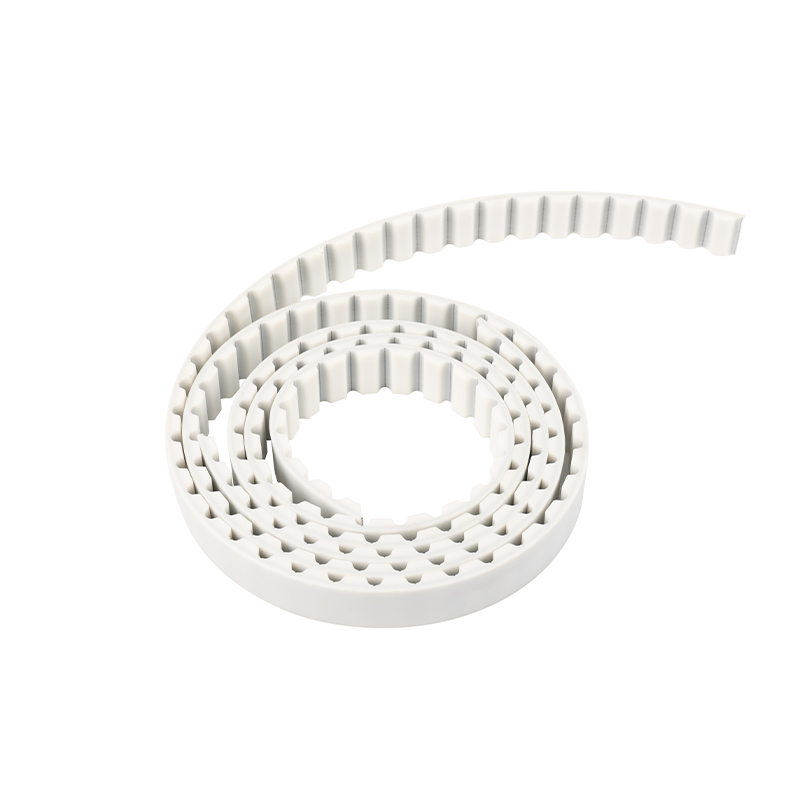
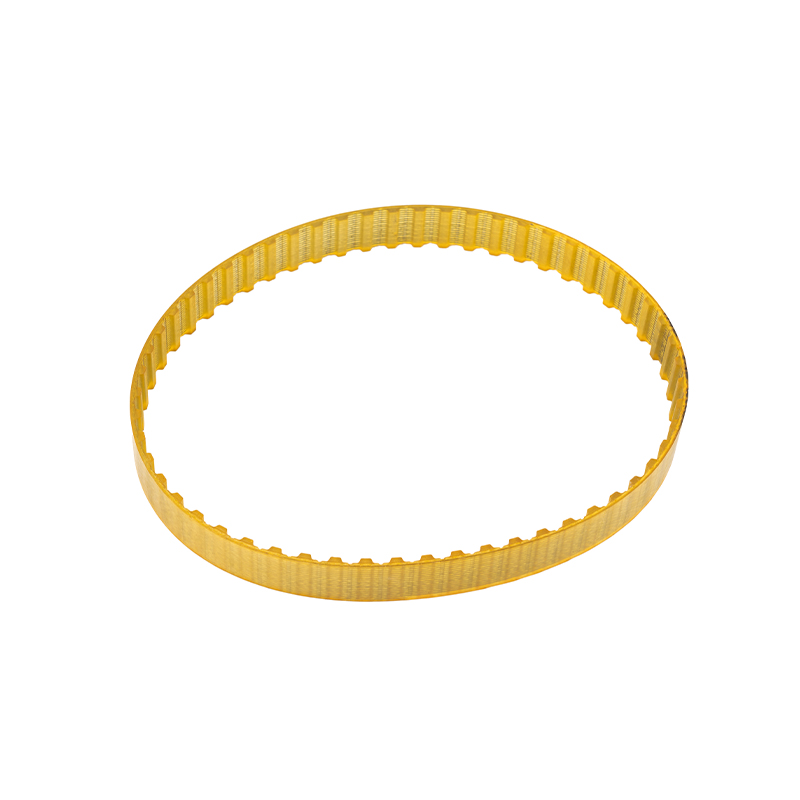
A rubber timing belt is a toothed power transmission belt that synchronizes the rotation of two or more shafts with precise positional accuracy. Unlike V-belts or flat belts that transmit power through friction, timing belts engage positively with matching sprocket teeth — delivering zero slip, consistent speed ratios, and repeatable positioning in every operating cycle. They are the backbone of engine valve timing systems, CNC machine axes, robotic actuators, packaging lines, and hundreds of other precision motion applications.
The global timing belt market exceeded $6.8 billion in 2023, driven by automotive production volumes, factory automation expansion, and the growing demand for quiet, oil-free power transmission in industrial and medical equipment. This guide covers everything engineers, maintenance technicians, and buyers need to know about rubber timing belts — from tooth profile selection and material properties to replacement intervals and failure diagnosis.
How Rubber Timing Belts Work
A rubber timing belt operates through positive engagement between the belt's molded teeth and the grooves of toothed sprockets (also called timing pulleys). When the drive sprocket rotates, each tooth enters a corresponding pulley groove, pulling the belt and transferring torque to the driven sprocket at a fixed speed ratio determined by the sprocket tooth count.
The belt's construction combines multiple functional layers:
- Tensile cord (load-carrying layer): High-strength fibers — typically fiberglass, aramid (Kevlar), or carbon fiber — embedded in the belt body that resist elongation under load. The tensile cord is the primary determinant of belt load rating and dimensional stability.
- Elastomeric body: The rubber or polyurethane matrix that encapsulates the tensile cord, forms the teeth, and transmits shear loads between cord and tooth root.
- Tooth facing (on rubber belts): A nylon fabric laminate bonded to the tooth surface that reduces friction against the pulley groove, improves wear resistance, and reduces noise.
- Belt back: The outer surface used for back-drive or idler contact. May be smooth or profiled for specific applications.
Because the drive is positive — not frictional — rubber timing belts maintain angular position accuracy to within ±0.5° or better on well-aligned systems, making them the preferred choice over chains or V-belts wherever synchronization matters more than raw torque capacity.
Timing Belt Tooth Profiles: Choosing the Right Geometry
Tooth profile is the single most important specification in timing belt selection. Different profiles have been developed to address specific limitations of earlier designs — primarily tooth jumping under shock loads and stress concentration at the tooth root.
Comparison of common rubber timing belt tooth profiles by geometry, load capacity, and application
| Profile |
Tooth Shape |
Load Capacity |
Noise Level |
Primary Applications |
| MXL / XL / L / H / XH / XXH |
Trapezoidal |
Low–Medium |
Moderate–High |
Light machinery, office equipment, legacy systems |
| HTD (3M / 5M / 8M / 14M) |
Curvilinear (round) |
Medium–High |
Low–Moderate |
Automotive, industrial drives, general automation |
| GT2 / GT3 (2M / 3M / 5M) |
Modified curvilinear |
High |
Very Low |
CNC machines, 3D printers, precision positioning |
| T2.5 / T5 / T10 / T20 |
Trapezoidal (metric) |
Low–Medium |
Moderate |
European machinery, conveyors, light automation |
| AT5 / AT10 / AT20 |
Modified trapezoidal |
Medium–High |
Low |
High-torque conveyors, linear drives |
| STD (S2M / S3M / S5M / S8M) |
Semicircular |
High |
Very Low |
Servo drives, robotics, medical equipment |
Trapezoidal vs. Curvilinear Profiles
Traditional trapezoidal profiles (XL, L, H series) have straight-sided teeth with sharp root corners — stress concentration points that limit load capacity and make them prone to tooth shear under shock loads. Curvilinear profiles (HTD, GT, STD) use rounded tooth geometry that distributes load more evenly across the full tooth contact area, increasing load capacity by 30–50% at equivalent pitch compared to trapezoidal designs. For new designs, curvilinear profiles are recommended in virtually all medium to high-load applications.
Rubber Timing Belt Materials and Compound Selection
The elastomeric compound used in the belt body determines its temperature range, chemical resistance, flexibility, and fatigue life. Two primary material families dominate the timing belt market:
Neoprene (Chloroprene Rubber — CR)
Neoprene is the traditional and still most widely used material for rubber timing belts, particularly in automotive and general industrial applications. Key properties:
- Temperature range: -40°C to +100°C (-40°F to +212°F) continuous; short-term peaks to 120°C.
- Oil resistance: Good — suitable for environments with incidental oil mist but not direct immersion.
- Flexibility: Excellent — neoprene remains flexible at low temperatures, enabling use in cold storage and outdoor equipment.
- Cost: Lower than HNBR or polyurethane — the standard choice where temperature and chemical demands are moderate.
HNBR (Hydrogenated Nitrile Butadiene Rubber)
HNBR has become the dominant material for automotive engine timing belts due to its superior performance at elevated temperatures and in oil-contaminated environments:
- Temperature range: -30°C to +150°C (-22°F to +302°F) continuous — critical for underhood automotive applications where belt temperatures regularly exceed 120°C.
- Oil resistance: Excellent — significantly better than neoprene, maintaining mechanical properties when exposed to engine oil splashback.
- Tensile strength: 15–20% higher than equivalent neoprene belts, enabling longer replacement intervals in demanding applications.
- Cost: 20–40% more expensive than neoprene, justified by extended service life in high-temperature or oil-contaminated applications.
Polyurethane (PU)
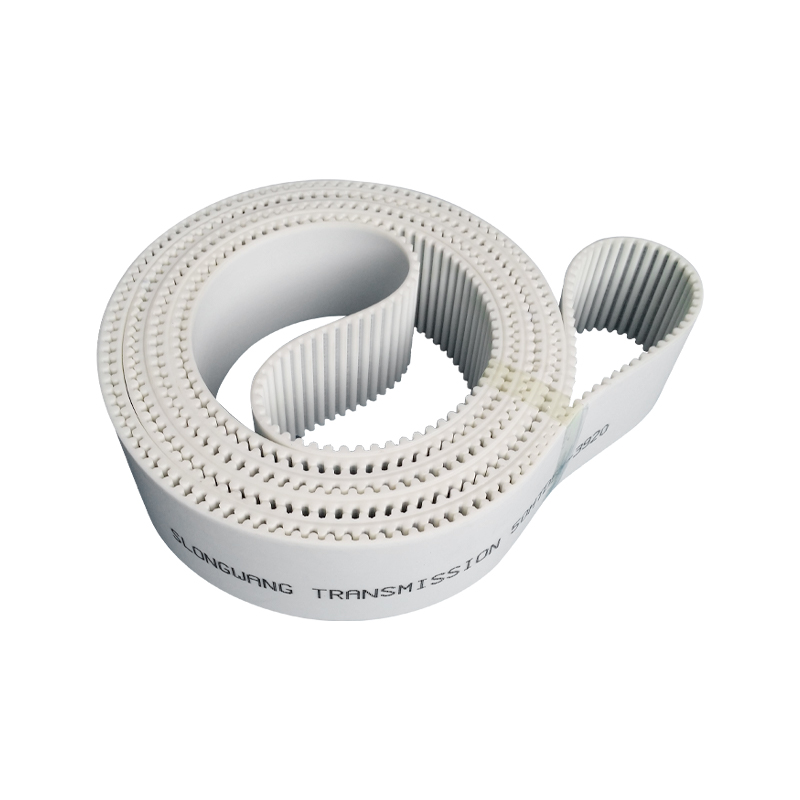
Polyurethane timing belts offer very high abrasion resistance and dimensional stability — making them the preferred choice for precision linear motion and positioning applications. However, PU belts have lower heat resistance than HNBR and can hydrolyze in humid environments over time. Common in CNC machine tools, 3D printers, and medical devices where dimensional repeatability below 0.1 mm is required.
Tensile Cord Material Comparison
- Fiberglass: Standard cord material. Good balance of strength, flexibility, and cost. Elongation under load is typically 0.3–0.5% at rated tension.
- Aramid (Kevlar/Twaron): 3–5× higher tensile strength than fiberglass, elongation under 0.1%. Required for shock-load applications, high-acceleration servo drives, and heavy industrial drives.
- Carbon fiber: Highest stiffness of any cord material — near-zero elongation. Used in premium CNC and robotics applications where positioning accuracy is paramount. Higher cost and lower fatigue resistance at small pulley diameters.
- Steel cord: Highest tensile strength and heat resistance. Used in high-temperature industrial drives above 130°C where rubber compounds with steel reinforcement are required.
Timing Belt Sizing and Selection: Key Parameters
Selecting the correct timing belt for an application requires evaluating five interdependent parameters. Errors in any one of them can result in premature failure, reduced accuracy, or inadequate power transmission.
1. Pitch
Pitch is the distance between adjacent tooth centers, measured along the belt's pitch line. Common metric pitches are 2mm, 3mm, 5mm, 8mm, 10mm, and 14mm. Larger pitch belts carry more load per unit width but require larger minimum pulley diameters. Smaller pitches (2–3mm) are selected for high-speed, low-torque precision applications; larger pitches (8–14mm) for high-torque, lower-speed industrial drives.
2. Belt Width
Power rating increases linearly with belt width. Standard widths are defined in the relevant belt standard (ISO, DIN, or manufacturer catalog). For a given pitch and tooth profile, doubling the belt width doubles the power transmission capacity. Width selection follows from the calculated design load (peak torque × service factor) divided by the belt's rated power per unit width at the operating speed.
3. Belt Length and Number of Teeth
Belt length is expressed as the total number of teeth (for closed-loop belts) or as a linear length (for open-ended belts). Closed-loop belts come in standard lengths; center distance must be designed to accommodate a standard belt length or an adjustable tensioner must be incorporated to compensate.
4. Minimum Number of Teeth in Mesh
The number of belt teeth simultaneously engaged with the smaller sprocket determines the load sharing and tooth jump resistance. A minimum of 6 teeth in mesh is recommended for standard loads; 8–10 teeth for shock or reverse-load applications. Small sprockets with fewer than 12 teeth reduce teeth-in-mesh significantly and require derating of the belt's rated power capacity.
5. Service Factor
Service factors account for operating conditions beyond constant-load, smooth running. Typical service factors applied to the calculated design load:
- Smooth, constant load (conveyors, fans): Service factor 1.0–1.3
- Moderate shock loads (machine tools, compressors): Service factor 1.4–1.7
- Heavy shock, reversing loads (presses, crushers): Service factor 1.8–2.5
- 24-hour continuous duty: Add 0.2–0.3 to base service factor
Automotive Rubber Timing Belts: Replacement Intervals and Critical Facts
In automotive engines, the rubber timing belt synchronizes the crankshaft and camshaft(s) to ensure valves open and close at the correct piston positions. Timing belt failure in an interference engine — where valves and pistons share the same cylinder space — causes catastrophic valve-to-piston contact, typically resulting in $3,000–$8,000+ in engine damage. This makes automotive timing belt replacement one of the most cost-critical maintenance decisions a vehicle owner faces.
Typical Replacement Intervals by Era and Material
Typical automotive timing belt replacement intervals by belt generation and material
| Belt Generation |
Material |
Typical Interval (miles) |
Typical Interval (km) |
| Pre-1990s legacy |
Neoprene / CR |
40,000–60,000 |
65,000–97,000 |
| 1990s–2000s standard |
HNBR |
60,000–90,000 |
97,000–145,000 |
| 2000s–present modern |
Premium HNBR / HSN |
90,000–120,000 |
145,000–195,000 |
| Long-life extended |
Advanced HNBR compound |
150,000–200,000+ |
240,000–320,000+ |
Always follow the manufacturer's specified interval — not a generic mileage guideline. Intervals vary significantly between engine designs: a Honda 2.4L engine specifies 105,000-mile replacement, while some older Volkswagen TDI engines specify 40,000-mile intervals due to higher belt loading from the diesel injection pump. Age also matters — most manufacturers specify replacement at 7–10 years regardless of mileage due to rubber oxidation and cord degradation over time.
What to Replace at the Same Time
When replacing an automotive timing belt, always replace the full kit simultaneously:
- Tensioner pulley and spring: Belt tensioners wear at the same rate as the belt — a failed tensioner destroys a new belt within thousands of miles.
- Idler pulleys: Bearing wear in idler pulleys creates vibration that causes premature belt tooth wear and can cause belt derailment.
- Water pump (if driven by the timing belt): Labor for water pump replacement is largely included in the timing belt job — replacing the pump prevents having to repeat the same disassembly at 30,000–50,000 miles when the pump fails.
Signs of Rubber Timing Belt Wear and Failure
Rubber timing belts often fail without obvious warning — particularly in automotive engines where the belt is concealed under covers. However, several indicators of impending failure can be detected during routine inspection or from driving symptoms.
Visual Inspection Indicators
- Cracking or glazing of the belt back: Fine transverse cracks across the belt's outer surface indicate rubber hardening from heat and oxidation — a sign that replacement is overdue.
- Tooth missing, cracked, or sheared: Any tooth damage constitutes immediate replacement — a single missing tooth changes timing by one pitch, which in interference engines causes valve contact.
- Fabric facing wear on tooth flanks: The nylon tooth facing wears off on the leading tooth face first — exposure of the rubber body beneath accelerates tooth wear exponentially.
- Belt edge fraying: Lateral movement from misalignment causes edge wear — address alignment before installing a new belt or the replacement will fail prematurely.
- Oil contamination: Oil on a rubber timing belt degrades the elastomer, reduces friction life of the tooth facing, and accelerates cord fatigue. Any oil leak source must be repaired before belt replacement.
Operational Symptoms in Industrial Applications
- Positioning errors in CNC or servo systems: Increased positional deviation, especially under load, indicates belt stretch from cord fatigue or tooth wear allowing skip.
- Abnormal noise (squealing, ticking, or slapping): Squealing indicates misalignment or inadequate tension; ticking suggests a damaged tooth or debris in the drive; slapping indicates excessive slack.
- Vibration increase: Belt resonance at operating speed, sometimes visible as lateral oscillation, indicates tension outside the recommended range.
Timing Belt Tensioning: The Most Critical Installation Variable
Incorrect tension is the leading cause of premature timing belt failure in both automotive and industrial applications. Under-tension allows tooth jump under load and causes belt slap and vibration; over-tension creates excessive bearing loads and cord fatigue that dramatically shortens belt and bearing life.
Tension Measurement Methods
- Frequency/vibration method (preferred): A belt tension meter measures the natural vibration frequency of a free belt span and converts it to tension using the belt's mass per unit length and free span length. This method achieves accuracy of ±5% of actual tension and is the industry standard for precision drives.
- Deflection force method: Apply a specified deflection force at the midpoint of the free belt span and measure resulting deflection in mm. Acceptable for field checks but less accurate than vibration measurement, particularly on short spans.
- Torque-controlled tensioner (automotive): Modern automotive timing belt systems use spring-loaded or hydraulic automatic tensioners that self-adjust to the correct tension throughout belt life — requiring no manual adjustment.
For industrial drives, always refer to the belt manufacturer's published tension specifications for the specific belt size and application. As a general guideline, the static tension in each strand of a timing belt drive should be set to approximately 1.5 × the effective tension (tight side tension minus slack side tension) at design load to maintain adequate tooth engagement under peak operating conditions.
Rubber vs. Polyurethane Timing Belts: When to Choose Each
The choice between rubber (neoprene/HNBR) and polyurethane timing belts is not a matter of one being universally superior — each material has specific strengths that make it optimal for different application conditions.
Direct comparison of rubber and polyurethane timing belts across key performance criteria
| Property |
Rubber (HNBR/Neoprene) |
Polyurethane (PU) |
| Max. continuous temp. |
Up to 150°C (HNBR) |
Up to 80–100°C |
| Abrasion resistance |
Good |
Very High |
| Dimensional stability |
Good |
Excellent |
| Oil resistance |
Good–Excellent (HNBR) |
Moderate |
| Hydrolysis resistance |
Excellent |
Poor (standard PU) — use hydrolysis-resistant grade |
| Flexibility at low temp. |
Excellent |
Stiffens below -10°C |
| Positioning accuracy |
Good |
Superior |
| Best application |
Automotive, high-temp industrial, outdoor equipment |
CNC, robotics, medical devices, 3D printers |
Timing Belt Maintenance Best Practices
Maximizing rubber timing belt service life in industrial applications requires a systematic maintenance approach that addresses alignment, tension, contamination, and inspection intervals.
- Establish a condition-based inspection schedule. Inspect industrial timing belts every 500–2,000 operating hours depending on duty cycle severity. Automotive belts should be visually inspected at every oil change where covers allow access.
- Verify and record tension at each inspection. Use a frequency meter to document tension values — trending tension loss over time enables prediction of re-tensioning needs and cord fatigue progression.
- Check pulley alignment with a laser alignment tool. Angular and parallel misalignment exceeding 0.5° or 1 mm offset per 100 mm of belt width will cause rapid edge wear, noise, and fatigue cracking.
- Keep the drive free from contamination. Oil, water, and chemical solvents all accelerate rubber degradation. Seal the drive environment with covers and address any fluid leaks immediately.
- Never pry or fold a timing belt sharply during installation. Bending a timing belt to a radius smaller than its minimum bending radius cracks the tensile cords irreversibly. Always roll new belts flat or in their natural loop shape during storage and handling.
- Replace on a time-based schedule regardless of visual appearance. Rubber and cord degradation is often invisible — operating beyond the manufacturer's interval on appearance alone is a leading cause of catastrophic timing failure.


 Inquiry

 English
 中文简体
中文简体