A timing belt is bad if you notice any of these five warning signs: a ticking or slapping noise from the engine, difficulty starting, engine misfires, oil leaking near the front of the engine, or visible cracks and fraying on the belt surface. If any one of these symptoms appears, the belt should be inspected immediately — a failed timing belt can cause catastrophic engine damage in seconds.
This guide covers every warning sign in detail, explains how different timing belt materials — rubber timing belts and polyurethane (PU) timing belts — degrade differently, and tells you exactly when and how to act before a small problem becomes a complete engine failure.
What a Timing Belt Does and Why Failure Is So Serious
The timing belt synchronizes the rotation of the crankshaft and camshaft so that engine valves open and close at precisely the right moment during each cylinder's firing cycle. In an interference engine — which accounts for the majority of modern passenger vehicles — the valves and pistons share the same space at different moments. If the timing belt fails and that synchronization is lost, pistons collide with open valves, bending or breaking them instantly.
Repair costs following a catastrophic timing belt failure typically range from $1,500 to $5,000 or more, depending on the extent of valve and piston damage. By contrast, a routine timing belt replacement costs between $300 and $800 including labor. Recognizing a bad timing belt early is one of the most cost-effective things a vehicle owner can do.
The 7 Most Reliable Warning Signs of a Bad Timing Belt
Each of these symptoms can indicate a timing belt that is worn, stretched, misaligned, or about to fail. Never dismiss more than one symptom appearing at the same time.
1. Ticking, Slapping, or Rattling Noise from the Engine
A ticking noise at idle — especially one that changes speed with engine RPM — often indicates insufficient lubrication reaching the timing belt components, or a belt that has begun to slip on its teeth. A louder slapping or flapping sound suggests the belt has significant slack and is striking the timing cover with each rotation. This is an urgent warning that requires same-day inspection.
2. Engine Misfires or Rough Running
A worn or stretched timing belt can slip one or more teeth on the sprocket. Even a single-tooth skip changes valve timing enough to cause misfires, hesitation during acceleration, and rough idling. If your vehicle's check engine light illuminates alongside misfire codes (P0300–P0308), and other causes such as spark plugs and injectors have been ruled out, a stretched timing belt is a strong suspect.
3. Difficulty Starting or Engine Won't Turn Over
If the timing belt has broken completely, the engine will crank but will not fire at all — because the camshaft is no longer being driven and valves are not opening. A broken belt on a non-interference engine may leave the car driveable to a stop, but on an interference engine, internal damage will have already occurred by the time you notice the engine won't start.
4. Oil Leaking Near the Front of the Engine
The timing belt operates behind a timing cover that is sealed with gaskets. When the camshaft seal or crankshaft seal begins to fail — often due to age or heat cycling — oil leaks onto the timing belt. Oil contamination degrades rubber timing belt compounds rapidly, softening the belt's body and causing the tooth surfaces to swell, slip, and eventually delaminate. A belt contaminated with oil can fail in as little as a few hundred miles even if it appeared visually intact before contamination.
5. Visible Cracks, Fraying, or Missing Teeth
On vehicles where the timing cover can be partially removed for inspection, visible damage is the most direct evidence of a bad belt. Look for:
- Fine transverse cracks across the back of the belt (early-stage rubber degradation)
- Fraying or separation at the belt edges
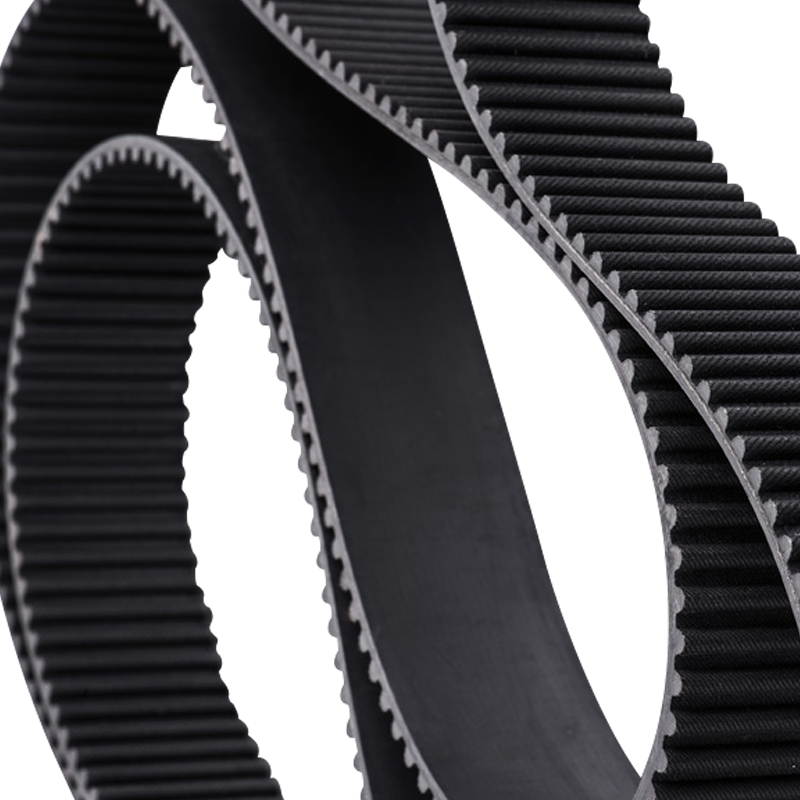
- Shiny, glazed tooth surfaces (indicates heat hardening and reduced grip)
- Missing, chipped, or rounded-off teeth (immediate replacement required)
- Uneven wear patterns on one side of the teeth (misalignment issue)
6. Exhaust Smoke or Unusual Emissions
Incorrect valve timing caused by a slipped or stretched timing belt changes when exhaust valves open during the combustion cycle. This can result in partially burned fuel exiting through the exhaust, producing dark, sooty smoke — particularly noticeable during cold starts or under acceleration. Excess hydrocarbons in the exhaust may also trigger emissions test failures.
7. Vibration or Shaking That Wasn't Present Before
A timing belt that has developed uneven wear or has begun to stretch non-uniformly across its width can introduce a subtle but noticeable vibration that increases with engine speed. This is different from typical engine vibration and tends to feel more rhythmic and RPM-dependent than vibrations caused by mounts or driveshaft issues.
Rubber Timing Belt vs PU Timing Belt: How Each Type Fails Differently
Understanding which type of timing belt your engine or machine uses changes what warning signs to prioritize. Rubber timing belts and polyurethane (PU) timing belts degrade through different mechanisms and show different failure patterns.
Comparison of rubber and polyurethane timing belt failure characteristics and warning signs
| Property |
Rubber Timing Belt |
PU / Polyurethane Timing Belt |
| Primary failure mode |
Cracking, hardening, tooth shear |
Tooth wear, cord fatigue, elongation |
| Visible warning signs |
Cracks, glazing, fraying edges |
Tooth rounding, elongation, cord exposure |
| Heat resistance |
Moderate — degrades above 100°C over time |
Better — stable to 120°C+ |
| Oil resistance |
Poor — oil contamination causes rapid softening |
Good — resists oil degradation well |
| Elongation under load |
Higher stretch over time |
Lower stretch — better dimensional stability |
| Typical service life (automotive) |
60,000–100,000 miles |
Often longer — application dependent |
| Sound when failing |
Ticking, slapping, squealing |
Higher-pitched whine; less audible early warning |
| Common applications |
Automotive engines, HVAC, general machinery |
Industrial machinery, precision drives, CNC, robotics |
How Rubber Timing Belts Fail
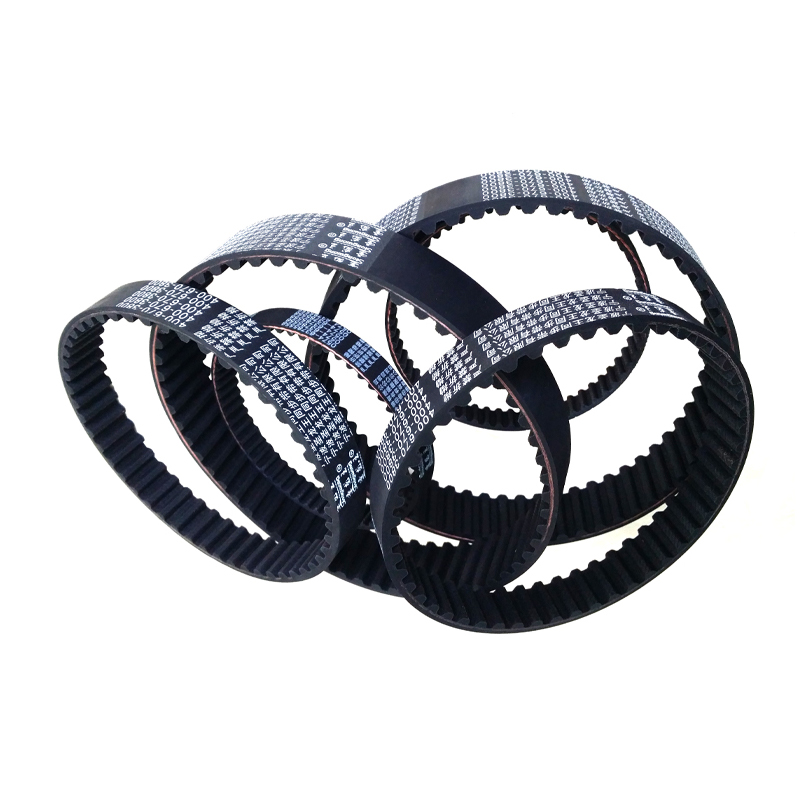
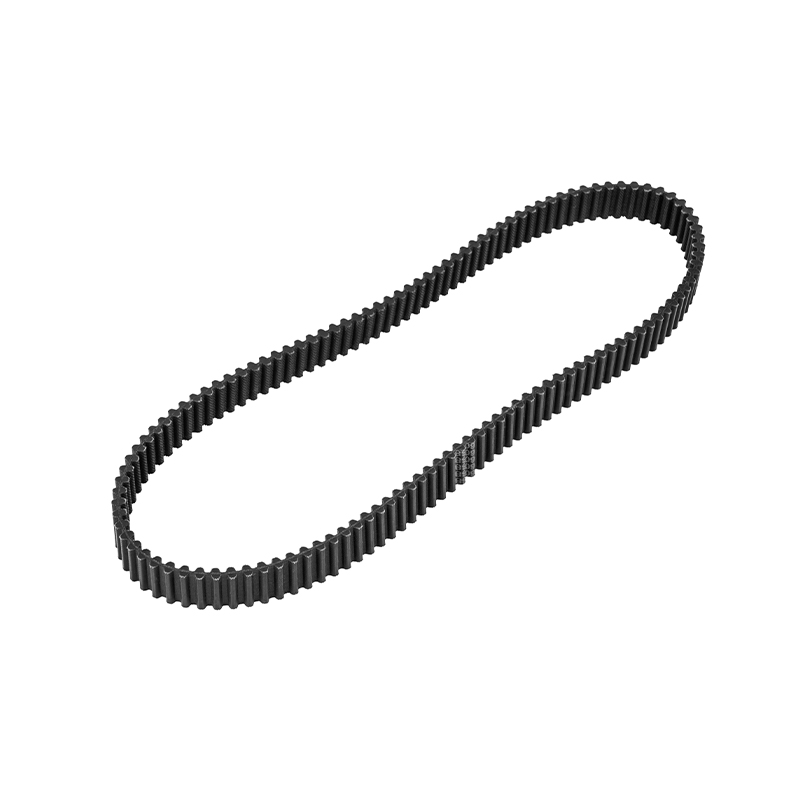
Rubber timing belts — typically reinforced with fiberglass or aramid (Kevlar) cords — are the standard in automotive applications. They fail primarily through thermal aging and ozone degradation, which causes the rubber compound to harden and crack over time regardless of mileage. A rubber belt stored in a hot engine bay for 7 or more years may be structurally compromised even if the vehicle has low mileage. Cracking begins on the outer belt surface and progresses inward; by the time cracks are visible on the tooth faces, replacement is overdue.
How PU (Polyurethane) Timing Belts Fail
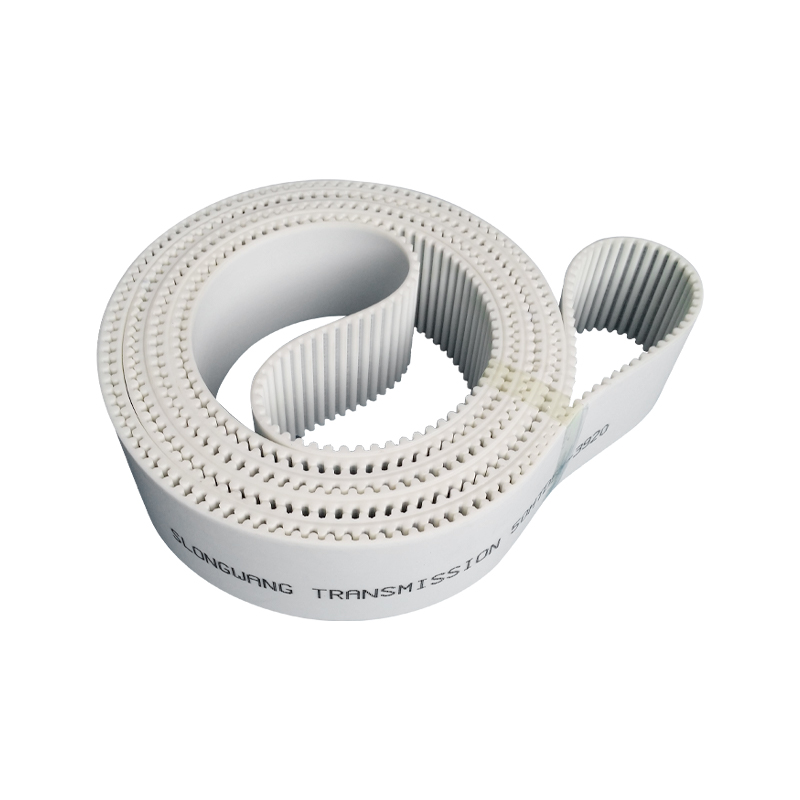
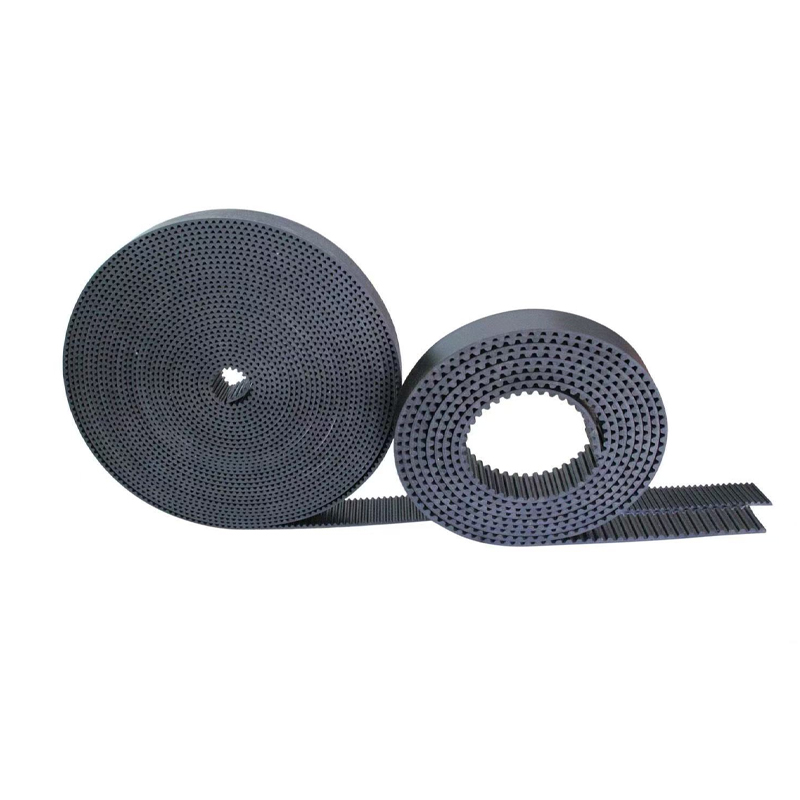
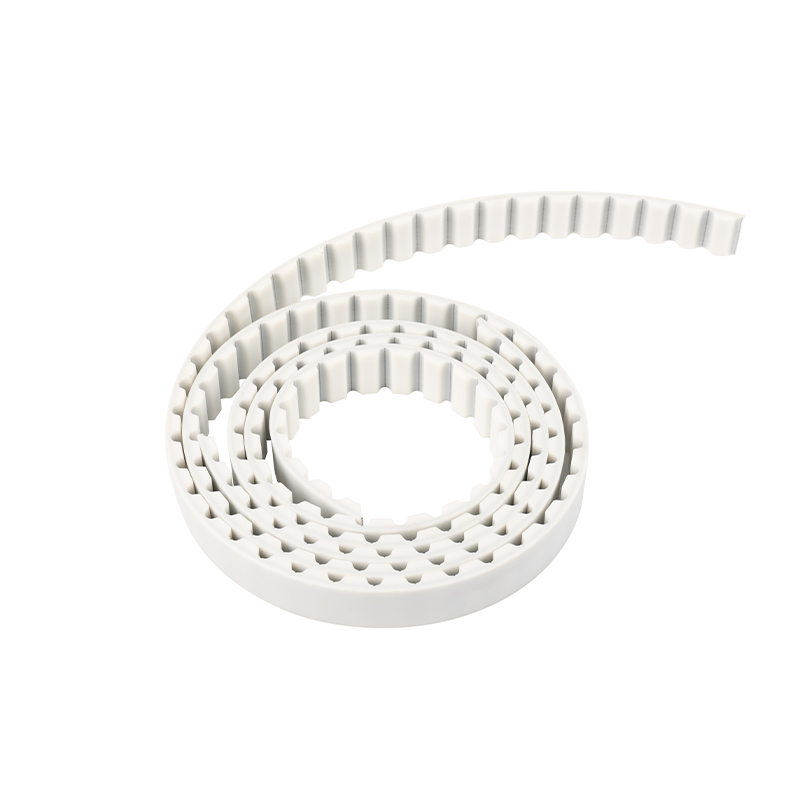
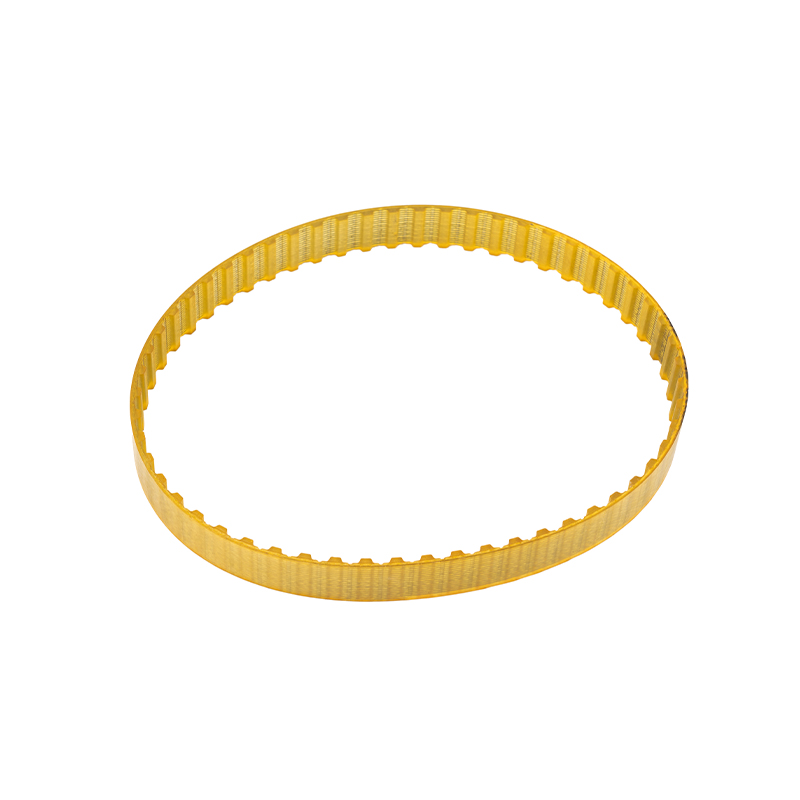
Polyurethane timing belts are predominantly used in industrial precision applications — CNC machines, conveyors, printing presses, and servo-driven systems. Unlike rubber, PU does not crack visibly with age. Instead, PU timing belts fail through tooth profile wear and tensile cord fatigue. The tooth surfaces gradually round off under repeated engagement, reducing the belt's ability to transmit precise positioning. Cord fatigue causes microscopic breaks in the internal reinforcement that result in sudden elongation or snapping under load — often with very little external warning. Regular dimensional checks and load monitoring are more reliable indicators than visual inspection alone for PU belts.
How to Visually Inspect a Timing Belt Yourself
On many vehicles, a partial inspection is possible without full disassembly by removing the plastic timing cover. This inspection takes approximately 20 to 40 minutes and requires only basic hand tools.
- Allow the engine to cool completely before touching any components near the belt
- Locate the timing cover on the front of the engine block (usually driver's side); remove the access bolts with a socket set
- Use a flashlight to examine the visible section of the belt — check the back surface for transverse cracks and the tooth faces for rounding or missing material
- Rotate the engine by hand using a breaker bar on the crankshaft bolt (clockwise only, never reverse) to expose additional belt sections for inspection
- Check belt tension — with proper tension, you should be able to twist the belt no more than 90 degrees with two fingers; excessive twisting indicates the belt has stretched or the tensioner has failed
- Check for oil staining — a brown or black oily residue on the belt surface indicates a leaking seal that must be repaired before a new belt is installed
- Reinstall the timing cover and torque bolts to specification
If you find any of the above defects, do not continue driving the vehicle. Even a belt that appears marginally acceptable may be days or hours away from failure. When in doubt, replace it — the cost difference between proactive replacement and reactive repair is enormous.
Timing Belt Replacement Intervals: When to Replace Before It Fails
The single most reliable way to prevent timing belt failure is to replace it on schedule — before any symptoms appear. Manufacturer-specified intervals vary by vehicle and belt material.
Typical timing belt replacement intervals by vehicle make and belt type
| Vehicle / Application |
Belt Type |
Mileage Interval |
Time Interval |
| Honda / Acura (most models) |
Rubber |
60,000–90,000 miles |
7 years |
| Toyota / Lexus (V6/V8) |
Rubber |
90,000 miles |
7–10 years |
| Volkswagen / Audi (TDI diesel) |
Rubber |
80,000–100,000 miles |
5–6 years |
| Subaru (EJ series) |
Rubber |
60,000–105,000 miles |
7 years |
| Industrial machinery (CNC, servo) |
PU / Polyurethane |
Per load cycle spec |
Annual inspection minimum |
Always use whichever limit comes first — mileage or time. A vehicle driven only 30,000 miles over 10 years still needs its rubber timing belt replaced due to age-related degradation.
Factors That Accelerate Timing Belt Wear and Failure
Several operating conditions cause timing belts to wear out significantly faster than the manufacturer's standard intervals suggest.
- Oil or coolant contamination: The single most destructive factor for rubber timing belts; even minor seepage from a cam seal degrades the belt compound within weeks
- Incorrect belt tension: Both overtightening and undertightening accelerate wear; overtight belts overload bearings and cord fibers, while loose belts allow tooth skipping and slapping
- Failed tensioner or idler pulley: A seized or worn pulley creates uneven belt loading and localized overheating; always replace tensioner and idler pulleys when replacing the belt
- Extreme temperature operation: Engines that frequently overheat, or vehicles operated in consistently hot climates, age rubber belts 30–50% faster than normal operating conditions
- Misaligned sprockets: Even slight axial misalignment between the crankshaft and camshaft sprockets causes the belt to track to one side, accelerating edge wear and fraying
- Infrequent use: Vehicles that sit unused for extended periods allow rubber belts to develop flat spots and surface hardening at the contact points with sprockets
Rubber Timing Belt vs PU Timing Belt: Choosing the Right Replacement
If you are replacing a worn timing belt, understanding the material options helps you make the best choice for your application — particularly in industrial or high-performance contexts where aftermarket options exist.
When to Choose a Rubber Timing Belt
Rubber timing belts remain the standard for automotive engines because they are engineered specifically for high-temperature, high-speed engine bay environments. They offer excellent flexibility across a wide temperature range and absorb vibration effectively. Always replace automotive timing belts with an OEM-spec rubber belt or a quality aftermarket equivalent from brands such as Gates, Continental, or Dayco. Non-OEM belts that don't meet tooth profile specifications can skip timing even at installation.
When to Choose a PU (Polyurethane) Timing Belt
Polyurethane timing belts are the preferred choice for industrial precision applications that demand dimensional stability, oil resistance, and low elongation over millions of cycles. In CNC machines, 3D printers, robotics, and servo-driven conveyor systems, the lower stretch of PU belts maintains positioning accuracy over time. PU belts are also used in applications where the belt may come into contact with oils, coolants, or mild chemicals that would rapidly degrade a rubber belt. The trade-off is that PU belts are less flexible in cold temperatures and may not absorb vibration as effectively as rubber.
Key Differences at a Glance
- Automotive engines: Always use rubber timing belt per manufacturer specification
- CNC and precision servo systems: PU timing belt provides superior positioning accuracy and longer service life
- High-humidity or chemical environments: PU resists moisture and many chemicals better than standard rubber
- Cold-environment machinery: Rubber maintains flexibility at lower temperatures; PU may stiffen below -20°C
- High-vibration applications: Rubber absorbs shock and vibration more effectively than PU
What to Do When You Suspect a Bad Timing Belt
Acting promptly and correctly when a timing belt problem is suspected can be the difference between a straightforward replacement and a destroyed engine.
- Stop driving immediately if you hear a sudden loud mechanical noise, the engine loses power abruptly, or the check engine light comes on alongside any other symptom listed in this guide
- Do not attempt to restart the engine if you suspect the belt has already broken — doing so on an interference engine causes immediate additional valve damage
- Have the vehicle towed to a shop rather than driven; the cost of a tow is negligible compared to the cost of a broken belt at highway speed
- When scheduling replacement, ask the mechanic to also replace the water pump, tensioner, and idler pulleys at the same time — these components are all accessed during the same job and are subject to the same wear cycles as the belt itself
- After replacement, note the mileage and date clearly in your service record and set a reminder for the next recommended interval
The combined cost of replacing the timing belt, water pump, tensioner, and idler pulleys together typically adds only $100 to $200 to the job, since the labor is already accounted for. Replacing any one of these components separately later requires the same labor all over again — making the incremental investment strongly worthwhile.
Timing Belt vs Timing Chain: Does Your Vehicle Have a Belt at All?
Not every vehicle uses a timing belt. Many modern engines use a timing chain instead, which is a metal roller chain similar to a bicycle chain. Timing chains generally last the life of the engine and do not require scheduled replacement, though they can stretch and develop slack over very high mileage.
To determine whether your vehicle has a timing belt or chain, consult your owner's manual under the maintenance schedule section. Vehicles with a timing belt will list a specific replacement interval; vehicles with a timing chain typically will not. Alternatively, search your vehicle's year, make, and model with the term "timing belt or chain" — this information is widely documented for all common models.
Common vehicles known to use rubber timing belts (as of recent model years) include the Honda CR-V (older generations), Toyota Camry V6, Subaru Forester/Outback (EJ engines), Volkswagen TDI diesel engines, and Hyundai/Kia 2.4L GDI engines. If your vehicle is on this list, a proactive replacement schedule is essential.


 Inquiry

 English
 中文简体
中文简体