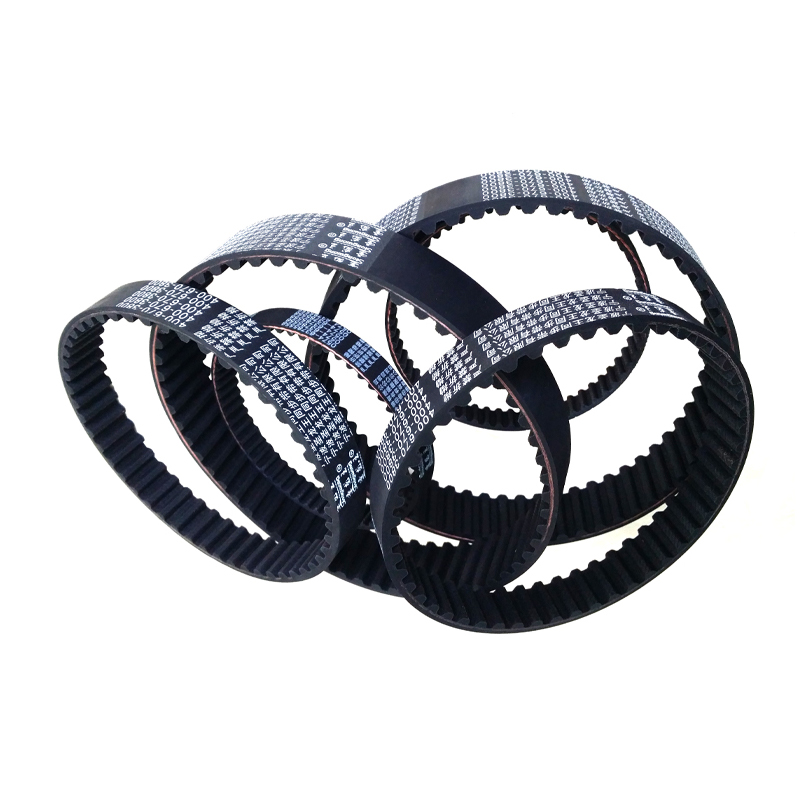
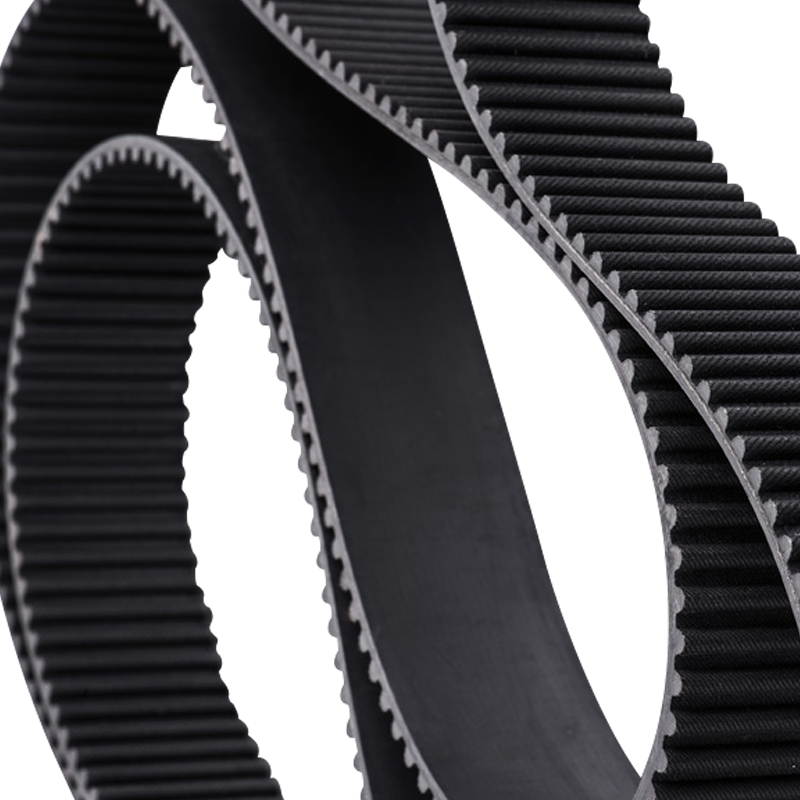
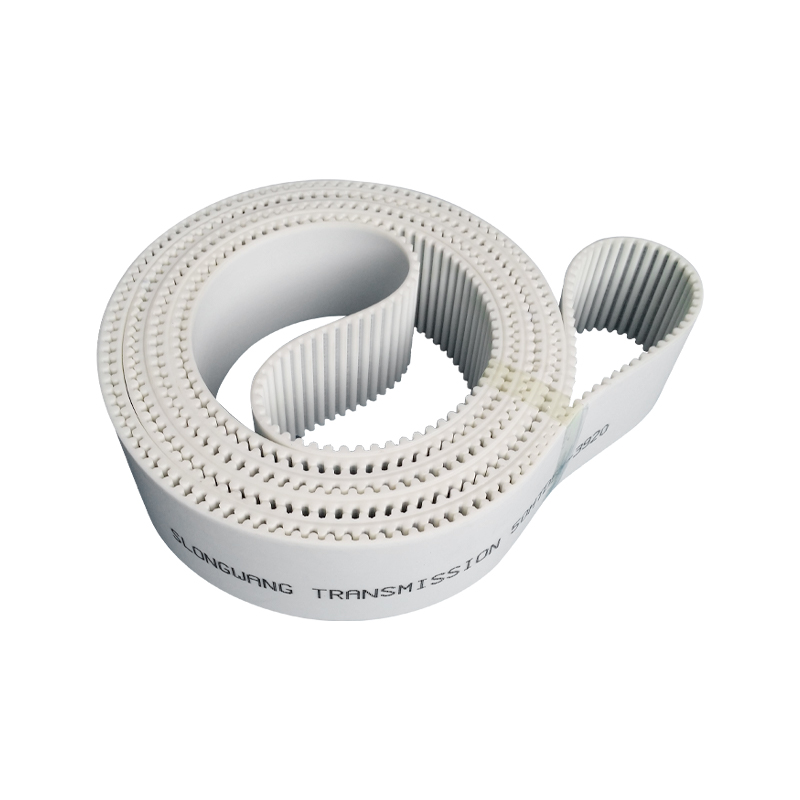
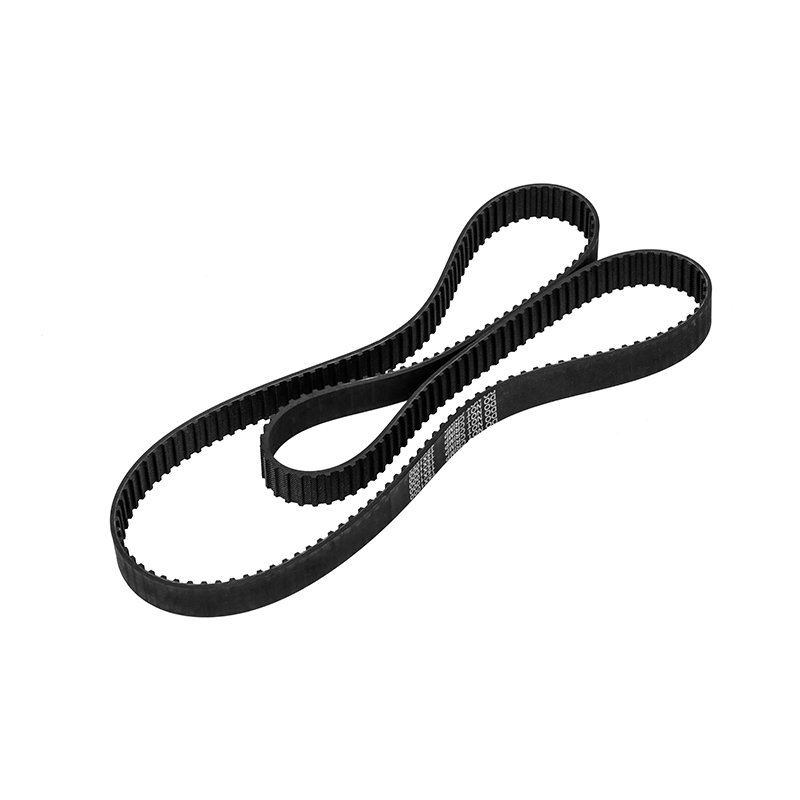
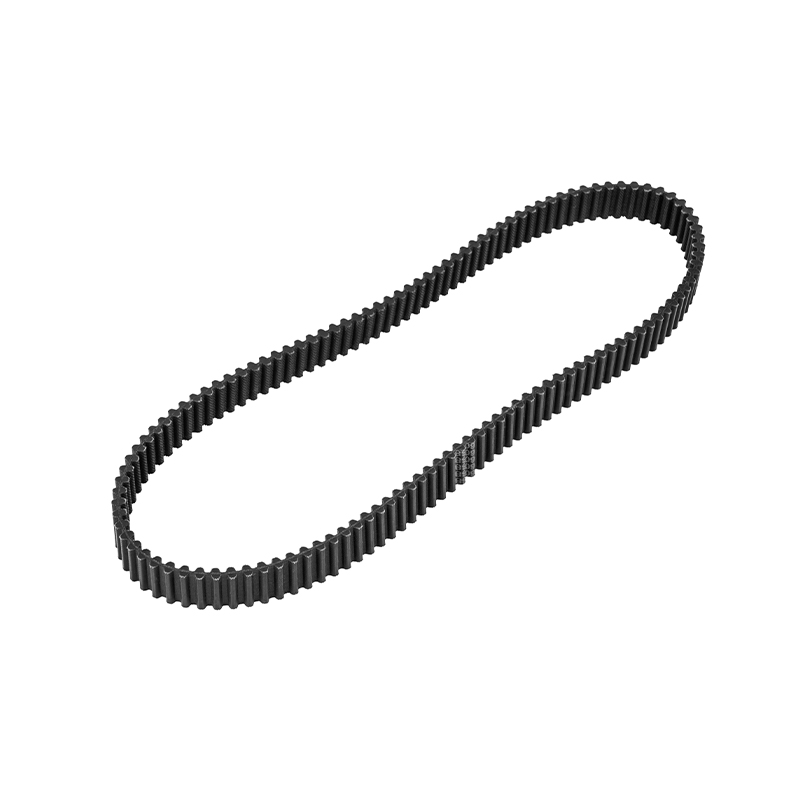
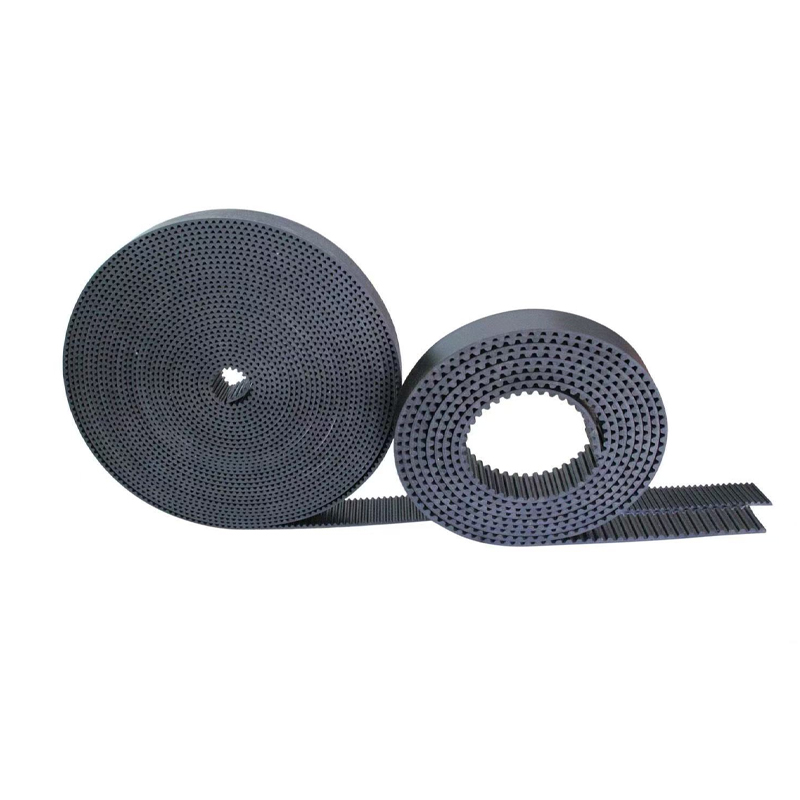
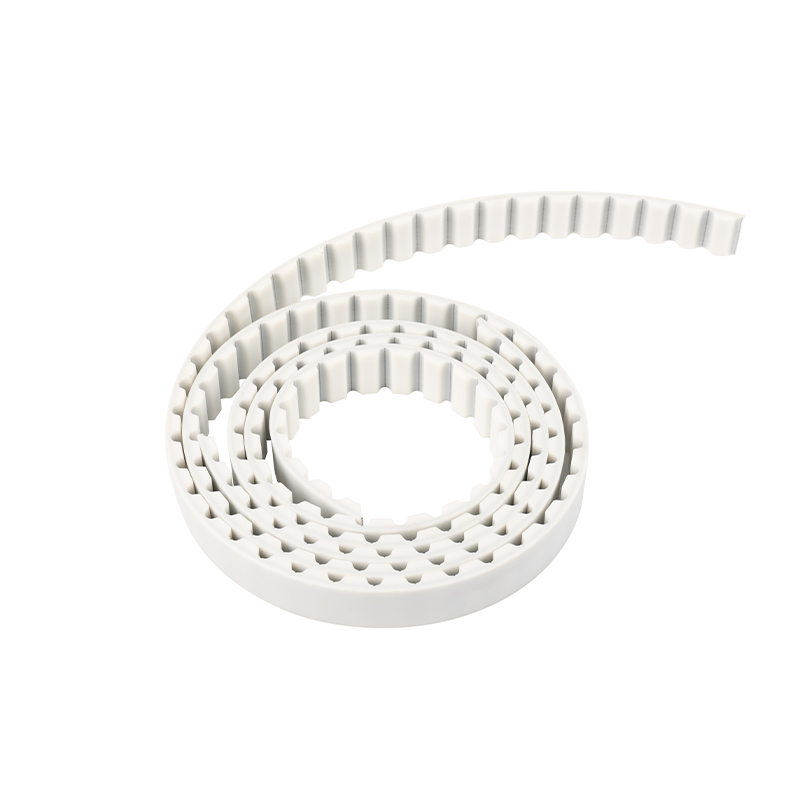
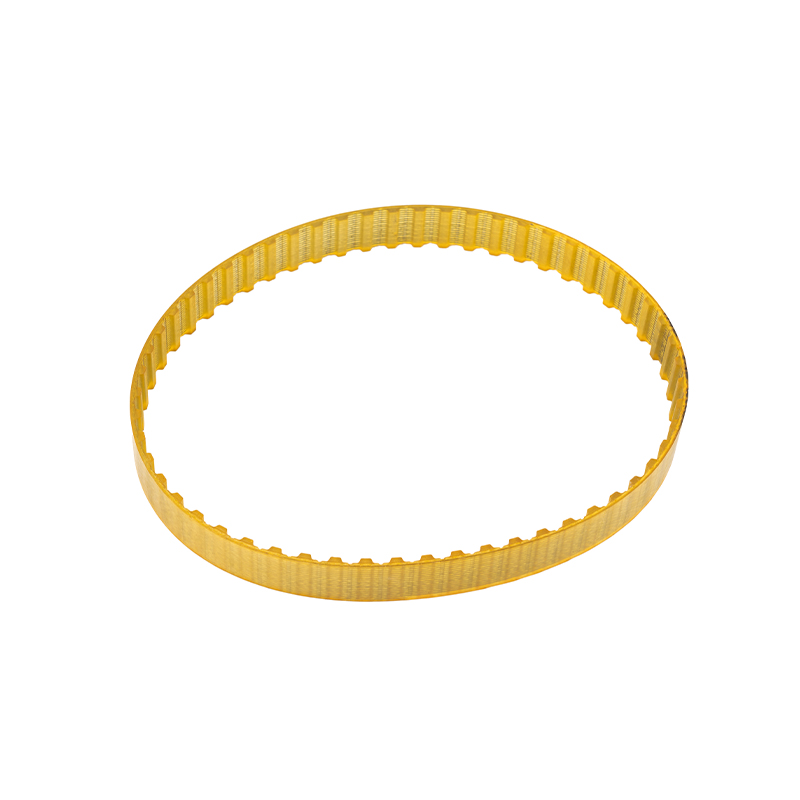
To measure for a timing belt size, you need three dimensions: the belt pitch (distance between tooth centers), the number of teeth (which determines belt length), and the belt width. These three values fully define any rubber timing belt or polyurethane (PU) timing belt and are all you need to order a correct replacement or specify a new belt. If you cannot count teeth directly, measure the belt's outer circumference and divide by the pitch to calculate tooth count.
The Three Measurements That Define Any Timing Belt
Every timing belt — whether a rubber timing belt or a PU timing belt — is specified by the same three parameters. Getting all three right is essential; an error in any one will result in a belt that either does not fit or fails prematurely.
| Measurement |
What It Defines |
How to Measure |
Typical Values |
| Pitch |
Tooth-to-tooth spacing |
Calipers across 10 teeth ÷ 10 |
2 mm, 3 mm, 5 mm, 8 mm, 14 mm |
| Number of Teeth |
Belt length |
Count directly or: length ÷ pitch |
50 – 500+ teeth |
| Belt Width |
Power transmission capacity |
Calipers across belt face |
6 mm – 100 mm+ |
The three essential measurements needed to fully specify any rubber or polyurethane timing belt
Step-by-Step: How to Measure a Timing Belt
Step 1 — Measure the Belt Pitch
Pitch is the most critical dimension because it must match the pulley exactly. Measure from the center of one tooth to the center of the next. For accuracy, use digital calipers to span 10 consecutive teeth, then divide the result by 10. This averages out any small measurement errors.
Example: If 10 teeth span 50.0 mm, the pitch is 5.0 mm — this is an HTD 5M or T5 profile belt. Never measure just one tooth gap; minor caliper placement errors become magnified.
Step 2 — Count the Teeth
For a closed-loop belt still on a machine, lay a piece of tape at a starting tooth and count every tooth around the full circumference until you return to the tape. For a belt removed from the machine, this is straightforward. Do not estimate — a difference of just 2–3 teeth changes the belt length by 10–24 mm on a 5 mm pitch belt, which is enough to prevent correct tensioning.
If the belt is worn or damaged and teeth are hard to count, measure the belt's pitch length (the circumference measured at the pitch line, approximately 0.6–0.8× tooth height from the outer surface) and divide by pitch:
Number of teeth = Pitch circumference (mm) ÷ Pitch (mm)
For example: a belt with a pitch circumference of 600 mm and a pitch of 5 mm has 120 teeth — written as 600-5M or 5M600 depending on the belt standard.
Step 3 — Measure the Belt Width
Use calipers to measure straight across the belt face. Standard widths for metric timing belts include 6 mm, 9 mm, 10 mm, 15 mm, 20 mm, 25 mm, 30 mm, and 50 mm. Always match the original width unless you are deliberately upgrading power capacity. A narrower replacement belt in the same drive will overstress the belt and fail early; a wider belt may not fit between pulley flanges.
Step 4 — Identify the Tooth Profile
Pitch alone is not enough — two belts can share the same pitch but have different tooth profiles that are not interchangeable. The main profiles you will encounter are:
- T-profile (T2.5, T5, T10, T20): Trapezoidal tooth; older standard, widely used in light industrial and office automation equipment.
- HTD (High Torque Drive — 3M, 5M, 8M, 14M): Curvilinear (rounded) tooth; higher torque capacity than T-profile at the same pitch.
- AT-profile (AT5, AT10, AT20): Modified trapezoidal with wider tooth base; better for reversing loads and positioning applications.
- STD/S-profile (S3M, S5M, S8M): Similar curvilinear profile to HTD but with slightly different geometry — not interchangeable with HTD despite similar pitch.
Visually, a trapezoidal tooth has flat sides and a flat top, while an HTD or curvilinear tooth has a smooth rounded profile. If in doubt, match the belt to the pulley tooth form, not just the pitch number.
Rubber Timing Belt vs Polyurethane Timing Belt: Which to Specify
Once you have your measurements, you still need to choose the belt material. Rubber timing belts and polyurethane (PU) timing belts share the same pitch systems and can be dimensionally interchangeable, but they perform very differently in service. The material choice affects service life, precision, operating environment suitability, and cost.
| Property |
Rubber Timing Belt |
PU Timing Belt |
| Cord Material |
Fiberglass or aramid |
Steel or aramid |
| Elongation under load |
Higher (0.2–0.4%) |
Very low (<0.05%) |
| Positional Accuracy |
Good |
Excellent (±0.1 mm achievable) |
| Oil Resistance |
Moderate (HNBR compounds) |
Excellent |
| Temperature Range |
−30°C to +100°C |
−30°C to +80°C (standard) |
| Abrasion Resistance |
Good |
Very good |
| Weldable/Open-ended |
No (closed loop only) |
Yes — can be cut to length and welded |
| Cost (relative) |
Lower |
Higher (2–4× rubber) |
| Typical Applications |
Engines, HVAC, general drives |
CNC, robotics, linear motion |
Performance comparison between rubber timing belts and polyurethane (PU) timing belts across key operating parameters
When to Choose a Rubber Timing Belt
A rubber timing belt is the right choice for the majority of power transmission applications where cost efficiency, flexibility at low temperatures, and high-speed operation matter more than extreme positional accuracy.
- Automotive engine camshaft and balance shaft drives (OEM standard)
- HVAC fans, compressors, and pump drives running at 1,500–6,000 RPM
- Agricultural and industrial machinery with high torque but moderate positional requirements
- Applications where belt replacement cost must be minimized and intervals are scheduled (e.g., every 60,000–100,000 km in engines)
HNBR (hydrogenated nitrile butadiene rubber) compound belts are the current industry standard for rubber timing belts, offering significantly better heat and oil resistance than earlier neoprene designs. A quality HNBR rubber timing belt can handle sustained temperatures of up to 120°C in short-duration peaks.
When to Choose a Polyurethane Timing Belt
A polyurethane timing belt is the superior choice wherever dimensional stability, chemical resistance, or the ability to work with open-ended (welded) belt configurations is required. The near-zero elongation of steel-corded PU belts makes them the standard for:
- CNC machine axes and linear positioning systems where repeatability of ±0.1 mm or better is specified
- Robotic arm and pick-and-place systems requiring synchronised, backlash-free motion
- Food processing and pharmaceutical conveyors (PU is FDA-compliant; rubber is not)
- Printing and labelling machinery where consistent pitch under tension is critical to registration accuracy
- Any drive requiring a custom belt length — PU open-ended belting can be welded on-site to any required circumference
The open-ended welding capability of PU timing belts is a significant practical advantage. Rather than stocking dozens of closed-loop lengths, a machine builder can purchase AT5 or T10 open-ended belt by the metre and weld exactly the length needed, reducing inventory cost and lead time.
How to Read a Timing Belt Part Number
Most timing belt part numbers encode all three key dimensions. Understanding the format lets you decode an existing belt label without measuring:
- HTD format: 600-5M-15 → 600 mm pitch length, 5 mm pitch (HTD), 15 mm wide
- T-profile format: 75T5/15 → 75 teeth, T5 pitch (5 mm), 15 mm wide
- AT-profile format: 50AT10/25 → 50 teeth, AT10 pitch (10 mm), 25 mm wide
- Imperial (inch) format: 420H075 → 420 tenths of an inch long (1,066.8 mm), H series (12.7 mm pitch), 0.75 inch (19.05 mm) wide
If the part number is legible on the old belt, you do not need to measure — simply order by the same number and confirm the tooth profile visually matches the pulley. If the label is worn away, the measurement process described above is the reliable fallback.
Common Measurement Mistakes to Avoid
- Measuring outer circumference instead of pitch circumference. The outer (back) of the belt is longer than the pitch line. Always measure at the tooth pitch line, or calculate from tooth count × pitch.
- Confusing T5 and HTD 5M. Both have a 5 mm pitch but different tooth profiles. A T5 belt will not mesh correctly with an HTD 5M pulley despite the same pitch number.
- Measuring a stretched belt. Worn rubber timing belts in service can stretch by 0.3–0.8%. If you measure a belt that has been running for years, calculate from tooth count, not from a tape measure along the belt surface.
- Ignoring belt width when upgrading. Fitting a wider belt increases tooth shear strength but also increases the bending load on pulley shafts and bearings. Check bearing load ratings before upgrading width by more than one standard step.
- Substituting rubber for PU on precision drives. Even if the dimensions match exactly, replacing a steel-corded PU timing belt with a fiberglass-corded rubber belt on a CNC axis will introduce measurable positional error under load.


 Inquiry

 English
 中文简体
中文简体