What Are the Symptoms of a Bad Timing Belt? Quick Answer
A bad timing belt typically presents with these key warning signs: engine misfires, ticking or slapping noises from the engine, difficulty starting, oil leaks near the front of the engine, and visible cracks or fraying on the belt surface. In the worst case, a snapped timing belt causes immediate engine shutdown — and on interference engines, catastrophic valve and piston damage costing $2,000–$5,000+ in repairs. Catching these symptoms early is critical.
This article covers both the failure symptoms common to all timing belts and how the two dominant belt materials — rubber and polyurethane (PU) — differ in durability, failure behavior, and ideal application. Understanding these differences helps you choose the right belt and replace it before disaster strikes.
7 Clear Symptoms of a Bad Timing Belt
1. Ticking or Slapping Noise from the Engine
A worn or loose timing belt often produces a rhythmic ticking or slapping sound from the front of the engine. This occurs because the belt has stretched past its tension specification, causing it to contact surrounding components. This sound intensifies during acceleration or cold starts when belt tension fluctuates most.
2. Engine Misfires or Rough Running
The timing belt synchronizes the crankshaft and camshaft. When it skips a tooth — caused by wear, cracks, or contamination — the valve timing shifts out of phase. The result is cylinder misfires, rough idling, or a notable loss of power. A timing belt that has jumped even one tooth can trigger a check engine light with camshaft/crankshaft correlation codes (e.g., P0016, P0017).
3. Difficulty Starting or Engine Won't Start
A severely stretched or broken timing belt means the camshaft no longer turns in sync with — or at all with — the crankshaft. This prevents proper combustion timing. If the belt has snapped entirely, the engine will crank but not start, and you may hear an unusually fast cranking speed because there is no compression resistance.
4. Oil Leak Near the Front Seal
A failing timing belt cover seal or camshaft seal can allow oil to leak directly onto the timing belt. Oil contamination degrades rubber belt compounds rapidly, accelerating cracking and delamination. If you notice oil stains on the front of the engine block or a burning oil smell during driving, inspect the timing belt cover immediately.
5. Visible Cracks, Fraying, or Glazing on the Belt
A direct visual inspection is the most reliable symptom check. Warning signs include:
- Transverse cracks across the belt back (common in aged rubber belts)
- Missing or damaged teeth along the toothed side
- Glazed or shiny appearance indicating heat hardening
- Fraying on the belt edges due to misalignment
- Exposed cord fibers indicating the outer layer has worn through
Rubber timing belts showing any of these signs should be replaced immediately regardless of mileage interval.
6. Exhaust Smoke or Unusual Emissions
When valve timing is off due to belt skip, fuel may be incompletely burned, resulting in black smoke from the exhaust. In some cases, retarded timing can cause excessive hydrocarbon emissions, causing a vehicle to fail emissions tests even without an obvious driveability complaint.
7. Engine Shuts Off Suddenly While Driving
This is the catastrophic end-stage symptom: complete belt failure at speed. On non-interference engines, the car simply stops running and can be towed for repair. On interference engines (e.g., many Honda, VW, BMW, and Audi models), the pistons collide with open valves, causing bent valves, damaged pistons, or a destroyed cylinder head. Repair costs for interference engine damage routinely exceed $3,000.
Rubber Timing Belt: Properties, Lifespan, and Failure Modes
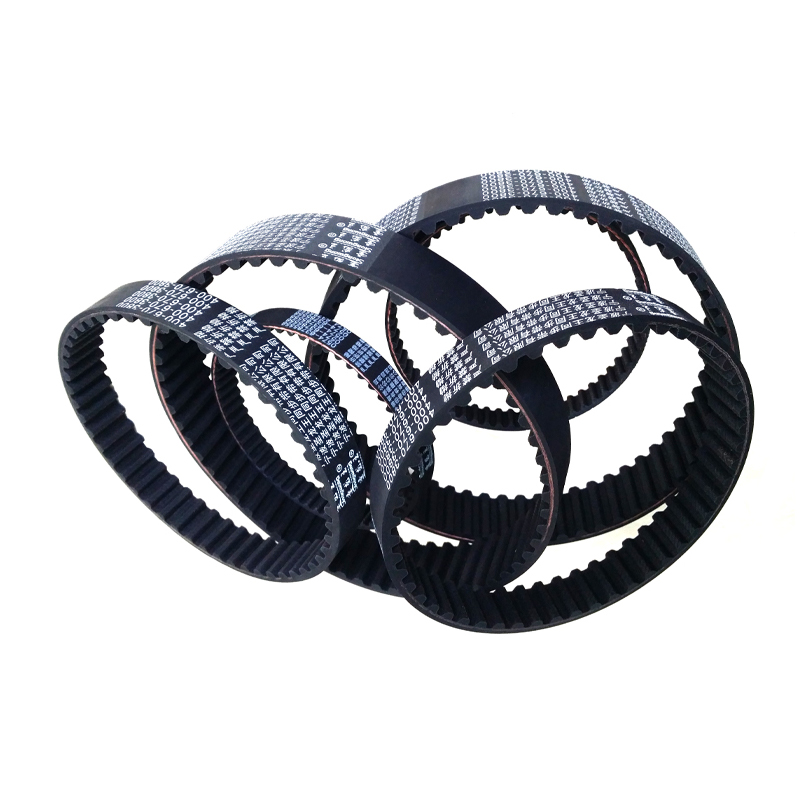
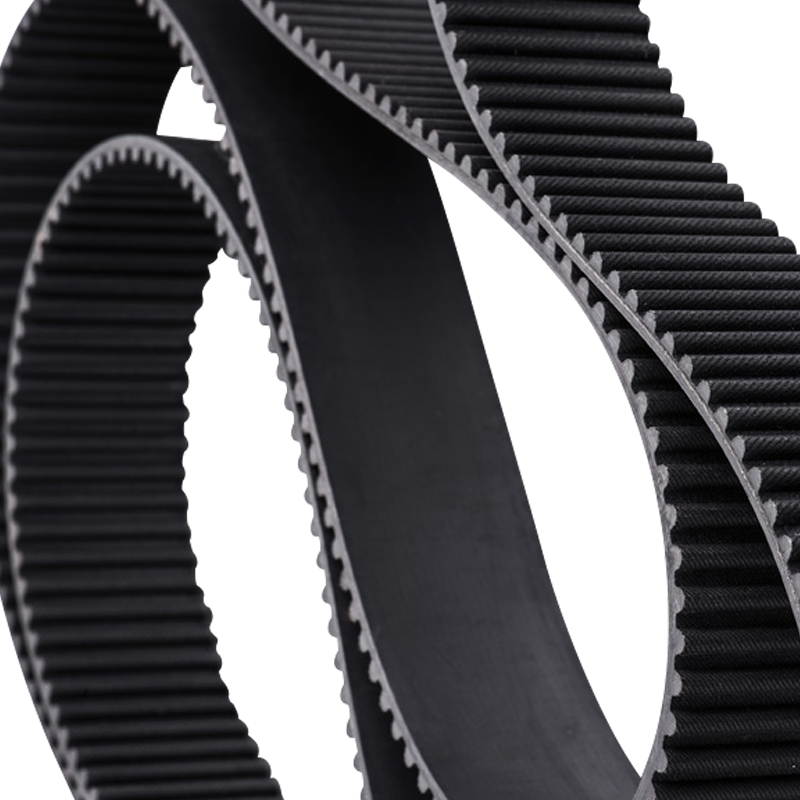
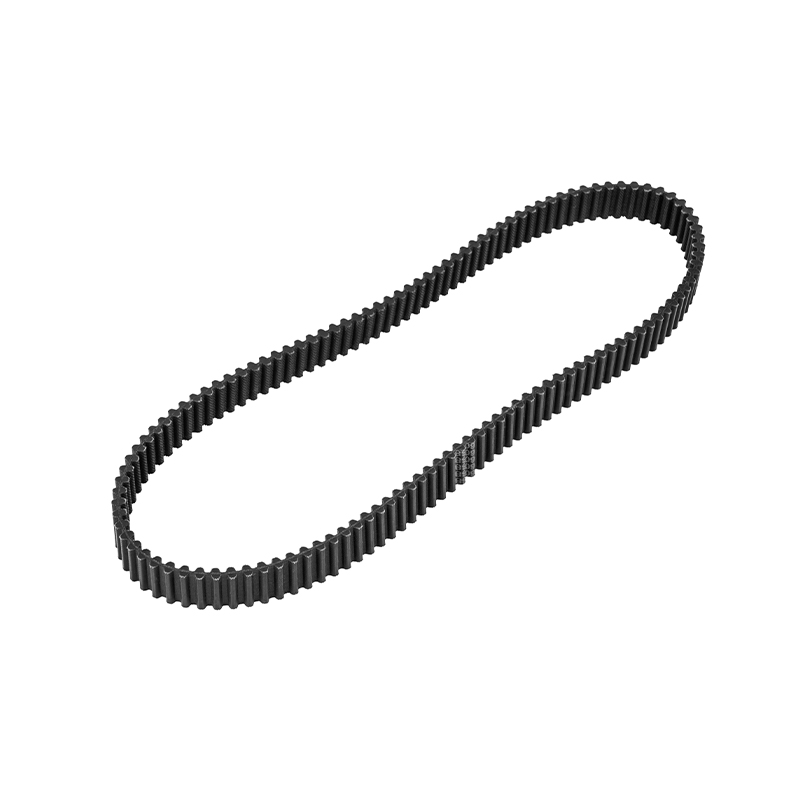
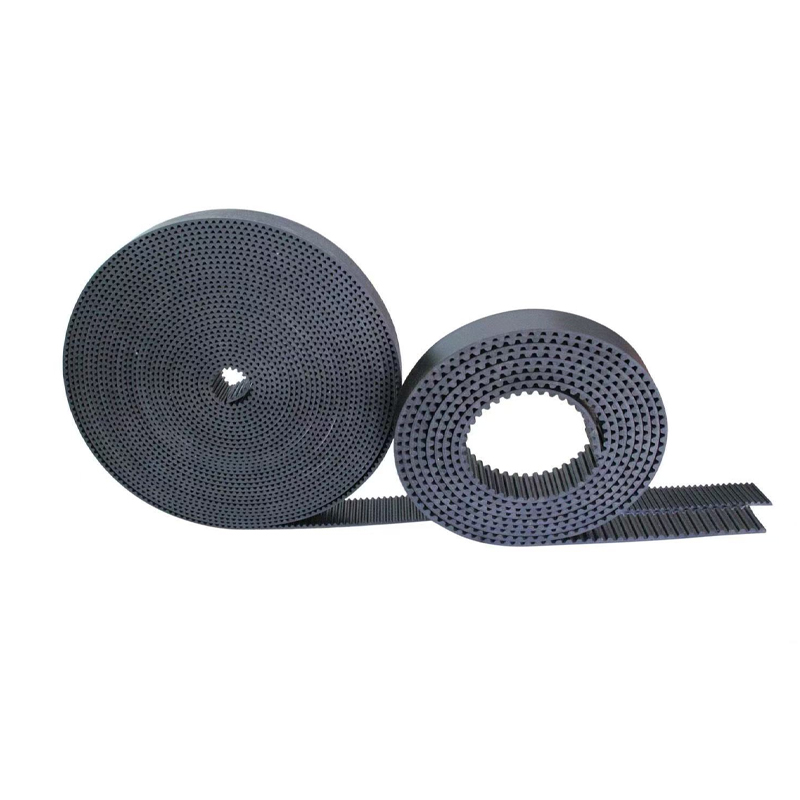
The rubber timing belt is the standard in automotive and many industrial applications. Most are made from neoprene (CR) or hydrogenated nitrile rubber (HNBR) reinforced with fiberglass or aramid (Kevlar) cords. HNBR belts offer significantly better heat and oil resistance than older neoprene designs.
Key Properties of Rubber Timing Belts
- Operating temperature range: −40°C to +120°C (HNBR); up to +130°C for short periods
- Replacement interval: Typically every 60,000–100,000 miles (96,000–160,000 km) or 5–7 years, whichever comes first
- Noise level: Low — rubber dampens vibration and runs quietly
- Stretch over time: Gradual elongation leads to timing deviation if not tensioned periodically
- Failure mode: Typically gradual — cracking, fraying, and tooth shear before complete snap
The primary enemy of rubber timing belts is heat, oil contamination, and age-related hardening. Even a belt with low mileage can become brittle and crack if left in a hot engine bay for 7+ years. This is why manufacturers specify a time interval alongside a mileage interval.
PU Timing Belt (Polyurethane Timing Belt): Advantages and Ideal Use Cases
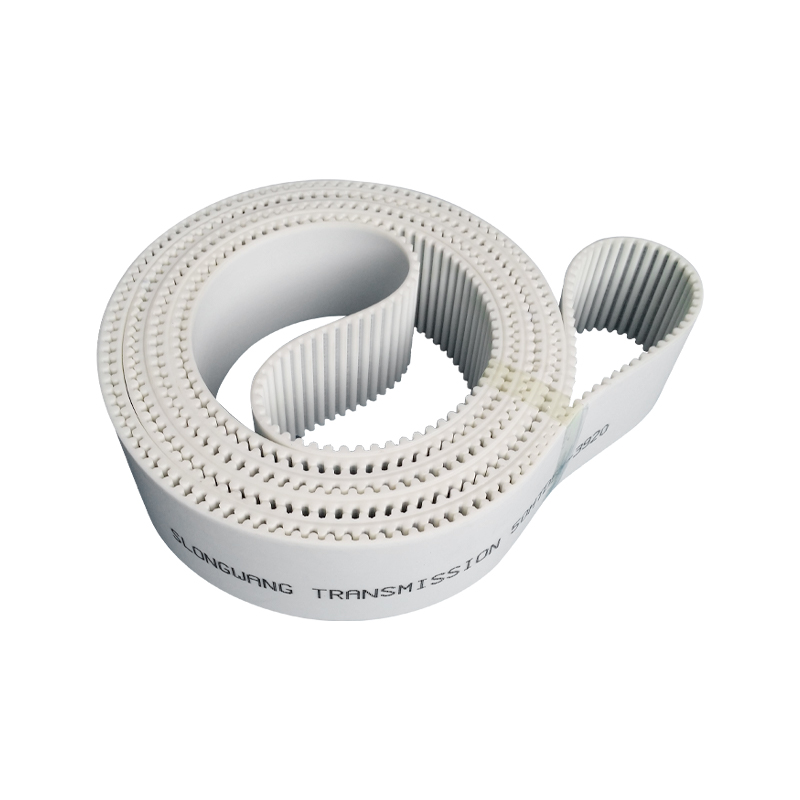
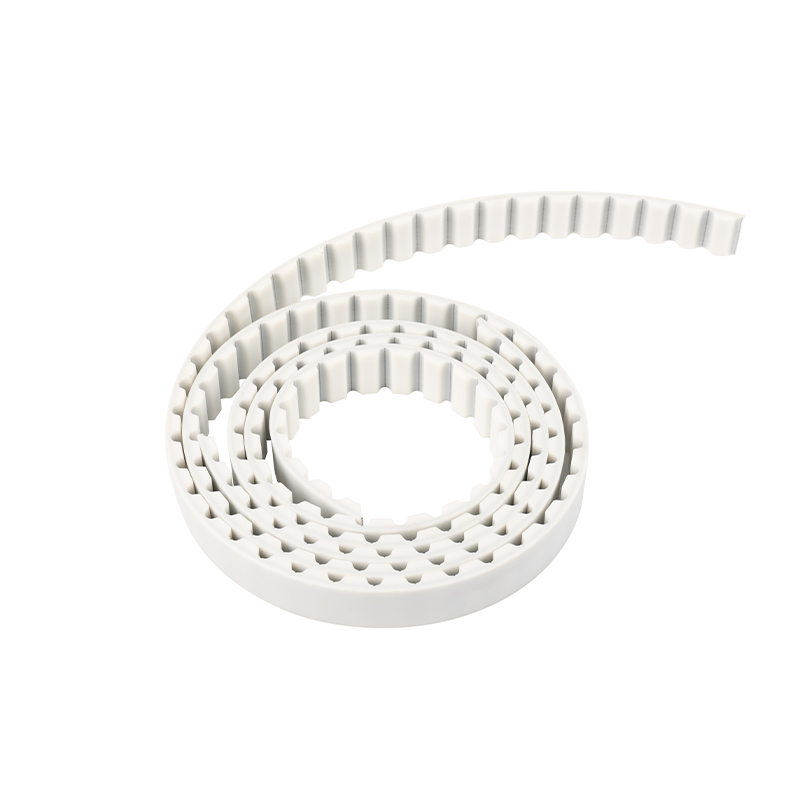
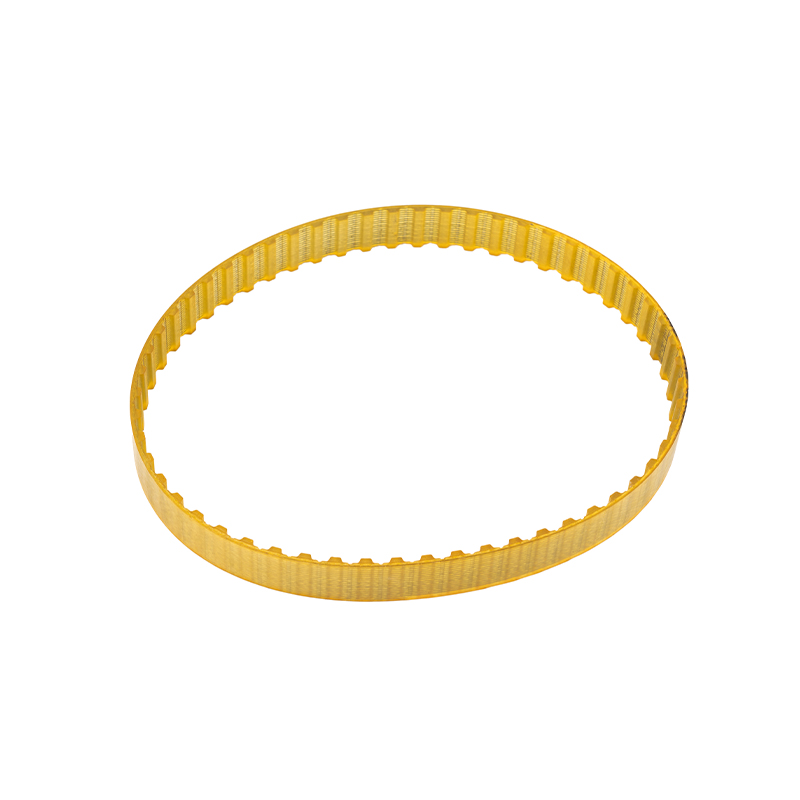
The polyurethane (PU) timing belt — also called a urethane timing belt — is the dominant choice in precision industrial and automation applications. PU belts are typically manufactured with steel, aramid, or fiberglass tension cord embedded in a cast or extruded polyurethane body.
Why Industries Choose Polyurethane Timing Belts
- Dimensional stability: PU exhibits near-zero elongation over service life, making it ideal for CNC machines, robotics, and servo drives where positional accuracy is critical
- Abrasion resistance: PU is 3–5× more abrasion-resistant than standard rubber compounds
- Chemical resistance: Resistant to oils, greases, and many solvents that attack rubber
- Operating temperature: −30°C to +80°C continuous; suitable for most factory environments
- Service life: In clean, properly aligned systems, PU belts can last 2–3× longer than equivalent rubber belts
Limitations of PU Timing Belts
Polyurethane timing belts are not universally superior. Key limitations include:
- Higher cost: PU belts are typically 30–80% more expensive than rubber equivalents of the same pitch and width
- Less vibration dampening: PU is stiffer and transmits more noise/vibration than rubber — problematic in automotive NVH (noise, vibration, harshness) contexts
- Temperature ceiling: At sustained temperatures above 80–90°C, PU can soften and lose dimensional stability — a concern in high-heat automotive environments
- Failure mode is more sudden: Unlike rubber, which cracks visibly before failure, worn PU belts may show little warning before tooth shear
Rubber vs. Polyurethane Timing Belt: Side-by-Side Comparison
Table 1: Key property comparison between rubber and polyurethane timing belts across common performance criteria.
| Property |
Rubber Timing Belt |
PU Timing Belt |
| Elongation / Stretch |
Moderate (increases with age) |
Near-zero |
| Abrasion Resistance |
Moderate |
Very High |
| Max Continuous Temp |
120°C (HNBR) |
80°C |
| Oil / Chemical Resistance |
Good (HNBR) / Poor (CR) |
Excellent |
| Vibration Dampening |
Excellent |
Low |
| Positional Accuracy |
Moderate |
Very High |
| Typical Service Life |
60,000–100,000 miles / 5–7 yrs |
2–3× rubber in industrial use |
| Relative Cost |
Lower |
30–80% higher |
| Best Application |
Automotive engines |
CNC, robotics, conveyor systems |
Symptoms That Differ Between Rubber and PU Belt Failures
While many failure symptoms overlap, the failure progression differs meaningfully between the two materials:
Rubber Belt Failure — Gradual, Visible Warning Signs
Rubber degrades progressively. The polymer backbone oxidizes, absorbs heat, and loses elasticity. You typically see:
- Surface cracking (transverse cracks visible to the naked eye)
- Tooth rounding and wear
- Belt stretch and slight elongation
- Delamination of the outer cover from the cord layer
- Complete tooth shear or belt snap
This gradual degradation gives mechanics and operators inspection windows to catch failure before it becomes catastrophic — provided they inspect on schedule.
PU Belt Failure — Less Warning, More Sudden
Polyurethane timing belts tend to maintain their appearance longer. Failure often occurs with less visual warning and manifests as:
- Tooth shear under overload — especially if belt is misaligned or a pulley has worn flanges
- Cord delamination due to fatigue from repeated flexing cycles
- Positional error drift in servo systems — often the first measurable sign of PU belt fatigue in precision machinery
- Hardening and cracking in cold environments (below −20°C)
For PU belts in industrial systems, preventive replacement on a fixed cycle — rather than inspection-triggered replacement — is the recommended maintenance strategy.
How to Inspect a Timing Belt: Step-by-Step
For automotive rubber timing belts, here is a practical inspection routine:
- Check service records — Confirm when the belt was last replaced. If unknown, replace it immediately if the vehicle has over 60,000 miles.
- Remove the timing belt cover — Most require basic tools; some require removing auxiliary components.
- Inspect the belt back — Look for transverse cracks, glazing, or hardening. A belt should feel slightly flexible, not stiff.
- Inspect the teeth — Check for rounding, missing chunks, or uneven wear patterns.
- Check belt edges — Fraying edges indicate pulley misalignment.
- Check for oil contamination — Oil on the belt face accelerates degradation; identify and fix the source leak before installing a new belt.
- Inspect the tensioner and idler pulleys — A good belt on a worn tensioner will still fail prematurely. Replace the full kit.
Always replace the water pump at the same time on engines where it is driven by the timing belt — the labor cost is already incurred, and a failed water pump can destroy a new belt.
When to Choose a PU Timing Belt Over a Rubber Belt
Selecting the right belt material matters more than many buyers realize. Use the following guidance:
Table 2: Application-based selection guide for rubber vs. polyurethane timing belts.
| Application |
Recommended Belt |
Primary Reason |
| Automotive engine timing |
Rubber (HNBR) |
High-temp tolerance, vibration dampening |
| CNC machines / servo drives |
PU |
Positional precision, low elongation |
| Food processing conveyor |
PU |
Chemical/wash-down resistance |
| General industrial conveyor |
Rubber or PU |
Depends on load and temp requirements |
| High-temp industrial (>100°C) |
Rubber (HNBR/EPDM) |
PU softens above 80–90°C |
| 3D printers / laser cutters |
PU (steel cord) |
Zero-stretch for print accuracy |
Key Takeaways: Don't Ignore These Warning Signs
A failing timing belt — whether rubber or polyurethane — sends signals before it quits. Acting on those signals early costs a few hundred dollars. Ignoring them can cost thousands. Here is a final summary of the most important points:
- The top symptoms of a bad timing belt are: engine ticking, misfires, hard starting, oil leaks near the front seal, visible cracking, and sudden engine shutdown
- Rubber timing belts degrade gradually and offer visual warning signs; replace every 60,000–100,000 miles or 5–7 years
- Polyurethane timing belts excel in precision industrial applications, offering near-zero elongation and superior abrasion resistance, but are not ideal for high-heat automotive environments
- Always replace the full kit (belt + tensioner + idler + water pump) — never just the belt alone
- On interference engines, a snapped timing belt is an emergency repair costing $2,000–$5,000+; preventive replacement is always the better economics


 Inquiry

 English
 中文简体
中文简体