
 Inquiry

 English
 中文简体
中文简体
Industry News
Home / News / Industry News / Neoprene vs. Polyurethane Timing Belts: The Engineering Guide to Material Selection
2026-07-15
Content
Polyurethane timing belts outperform neoprene in abrasion resistance, chemical resistance, and dimensional stability under load, making them the better choice for precision positioning and long-service industrial drives — while neoprene timing belts still win on fatigue resistance, quiet running, and resistance to swelling in wet environments, making them the better choice for high-flex, moisture-exposed, or shock-loaded applications.
There is no universal winner between neoprene and polyurethane timing belts — the right material depends on which failure mode you're trying to avoid. If your belt drive fails from tooth wear, chemical exposure, or positioning drift, polyurethane is the fix. If it fails from cracking, fatigue, or belt noise in a damp environment, neoprene is the fix.
The sections below compare both materials property by property, cover construction differences that explain those properties, and give a practical checklist for choosing between them.
Both materials are used to make synchronous (toothed) belts, and in many standard tooth profiles a neoprene and a polyurethane belt will run on the exact same pulleys. The difference is almost entirely in how each material behaves once the belt is under load, in the plant environment it has to survive, and over the years of service it's expected to deliver.
It's tempting to assume polyurethane simply outperforms neoprene across the board, but that isn't accurate. Polyurethane timing belts are often noisier than neoprene, and tend to swell more in moist environments and warp under direct sunlight, which adds unwanted tension to the drive. Neither material is strictly better — each solves a different problem.
The properties above aren't arbitrary — they follow directly from how each belt is built. Understanding the construction makes it much easier to predict how a belt will actually behave in your application, rather than relying on a generic "PU is premium" assumption.
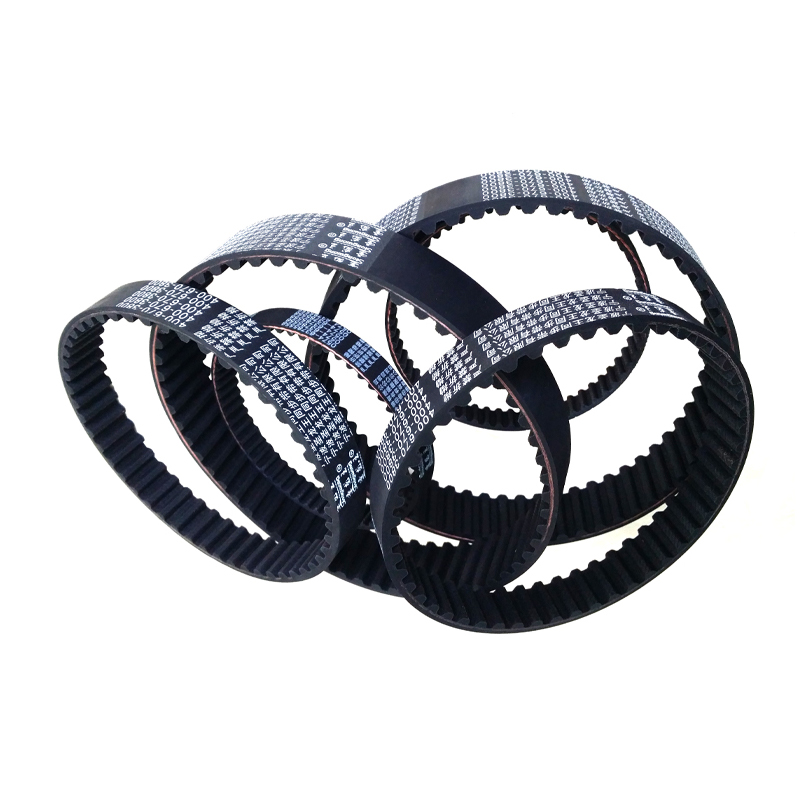
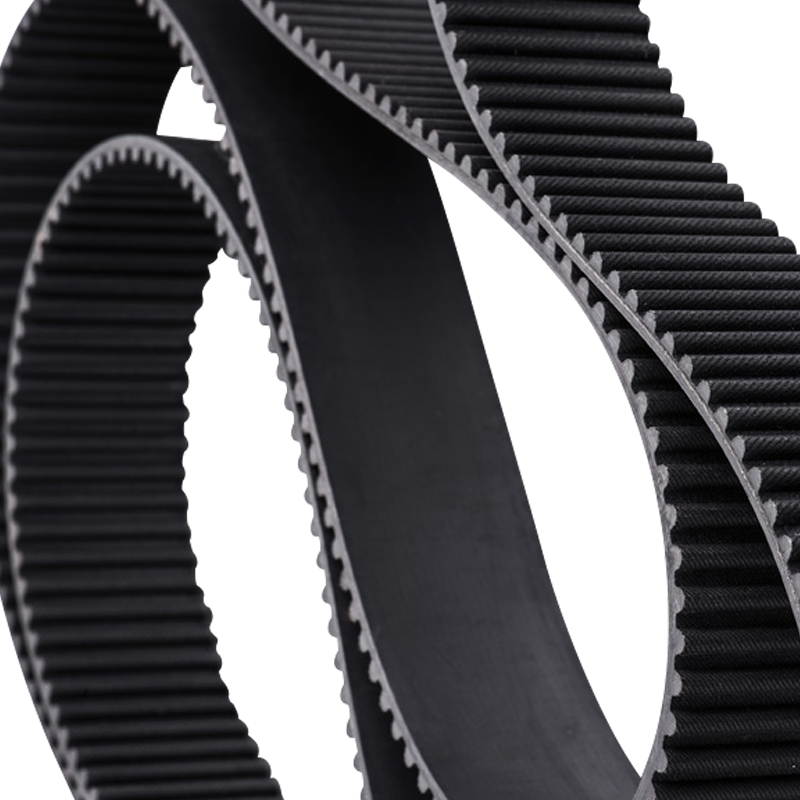
Neoprene timing belts are typically molded around a fiberglass rope core, which supplies tensile strength while the surrounding rubber body provides the flexibility that makes neoprene so fatigue-resistant. The tooth surface is usually covered with a nylon facing, which improves shear strength at the teeth and reduces wear against the pulley. This construction is why neoprene belts tolerate constant flexing over small pulleys and rapid direction changes so well — the rubber body is doing exactly what rubber is good at.
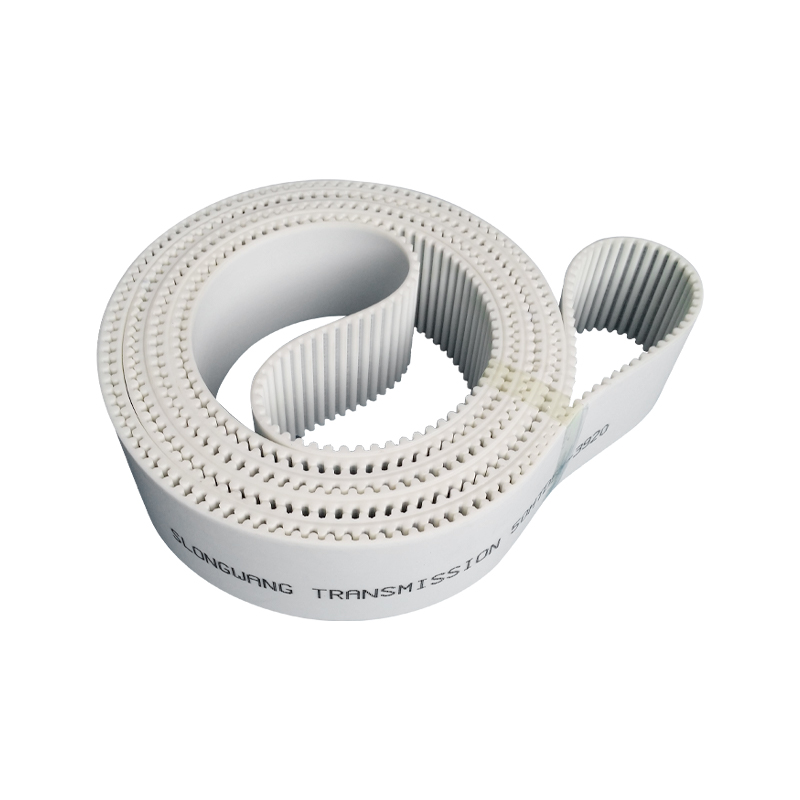
Polyurethane timing belts are generally molded directly over a steel or aramid (Kevlar) cable spine. Because PU can be cast around the reinforcement cord without a separate bonding layer, the result is a monolithic structure with excellent cord-to-body adhesion — which is a major reason PU belts hold dimensional accuracy so well under load. That same hardness and rigidity, however, is also why PU belts are less forgiving of tight bend radii than neoprene.
Environmental tolerance is where the two materials diverge most sharply, and it's the factor most likely to rule one material out entirely for a given application.
| Factor | Neoprene | Polyurethane |
|---|---|---|
| General operating range | -20°C to 100°C (typical) | -30°C to 80°C (short-term to 120°C) |
| Chemical vulnerability | Chlorine, halogenated substances, ketones, certain acids | Better resistance to oils, greases, many acids/alkalis |
| Water/humidity exposure | Tolerates well, low swelling | More prone to swelling and dimensional change |
| Sunlight/UV exposure | Generally stable | Can warp under prolonged direct sun |
| Particulate contamination | Sheds more particles under abrasion | Minimal particle shedding — better for clean rooms |
Temperature figures vary by manufacturer and specific compound — some specialized polyurethane belt lines are rated for a much wider window than the standard figures above — so always confirm the exact range on a given product's datasheet rather than assuming the general figures apply to every PU or neoprene belt on the market.
A practical point that matters when specifying a belt: tooth profile and pitch are largely independent of material choice. Standard profiles like HTD, GT2, MXL, XL, and AT are available in both neoprene and polyurethane, and in most cases a PU belt of the correct profile and pitch will run on the same pulley as its neoprene equivalent.
Because slight differences in tooth geometry between manufacturers can still affect fit even within the "same" profile name, it's worth confirming pulley compatibility with the belt supplier before mixing a polyurethane belt with a neoprene-drive pulley system, rather than assuming a straight swap.
The most reliable way to choose is to identify which failure mode is the actual risk in your application, then pick the material that resists it.
In many cases yes, provided the tooth profile and pitch match exactly, since the two materials often share pulley geometry. It's still worth confirming with the belt manufacturer first, since small differences in tooth shape between suppliers can affect mesh even when the profile name is identical.
Polyurethane's hardness tends to slow degradation compared to neoprene, and upgrading a neoprene HTD belt to an equivalent polyurethane belt is commonly reported to extend wear life several times over. Neoprene, however, still resists fatigue cracking from repeated flexing better than polyurethane, so "longer lasting" depends on which stress the belt experiences most.
Polyurethane is generally favored for food contact because it doesn't leach residue and is easy to clean, and FDA/USDA-compliant polyurethane belts are widely available for direct food contact. Always confirm the specific compound's food-contact certification with the manufacturer rather than assuming all polyurethane belts qualify automatically.
Standard tooth profiles are typically manufactured in a comparable range of widths and lengths across both materials, since they're built around the same pulley and pitch standards. Custom widths and lengths are also commonly available from most timing belt manufacturers for either material.

Model:
Model:
Model:
Model:
Model:

No. 6, Longrui Middle Road, Longzhen Avenue, Longshan Town, Cixi City, Ningbo City, Zhejiang Province, China
Tel: +86-400-670-3800
Tel: +86-574-58967770
Phone: +86-18867628822
FAX: +86-574-63990099
Email: llm@cn-slw.com