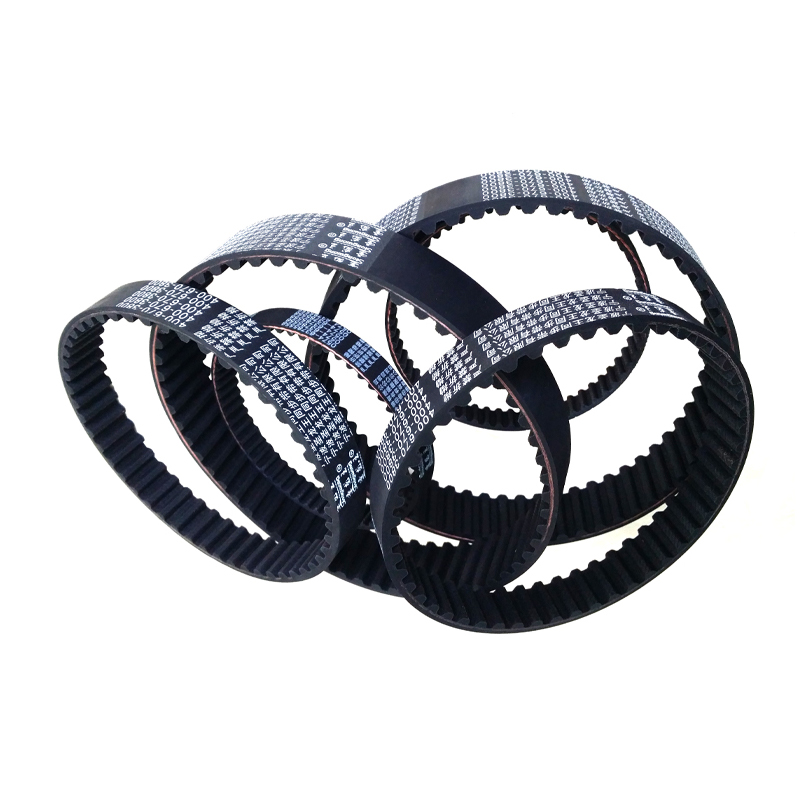
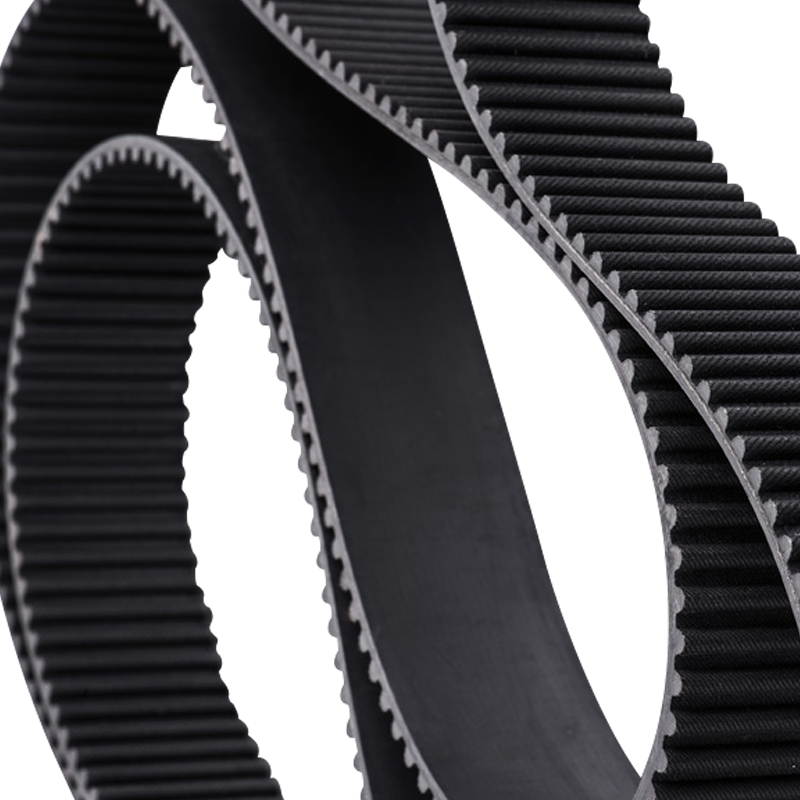
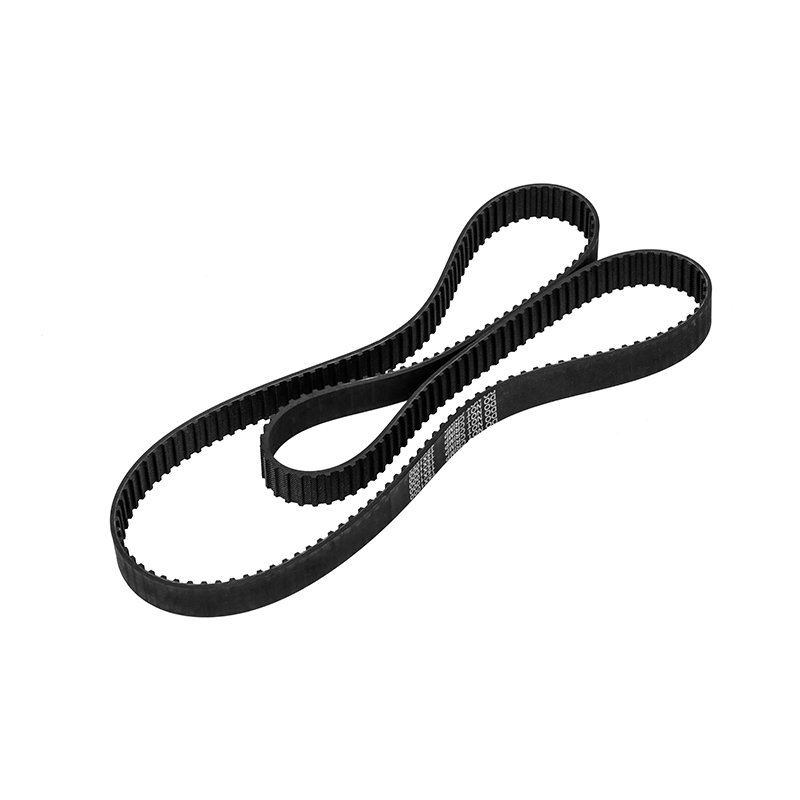
Replacing a timing belt typically costs $300 to $1,000 for most passenger vehicles when performed at a repair shop, with parts accounting for $50 to $200 and labor making up the remainder. For high-end European vehicles, luxury SUVs, or engines with difficult access, total replacement costs can reach $1,500 to $2,500. DIY replacement on an accessible engine can reduce total cost to $80 to $300 in parts alone.
The wide cost range exists because timing belt replacement cost is driven by several compounding factors: vehicle make and model, engine complexity, labor rates in your region, whether a complete kit (including tensioners, idler pulleys, and water pump) is installed, and the belt material itself — whether a standard rubber timing belt or a premium polyurethane (PU) timing belt. This guide breaks down every cost component and explains how belt material choice affects both upfront price and long-term value.
Timing Belt Replacement Cost by Vehicle Type
Vehicle type is the single largest determinant of timing belt replacement cost. Engine layout, the number of camshafts, accessibility of the timing cover, and whether the water pump is driven by the timing belt all directly affect how many labor hours the job requires.
Estimated timing belt replacement cost ranges by vehicle category, including parts and labor at a professional shop
| Vehicle Category |
Parts Cost |
Labor Cost |
Total Estimated Cost |
| Economy / Compact Car (e.g., Honda Civic, Toyota Corolla) |
$50–$120 |
$200–$400 |
$250–$520 |
| Mid-Size Sedan / SUV (e.g., Subaru Outback, Hyundai Santa Fe) |
$80–$180 |
$300–$600 |
$380–$780 |
| Truck / Full-Size SUV (e.g., Toyota Tacoma, Ford Explorer) |
$100–$220 |
$350–$700 |
$450–$920 |
| European Luxury (e.g., Audi A4, BMW 3 Series, Volvo XC90) |
$150–$350 |
$600–$1,200 |
$750–$1,550 |
| High-Performance / Exotic (e.g., Porsche, Alfa Romeo, Maserati) |
$200–$500 |
$900–$2,000 |
$1,100–$2,500 |
These estimates assume replacement of the timing belt only, with standard rubber belt kits. Adding a water pump replacement — which is almost always recommended when the water pump is belt-driven — typically adds $80 to $250 in parts and 0.5 to 1.0 additional labor hours, since the labor overlap is significant when the timing cover is already removed.
What Is Included in a Timing Belt Kit and Why It Matters for Cost
One of the most important — and most misunderstood — aspects of timing belt replacement cost is what "replacement" actually includes. Replacing only the belt while leaving worn tensioners and idler pulleys in place is a common false economy that leads to premature failure of the new belt.
Components Typically Included in a Complete Timing Belt Kit
- Timing belt: The primary toothed belt synchronizing crankshaft and camshaft rotation
- Tensioner pulley: Maintains correct belt tension; the spring or hydraulic mechanism inside wears over time and can cause belt slippage if not replaced
- Idler pulley(s): Guide the belt path; worn bearings create noise and can cause belt derailment
- Water pump (in kit versions): Driven by the timing belt on many engines; replacing it simultaneously prevents a second teardown if it fails within the belt's service interval
- Seals and gaskets: Camshaft and crankshaft seals are often replaced preventively since they are accessible during timing belt removal
A belt-only replacement might cost $50 to $100 in parts, while a complete kit including tensioner, idlers, and water pump typically costs $150 to $400. However, the labor cost is nearly identical — typically 3 to 7 hours regardless of whether you replace just the belt or the full kit. Spending an extra $100 to $200 on a complete kit during an already-open job avoids potentially paying the full labor cost again within 30,000 to 50,000 miles when another component fails.
Rubber Timing Belts: The Standard Choice and Its Cost Implications
The vast majority of automotive timing belt replacements use rubber timing belts — specifically, belts made from neoprene (chloroprene rubber) or HNBR (hydrogenated nitrile butadiene rubber) reinforced with fiberglass or aramid (Kevlar) fiber tension cords. These materials have been the automotive industry standard for decades and offer a well-understood combination of performance, flexibility, and cost.
Properties of Rubber Timing Belts
- Operating temperature range: -40°F to +230°F (-40°C to +110°C) for standard neoprene; HNBR compounds extend to +250°F (+120°C)
- Typical service life: 60,000 to 105,000 miles depending on manufacturer specification and operating conditions
- Flexibility: Excellent — rubber belts wrap around small-diameter pulleys easily, accommodating tight engine packaging
- Noise level: Low — rubber dampens vibration effectively, contributing to quiet engine operation
- Oil and coolant resistance: Good with HNBR compounds; moderate with standard neoprene — coolant or oil contamination from leaking seals accelerates belt degradation
- Part cost: $25 to $120 for most automotive applications — the most affordable timing belt option
Limitations of Rubber Timing Belts
Rubber timing belts degrade through a combination of heat cycling, ozone exposure, and mechanical fatigue — processes that are invisible externally until the belt is near failure. A rubber timing belt can look completely normal on the outside while the internal tension cords have significantly degraded, which is why replacement at the manufacturer's mileage interval — not based on visual inspection alone — is essential. Rubber also has higher elongation under sustained load compared to polyurethane, which can cause minor timing drift in high-precision or high-load applications.
Polyurethane Timing Belts: Premium Performance at Higher Cost
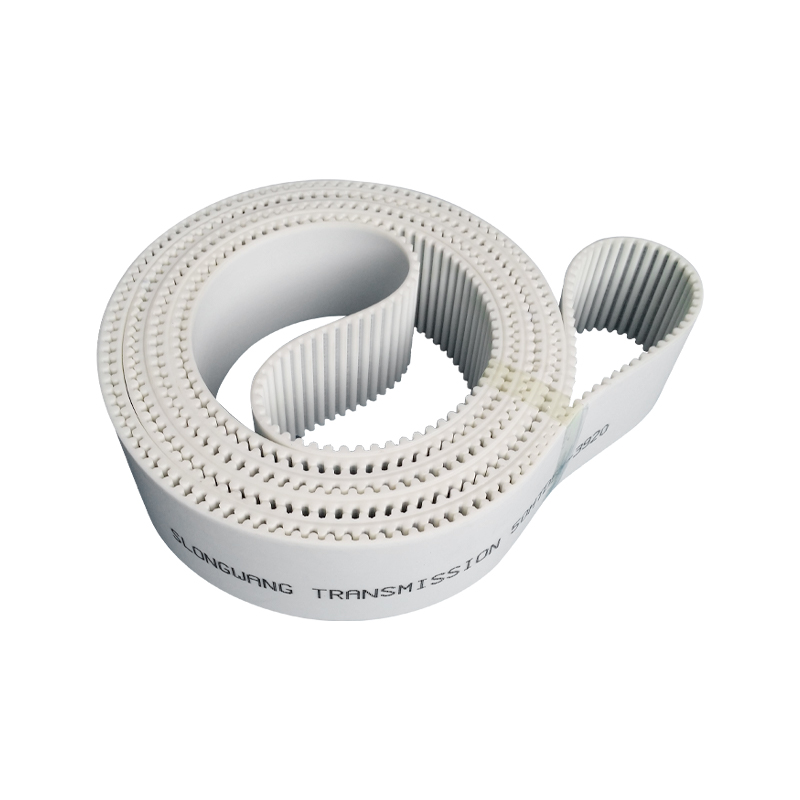
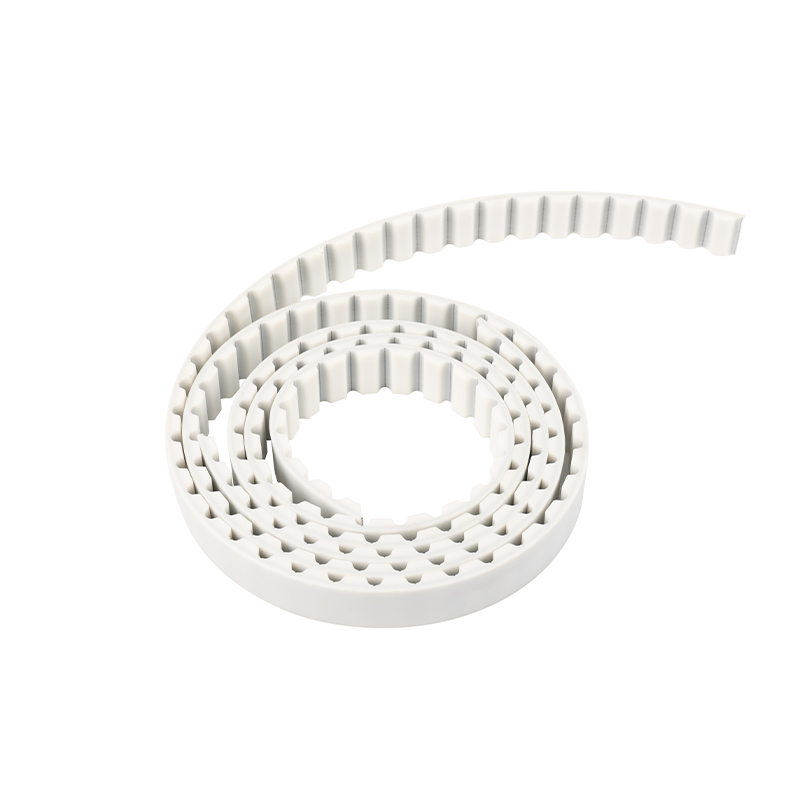
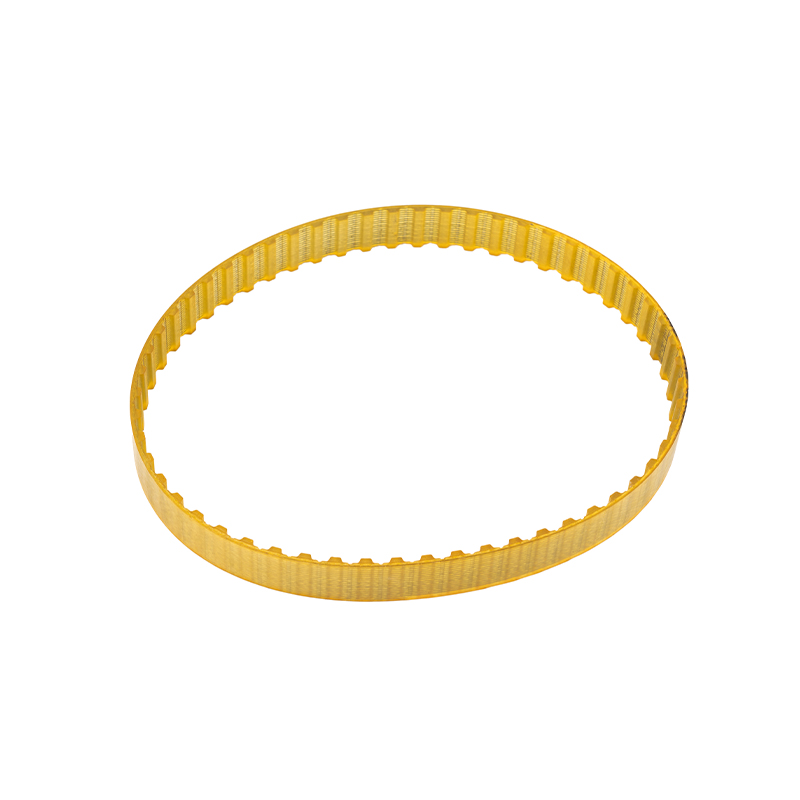
Polyurethane (PU) timing belts use a cast or extruded polyurethane body — typically reinforced with steel, fiberglass, or aramid tension cords — instead of rubber. Originally developed for industrial power transmission and motion control applications, PU timing belts are increasingly available for automotive and high-performance engine applications where their superior dimensional stability and extended service life justify the higher upfront cost.
Why Polyurethane Outperforms Rubber in Specific Applications
Polyurethane as a belt material offers several measurable performance advantages over rubber compounds:
- Higher abrasion resistance: PU belts typically exhibit 3 to 5 times the abrasion resistance of neoprene rubber belts in standardized DIN 53516 wear tests, translating directly to longer tooth profile life under high-load conditions
- Lower elongation under load: Polyurethane stretches less than rubber under tension — elongation values for PU are typically 3 to 8% vs. 10 to 15% for rubber at equivalent loads — maintaining more precise timing accuracy over the belt's service life
- Superior chemical resistance: PU belts resist oil, grease, ozone, and many solvents significantly better than standard rubber compounds, making them preferable where oil seal leakage is a known issue or in chemically challenging environments
- Wider temperature range: High-quality PU timing belts operate from -65°F to +185°F (-54°C to +85°C) continuously, with specialty formulations extending to +230°F (+110°C)
- Extended service intervals: In industrial applications, polyurethane timing belts routinely achieve 2 to 3 times the service life of equivalent rubber belts operating under the same load and speed conditions
Cost of Polyurethane Timing Belts vs. Rubber
PU timing belts carry a significant price premium over rubber equivalents. For industrial and motion control applications, a polyurethane timing belt costs 40 to 120% more than a comparable rubber belt in the same pitch and width. For automotive applications, aftermarket PU timing belts for performance vehicles typically cost $80 to $250 compared to $30 to $120 for OEM-specification rubber belts. However, when evaluated on a cost-per-mile or cost-per-operating-hour basis — accounting for the extended replacement interval — PU belts often deliver equal or lower total cost of ownership in high-mileage or high-cycle applications.
Rubber vs. Polyurethane Timing Belt: Direct Comparison
Performance and cost comparison between rubber and polyurethane timing belts across key specifications
| Property |
Rubber Timing Belt |
Polyurethane (PU) Timing Belt |
| Base Material |
Neoprene or HNBR rubber |
Cast or extruded polyurethane |
| Abrasion Resistance |
Good |
Excellent (3–5× better) |
| Elongation Under Load |
10–15% |
3–8% |
| Oil / Chemical Resistance |
Moderate–Good (HNBR) |
Excellent |
| Flexibility / Small Pulley Wrap |
Excellent |
Good (less flexible than rubber) |
| Operating Temp Range |
-40°C to +120°C |
-54°C to +110°C (standard) |
| Noise / Vibration Damping |
Excellent |
Good (slightly more noise) |
| Typical Service Life |
60,000–105,000 miles |
Up to 2–3× longer (application-dependent) |
| Typical Belt Cost |
$25–$120 |
$80–$250 |
| Best For |
Standard automotive, OEM replacement |
Performance, industrial, high-cycle use |
Factors That Increase Timing Belt Replacement Cost
Several specific conditions can push your timing belt replacement cost well above the typical range. Understanding them in advance allows you to budget accurately and avoid surprise charges.
- Interference engine design: Virtually all timing belt engines are interference engines, meaning if the belt breaks, pistons and valves collide. However, the consequences make mechanics appropriately thorough — and thorough takes time. Labor for interference engine belt jobs often runs 5 to 8 hours.
- Dual overhead camshaft (DOHC) engines: Engines with two camshafts (intake and exhaust) require a longer, more complex belt routing with additional idler pulleys, increasing both parts and labor cost by 15 to 30% compared to SOHC equivalents.
- Transversely mounted engines in tight bays: Many front-wheel-drive vehicles require removal of the engine mount, front bumper assembly, or radiator to access the timing cover — adding 1 to 3 extra labor hours that have nothing to do with the belt itself.
- Timing belt failure damage: If a belt breaks before replacement rather than being replaced preventively, valve and piston damage repair on an interference engine typically costs an additional $1,500 to $4,000 or more — sometimes exceeding the vehicle's value.
- Dealership vs. independent shop labor rates: Dealer labor rates average $120 to $180 per hour, while independent shops typically charge $75 to $130 per hour. On a 5-hour job, this difference alone can add $225 to $450 to the total bill.
- Geographic labor market: Labor rates in major metropolitan areas on the coasts average 20 to 40% higher than in the Midwest or rural areas for the same job.
When to Replace a Timing Belt: Mileage Intervals by Brand
Timing belt replacement intervals are set by the vehicle manufacturer based on the specific belt material, engine operating temperature, and load conditions. Always follow the manufacturer's interval — not generic advice — because using an interval that is too long for your specific engine is one of the most preventable causes of catastrophic engine failure.
Manufacturer-specified timing belt replacement intervals for common vehicle makes and models
| Make / Model |
Engine |
Replacement Interval |
Belt Type |
| Honda CR-V (2002–2006) |
2.4L i-VTEC |
110,000 miles / 7 years |
Rubber |
| Toyota 4Runner (2003–2009) |
4.0L V6 1GR-FE |
90,000 miles |
Rubber |
| Subaru Outback (EJ engines) |
2.5L H4 EJ253 |
105,000 miles |
Rubber |
| Audi A4 B6/B7 |
1.8T / 2.0T |
75,000 miles / 5 years |
Rubber |
| Hyundai Santa Fe (2001–2006) |
2.7L V6 |
60,000 miles |
Rubber |
| Volvo XC90 (2003–2014) |
2.5T / 3.2L |
105,000 miles / 10 years |
Rubber |
Note that intervals are specified in both mileage and time — whichever comes first. A vehicle driven only 5,000 miles per year still needs its timing belt replaced at the calendar interval because rubber degrades through ozone exposure and heat cycling even when the vehicle is not running.
How to Reduce Timing Belt Replacement Cost Without Cutting Corners
There are several legitimate ways to reduce the total cost of timing belt service without compromising engine protection.
- Get multiple quotes: Labor rates for timing belt replacement vary significantly between shops. Obtaining three quotes from reputable independent shops in your area can reveal a $150 to $400 price spread for identical work. Always confirm what is included in each quote before comparing.
- Supply your own parts: Many independent shops will install customer-supplied parts. Purchasing a quality timing belt kit from a reputable supplier (Gates, Dayco, ContiTech, or Aisin) can save 20 to 40% compared to shop markup on the same parts.
- Bundle with other maintenance: If your water pump, valve cover gaskets, or serpentine belt are due for service, having them done simultaneously with the timing belt — when the engine is already partially disassembled — eliminates duplicate teardown labor charges and can save $100 to $300 compared to separate appointments.
- Replace preventively, not reactively: A timing belt replaced on schedule costs $300 to $800. A timing belt that breaks on an interference engine costs $2,000 to $6,000 or more in engine repair — or scraps the vehicle entirely. The math for preventive replacement is always compelling.
- Consider DIY for accessible engines: Vehicles with straightforward timing belt access — many Honda, Toyota, and Subaru inline engines — can be DIY-replaced by a mechanically competent owner. With a quality rubber timing belt kit costing $80 to $200 and access to basic tools plus a torque wrench, DIY saves the entire labor charge of $250 to $700.
Warning Signs That Your Timing Belt Needs Immediate Attention
Unlike many maintenance items, a timing belt rarely gives clear advance warning before failure. However, the following symptoms can indicate a belt or related component nearing the end of its service life — and should be inspected immediately.
- High-pitched ticking or slapping noise from the engine: Can indicate a worn tensioner allowing belt flutter, or a belt with damaged teeth skipping on the sprocket
- Rough idle or misfires at idle: Timing drift caused by a stretched or worn rubber belt can retard valve timing enough to cause rough running at low RPM
- Visible cracks, fraying, or missing teeth on belt inspection: Any visible rubber deterioration — even superficial surface cracking — on a high-mileage belt warrants immediate replacement
- Oil or coolant contamination on the belt: Even minor seepage from a leaking cam seal or water pump can degrade a rubber timing belt within 10,000 to 20,000 miles — far short of the normal interval
- Approaching or exceeding the manufacturer's replacement interval: The most important warning sign — if your timing belt is within 10,000 miles of its scheduled replacement interval, do not delay the service


 Inquiry

 English
 中文简体
中文简体