Changing a timing belt typically takes 1 to 8 hours of labor, with most standard passenger car engines falling in the 2–4 hour range. Complex engines—such as V6s, interference engines with tight packaging, or those requiring front-end accessory removal—can push that to 6–8 hours. The belt material also matters beyond installation time: rubber timing belts and polyurethane (PU) timing belts differ significantly in service life, load capacity, and application suitability.
This article covers realistic replacement timeframes, the factors that drive labor hours up or down, and a detailed comparison of rubber versus polyurethane timing belts to help you make the right choice for your engine or industrial application.
How Long Does a Timing Belt Change Actually Take?
The honest answer depends heavily on the engine configuration, whether additional components are being replaced simultaneously, and the technician's experience level. Below is a realistic breakdown by vehicle and engine type:
| Engine Type / Vehicle Example |
Estimated Labor Time |
Difficulty Level |
| Simple inline-4 (e.g., Honda Civic 1.5L) |
1.5–2.5 hours |
Low |
| Standard 4-cylinder with water pump drive (e.g., Toyota Camry 2.2L) |
3–4 hours |
Moderate |
| V6 transverse engine (e.g., Honda Accord V6) |
5–7 hours |
High |
| Subaru boxer engine (EJ/FA series) |
4–6 hours |
High |
| V8 longitudinal (e.g., Lexus LS 400) |
6–8 hours |
Very High |
| Industrial machinery belt replacement |
0.5–2 hours |
Low–Moderate |
Table 1: Estimated timing belt replacement labor times by engine/application type
Professional mechanics at dealerships or independent shops typically charge $200–$900 in labor alone, with total job costs (belt + tensioner + idler pulley + water pump) ranging from $400 to $1,500 depending on the vehicle and region.
Key Factors That Affect How Long the Job Takes
Engine Accessibility and Component Layout
The single biggest time driver is how buried the timing cover is. On a transversely mounted V6, the timing belt is often positioned toward the firewall, requiring the engine to be supported and partially lifted off its mounts. This step alone adds 45–90 minutes compared to a straight-forward inline-4 layout where the timing cover faces the front of the engine bay.
Simultaneous Component Replacement
Most experienced technicians and manufacturers recommend replacing the entire timing belt kit at the same interval—tensioner, idler pulleys, and water pump (if belt-driven). Since these components are already fully exposed, doing them together adds only 30–60 minutes of additional labor while avoiding a second full teardown if a pulley or water pump fails shortly after. Skipping this step to save time is a false economy.
Number of Camshafts and Timing Marks
Dual overhead cam (DOHC) engines have more camshaft timing marks to align simultaneously than single overhead cam (SOHC) engines. On a DOHC V6, a technician must correctly align five or more timing marks (two intake cams, two exhaust cams, and the crankshaft). A misalignment error on an interference engine can cause catastrophic valve-piston contact, so technicians rightly take extra time to verify.
Vehicle Age and Fastener Condition
On vehicles with 100,000+ miles, corroded or seized fasteners can add 30 minutes to 2+ hours of unplanned work. Crankshaft bolt removal is notoriously difficult on some engines (Toyota 22R-E, for example) and may require an impact wrench, holding tool, and heat application.
DIY vs. Professional Installation
A professional mechanic familiar with a specific engine platform can complete the same job 40–60% faster than a competent DIYer doing it for the first time. A first-time DIY timing belt job on a moderate-complexity engine realistically takes a full day (6–10 hours) including setup, research, and double-checking work. That said, DIY saves labor cost—often $300–$700 on this job.
Step-by-Step Overview of the Timing Belt Replacement Process
Understanding the procedure helps explain where time gets consumed. A typical timing belt job follows this sequence:
- Disconnect battery; allow engine to cool completely
- Remove engine covers, accessory belts, and any components blocking timing cover access (power steering pump, A/C compressor bracket, etc.)
- Support the engine if necessary; remove engine mount to access timing cover
- Rotate crankshaft to Top Dead Center (TDC) on cylinder 1; confirm all timing marks align
- Remove timing cover bolts and cover(s)
- Release tension from belt tensioner; remove old timing belt
- Replace tensioner, idler pulleys, and water pump as applicable
- Route new belt; verify all timing marks still align
- Set and lock tensioner to manufacturer specification
- Rotate engine two full revolutions by hand; re-verify all timing marks
- Reinstall covers, components, and accessory belts in reverse order
- Start engine; check for proper operation and absence of unusual noise
Steps 4, 8, and 10 are where errors are most costly—a one-tooth misalignment on an interference engine can bend valves instantly. Experienced mechanics do not rush these verification steps.
Rubber Timing Belt vs. Polyurethane Timing Belt: Core Differences
The belt material you choose—or that comes specified with your engine or machine—determines service interval, performance envelope, and replacement frequency. The two dominant materials are rubber (typically neoprene or HNBR-based) and polyurethane (PU).
Rubber Timing Belts
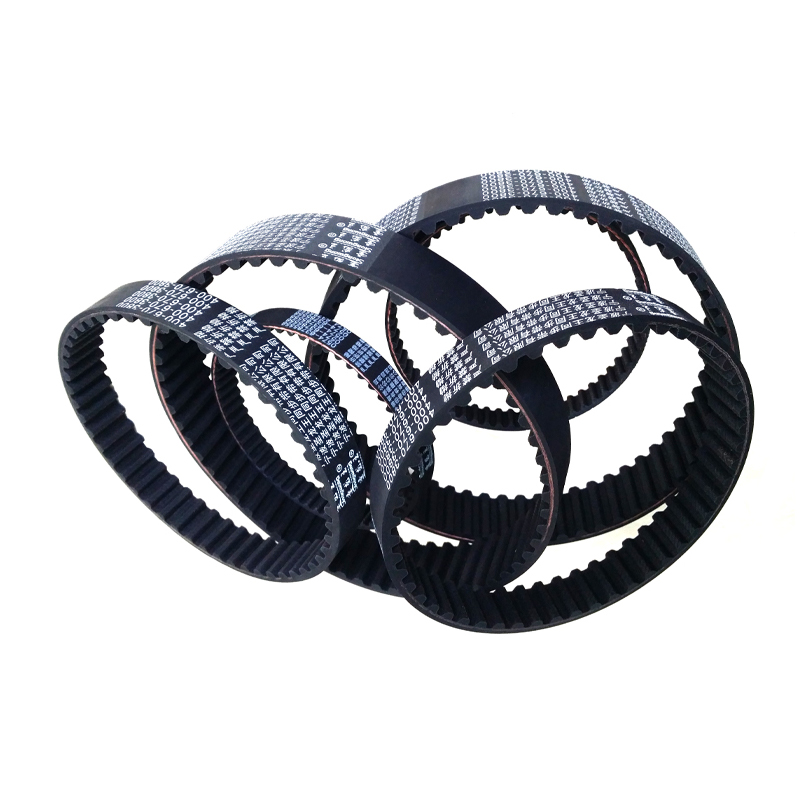
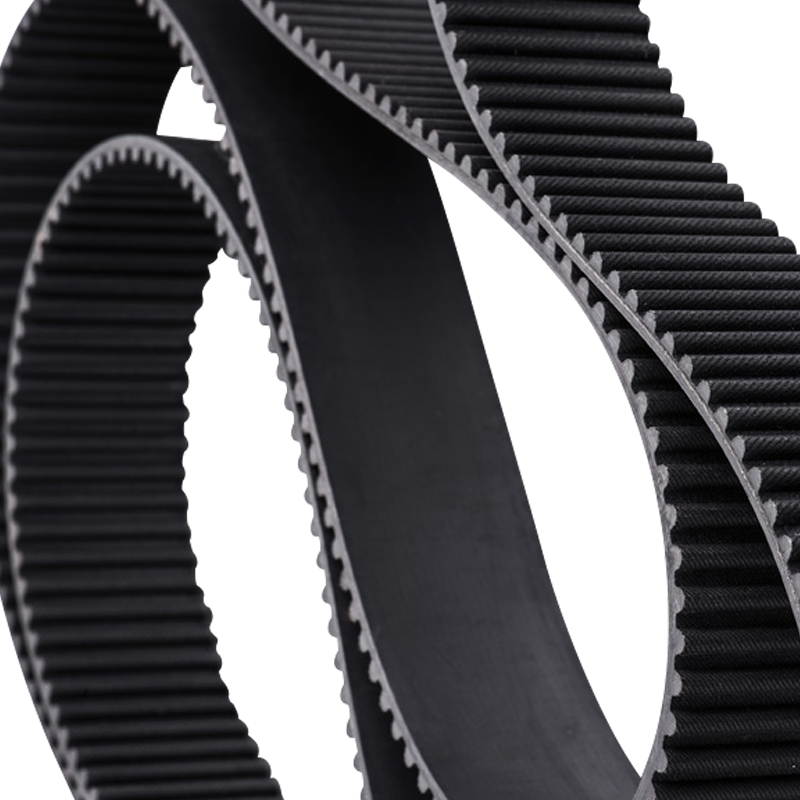
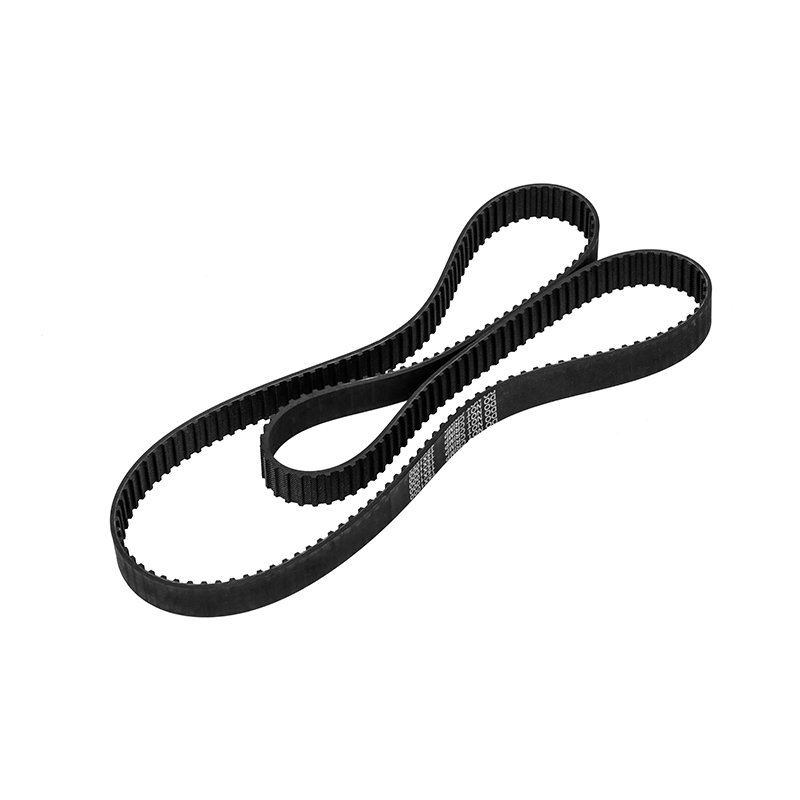
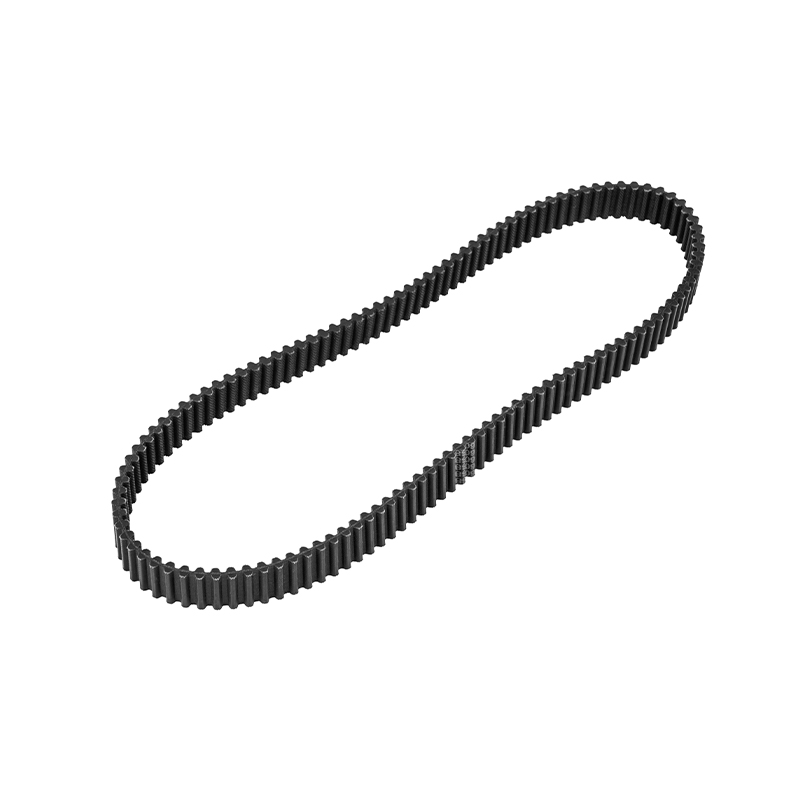
Traditional rubber timing belts use a fiber-reinforced rubber compound—originally neoprene, now predominantly HNBR (Hydrogenated Nitrile Butadiene Rubber) in modern OEM applications. HNBR offers significantly improved heat resistance (up to ~130°C continuous) and oil resistance compared to older neoprene belts. Fiberglass or aramid (Kevlar) cords provide tensile strength.
Rubber belts dominate automotive engine applications. Standard replacement intervals for HNBR rubber timing belts are typically 60,000 to 105,000 miles (96,000–168,000 km), or every 5–7 years regardless of mileage—whichever comes first.
Polyurethane (PU) Timing Belts
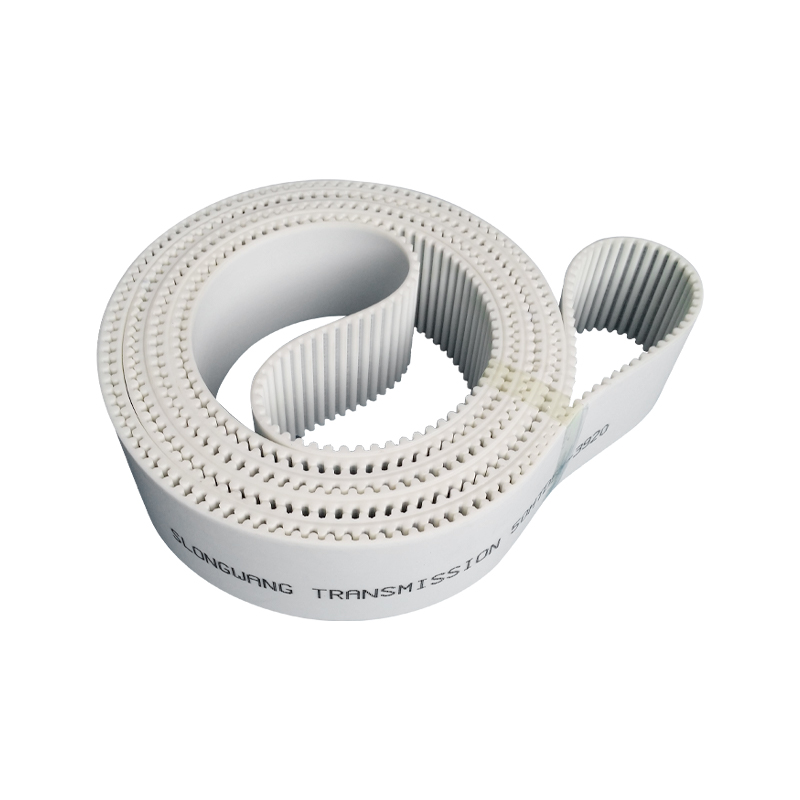
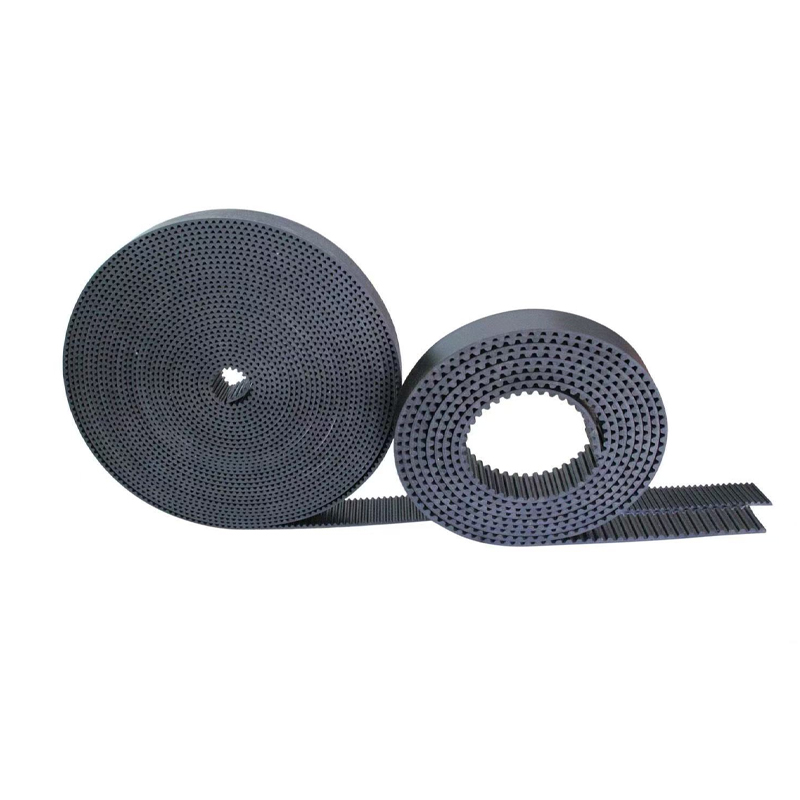
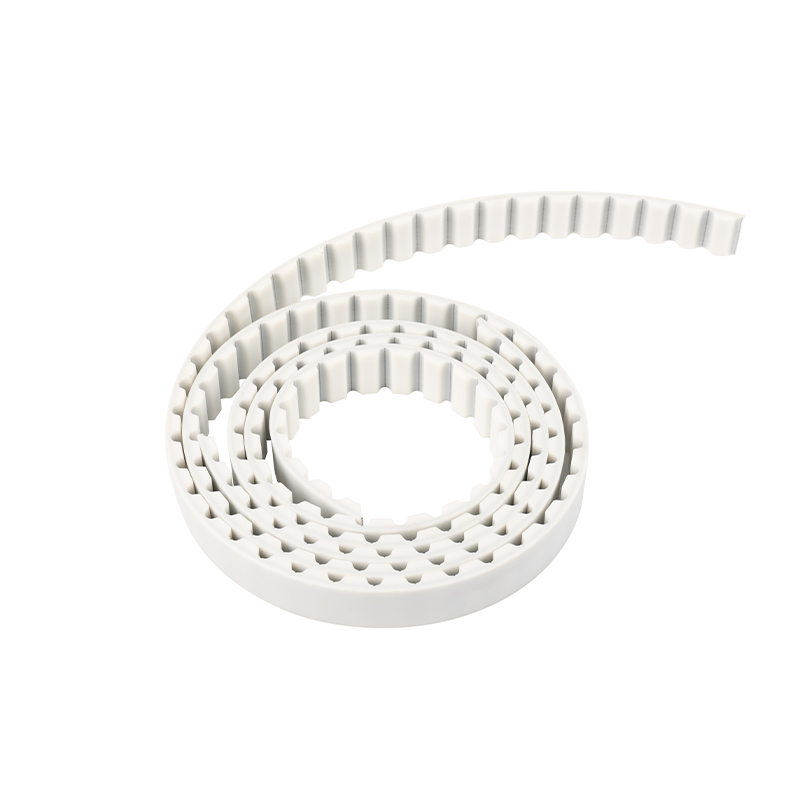
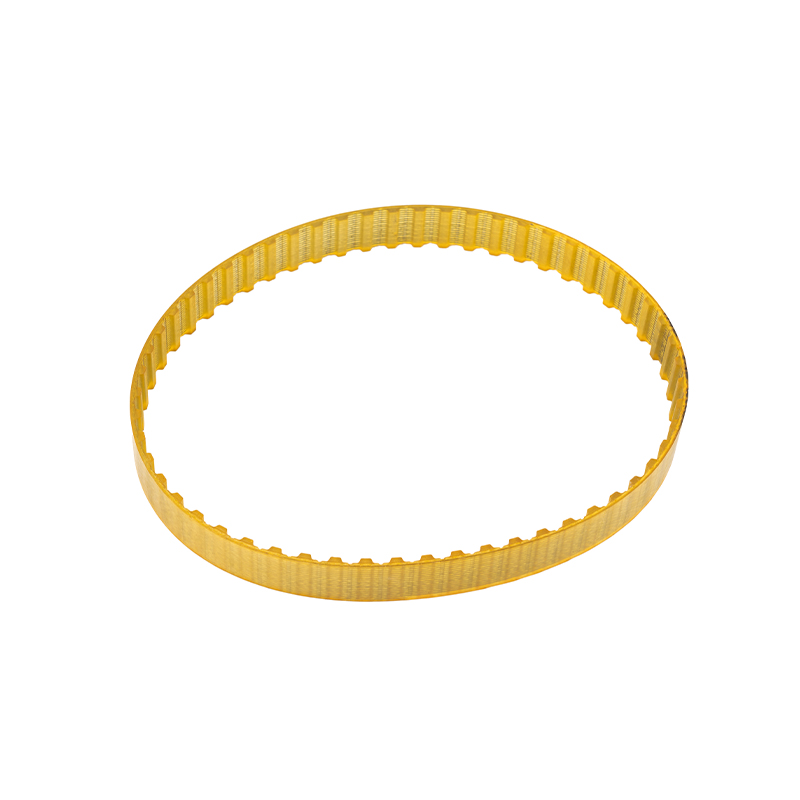
Polyurethane timing belts are cast or molded from thermoplastic polyurethane, typically reinforced with steel or aramid tension members. PU belts are the standard choice in industrial, automation, and precision motion control applications—CNC machines, conveyor systems, 3D printers, packaging equipment, and robotics.
PU timing belts offer superior dimensional stability and are available in open-ended lengths (joinable on-site), making them practical for retrofits. Their service life in controlled industrial environments can exceed 10,000–20,000 operating hours under appropriate load conditions.
Detailed Comparison: Rubber vs. PU Timing Belt Properties
| Property |
Rubber Timing Belt (HNBR) |
Polyurethane Timing Belt |
| Operating Temperature Range |
-40°C to +130°C |
-30°C to +100°C (standard) |
| Oil/Grease Resistance |
Good (HNBR) |
Excellent |
| Abrasion Resistance |
Moderate |
Excellent |
| Dimensional Stability |
Moderate (swells with oil/heat) |
High (minimal elongation) |
| Noise Level |
Low (quieter) |
Slightly higher |
| Load Capacity |
Moderate–High |
High (with steel cords) |
| Flexibility at Low Temp |
Better |
Can stiffen below -20°C |
| Available in Open-Ended Form? |
Rarely |
Yes (standard offering) |
| Typical Automotive Use |
Yes (dominant) |
Rarely |
| Typical Industrial Use |
Some (neoprene in older machines) |
Yes (dominant) |
| Relative Cost |
Lower |
Higher (15–40% premium) |
Table 2: Property comparison between rubber (HNBR) and polyurethane timing belts
Why Rubber Belts Dominate Automotive Engines
Automotive timing belts must tolerate extreme thermal cycling—cold starts at -30°C and sustained operation at engine bay temperatures exceeding 120°C. Rubber, especially HNBR, handles this range without becoming brittle or losing flexibility. The compliance (slight elasticity) of rubber also helps absorb torsional vibration pulses from combustion events, protecting the belt teeth and sprocket flanks from impact fatigue.
PU belts in automotive environments would face accelerated degradation from the high-heat cycles and would lack the low-temperature flexibility needed for cold climate reliability. Additionally, automotive rubber timing belt systems are precision-engineered closed loops with specific tooth profiles (HTD, PGDT, ZHNBR) matched to the OEM sprocket geometry—not a category where open-ended PU stock belts are practical.
Why PU Timing Belts Excel in Industrial and Automation Applications
In industrial motion control, dimensional precision matters more than cold-weather flexibility. A CNC router or 3D printer axis driven by a timing belt must maintain positional accuracy over millions of cycles. PU belts, with their steel or aramid tension cord reinforcement and minimal elongation under load, maintain consistent pitch length throughout their service life in a way that rubber belts—which can creep and stretch slightly—cannot match.
PU timing belts are also available in metric pitch profiles (T2.5, T5, T10, AT5, AT10, HTD 3M/5M/8M) in continuous roll form, which allows fabricators to cut and weld custom lengths on-site—a critical practical advantage for maintenance teams replacing belts on large conveyors or custom-built machines without shutting down for a factory-sourced part.
The abrasion resistance of PU is also a decisive factor in dusty, gritty, or particulate-laden environments (food processing, woodworking, mining equipment) where rubber compound surfaces would wear significantly faster.
Timing Belt Replacement Intervals: Rubber vs. PU
Replacement intervals differ significantly between the two materials and their respective applications:
Rubber Automotive Timing Belt Intervals
- Standard HNBR belts: 60,000–105,000 miles or 5–7 years
- High-performance/racing applications: 30,000–40,000 miles due to higher RPM stress
- Older neoprene belts (pre-2000 vehicles): Often 40,000–60,000 miles
- Time-based replacement is essential because rubber degrades chemically with age regardless of mileage—a belt at 7 years with only 40,000 miles on it should still be replaced
PU Industrial Belt Service Life
- Light-duty automation (3D printers, plotters): 2,000–5,000 operating hours or as needed based on positional drift
- Medium-duty CNC and conveyor: 5,000–15,000 operating hours with correct tensioning
- Heavy industrial: Replacement driven by elongation measurement—when pitch elongation exceeds 0.5–1% of nominal, replacement is due
- PU does not suffer time-based chemical degradation the way rubber does, making runtime hours a more reliable indicator
Signs Your Timing Belt Needs Immediate Replacement
Regardless of material type, certain warning signs indicate a belt should be replaced before its scheduled interval:
- Visible cracking or fraying on the belt's outer surface or tooth roots—a sign of rubber degradation or fatigue
- Missing or sheared teeth—the most dangerous failure mode; the engine immediately loses valve timing synchronization
- Glazed or hardened belt surface—indicates heat damage that reduces grip and increases slip risk
- Oil contamination—rubber timing belts exposed to engine oil degrade rapidly; a leaking cam or crank seal must be repaired alongside belt replacement
- Ticking or slapping noises from the timing cover area—may indicate a loose belt or failing tensioner bearing
- Engine misfires or rough idle—can indicate the belt has skipped a tooth, causing valve timing to shift
On interference engines (the majority of modern engines), a snapped timing belt causes immediate and severe engine damage—bent valves, damaged pistons, and sometimes cracked cylinder heads. Repair costs typically run $2,000–$6,000+. The cost of preventive replacement at the recommended interval is always the better financial decision.
Choosing the Right Belt: A Practical Decision Guide
The choice between rubber and polyurethane timing belts is not a matter of preference—it is dictated by application requirements:
- Automotive engine replacement: Always use an OEM-specification rubber (HNBR) timing belt from a reputable brand (Gates, Continental, Dayco). Do not substitute PU belts in engine timing systems.
- CNC machines, 3D printers, laser cutters: Polyurethane belts with aramid cords provide the dimensional stability needed for positional accuracy. Replace rubber belts in these machines with PU equivalents when upgrading.
- Food processing conveyors: PU timing belts are preferable—they resist cleaning chemicals, oils, and abrasion better than rubber, and many PU formulations are FDA-compliant for incidental food contact.
- Extreme cold environments (below -25°C): Rubber maintains flexibility advantages; PU may require special low-temperature formulations.
- High-temperature industrial environments (above 100°C continuous): Rubber HNBR belts handle higher sustained temperatures than standard PU; specialty high-heat PU grades exist but cost significantly more.


 Inquiry

 English
 中文简体
中文简体